
Bingfu 20-1300MHz
4.2Editor score
Affordable price point
Magnetic base mounting
Compatible with major scanners
This comprehensive guide compares the top base station scanner antenna models for reliable wideband reception across VHF, UHF, and other frequency bands.
Finding the right base station scanner antenna is crucial for hobbyists and professionals seeking reliable wideband reception. A quality antenna ensures you capture signals across VHF, UHF, and other bands without interference.
We evaluated ten top-rated models based on frequency range, build quality, installation ease, and user feedback. Our selection includes discone, ground plane, and versatile options suitable for various setups.
Each pick highlights key features, pros, and cons to help you choose the best fit for your needs. Remember that prices and availability change frequently, so check current listings before purchasing.
4.2Editor score
4.7Editor score
5.0Editor score
This table provides a side-by-side comparison of all ten models, highlighting their key specifications to help you make an informed decision quickly.


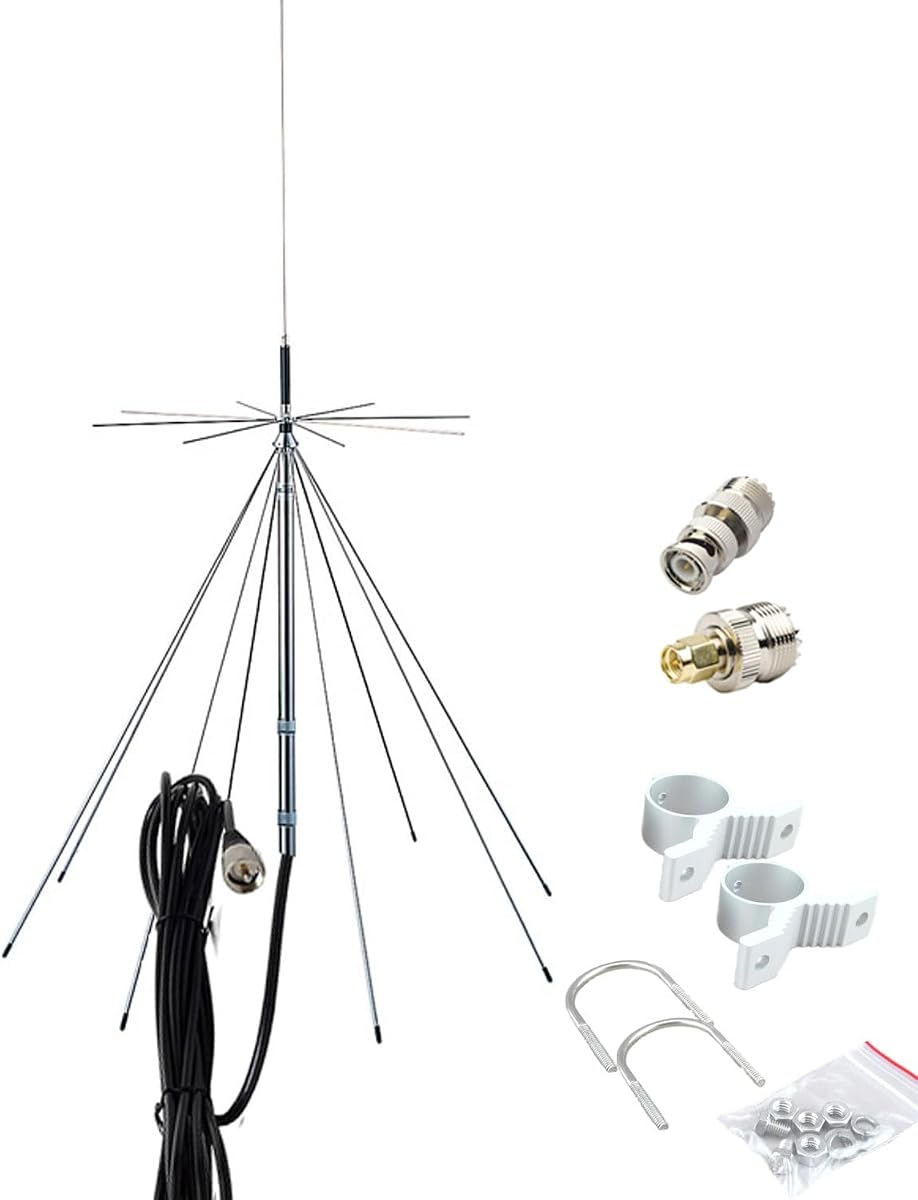
The Discone Antennas D3000 stands out as a top-tier choice for base station scanning. With a 4.7 rating, users praise its ultra-wideband support from 25 to 3000 MHz, making it ideal for ham radio, SDR, and air traffic monitoring.
We may earn a commission when you buy through this link, at no additional cost to you.
Its standout feature is the inclusion of a full kit with RG58 wires and multiple adapters like PL-259, BNC, and SMA. This means you can connect it to almost any scanner or radio without buying extra cables. It also supports transmitting, which is rare for scanners.
The stainless steel structure ensures durability against the elements. Installation is straightforward, with options for balconies, roofs, or masts. The only trade-off is the cost, but for versatility, it's worth the investment.
This antenna is best for serious hobbyists who need reliable wideband reception and the flexibility to transmit. If you want one antenna for everything from aviation to amateur radio, this is the pick.
Covers 25 to 3000 MHz, including MW, SW, HF, VHF, UHF, FM, and more for comprehensive monitoring.
Includes 10 meters of cable and adapters for PL-259, BNC, and SMA connectors, saving you extra purchases.
We may earn a commission when you buy through this link, at no additional cost to you.
The Tram 300-Watt is built for robust performance. Its 4.6 rating reflects user satisfaction with its stainless steel construction and wideband coverage from 25 to 1300 MHz. It handles up to 300 watts, making it great for transmit applications.
We may earn a commission when you buy through this link, at no additional cost to you.
Key strengths include its rust-free design and adjustable radials that help optimize performance. It covers major bands like CB, VHF, and UHF. The 6 lower radials and 2 adjustable ones ensure good SWR performance.
However, it doesn't reach the 3000 MHz of the D3000, so it's less future-proof for ultra-high bands. It's also heavier, requiring a sturdy mount. For those prioritizing transmit power and durability, it's excellent.
Choose this if you need a durable, high-power antenna for CB and VHF/UHF scanning. It's reliable for permanent installations where weather resistance is critical.
Handles up to 300 watts max, ideal for transmitting on CB and other bands without damage.
Features 6 lower radials and 2 adjustable ones for fine-tuning SWR and signal performance.
We may earn a commission when you buy through this link, at no additional cost to you.
This antenna comes with a portable stainless steel tripod, making it perfect for field use or temporary setups. It covers 25-1300 MHz with omnidirectional coverage. The compact design adapts well to various outdoor environments.
We may earn a commission when you buy through this link, at no additional cost to you.
Strengths lie in its portability and rust-proof build. It's compatible with amateur radio and public wireless scanners. The included 10m cable and connectors add convenience. However, it lacks transmission power compared to others.
The trade-off is that it's optimized for receiving, not heavy transmission. For base station monitoring or mobile setups, it's versatile. The N/A rating suggests it's newer, but the specs are solid.
Buy this if you need a mobile or travel-ready solution. The tripod makes it stand out for on-the-go scanning or temporary home installations.
Comes with a 2m 70cm GMR antenna list including a stainless steel portable tripod for flexible setup.
Optimized for receiving across HF, AIR, VHF, UHF, FM, and more bands up to 1300 MHz.
We may earn a commission when you buy through this link, at no additional cost to you.
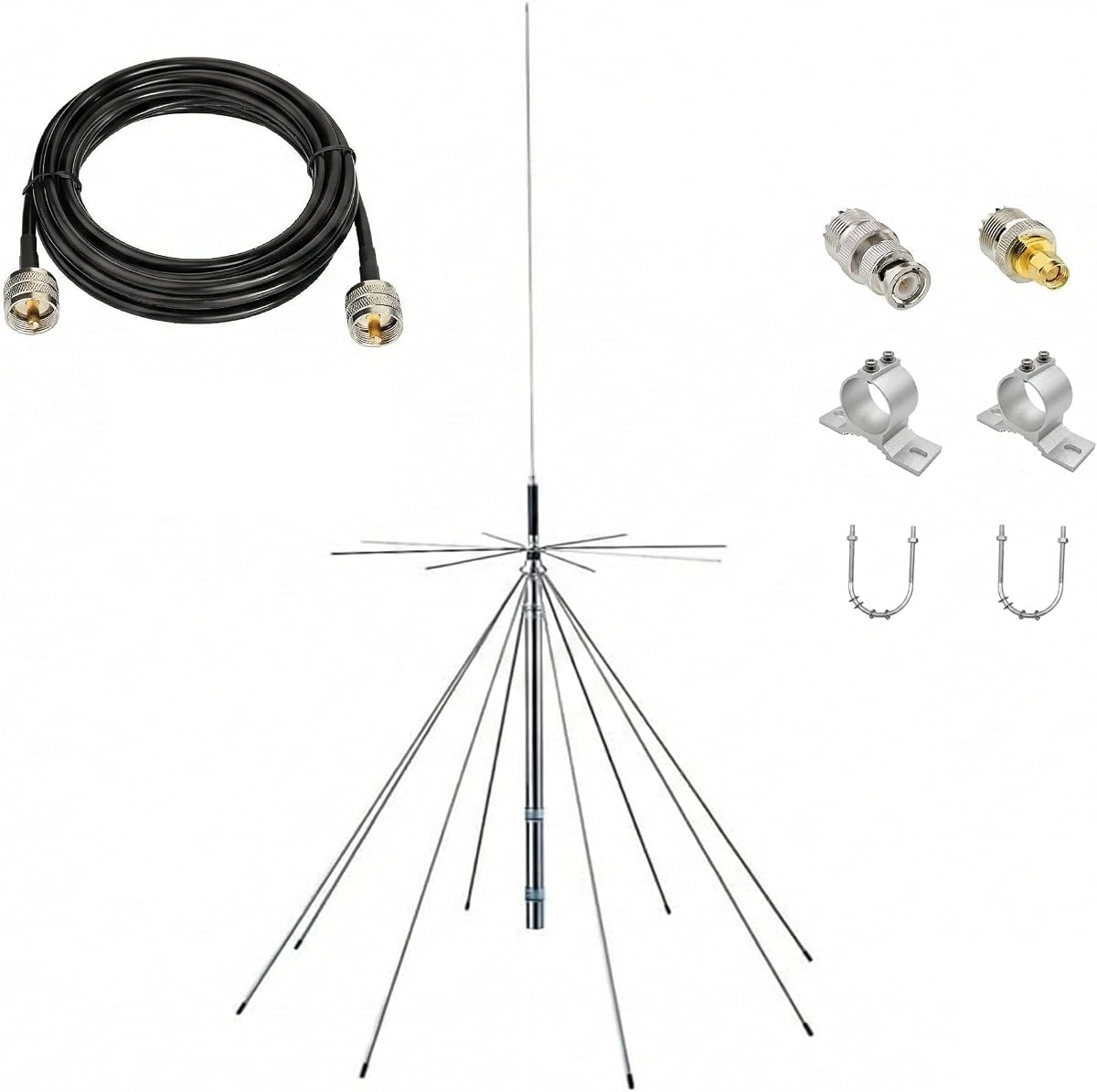
With a perfect 5.0 rating, the D3000N is a top choice for premium performance. It offers 25-3000 MHz coverage and handles up to 200W power above 144MHz. The heavy-duty stainless steel build ensures long-lasting operation even in strong winds.
We may earn a commission when you buy through this link, at no additional cost to you.
Key strengths include the complete installation kit with all elements, bolts, and coax. This makes setup straightforward. The compact 1.7m design saves space without compromising performance. It's ideal for both receiving and transmitting.
The trade-off is the higher price and the need for assembly. However, the premium materials and 5-star feedback justify the cost. It's robust and reliable for permanent installations.
This is the pick for those wanting the best build quality and full kit convenience. If you need a durable, high-performance antenna, this delivers exceptional value.
Includes 1 top element, loading coil, disc, radial rods, bracket, pipe, coax, hex wrench, and manual.
Uses premium materials to resist corrosion and maintain stable SWR even in strong winds.
We may earn a commission when you buy through this link, at no additional cost to you.
This antenna features a magnetic base, making it ideal for desktop or travel use. It covers 25-3000 MHz with a 9cm magnetic base for easy installation. The package includes a ground plane kit and RG58 coax cable.
We may earn a commission when you buy through this link, at no additional cost to you.
Strengths include its versatility for scanners, FM transmitters, and marine radios. The magnetic base is convenient for temporary setups. It's compatible with many radios like IC-V8 and TK100 series.
The 4.0 rating suggests mixed reviews, possibly due to desktop focus. It's not as robust for permanent outdoor use. However, for quick setups, it's functional and easy to move.
Choose this if you need a portable, magnetic option for home or travel. It's great for quick scans without permanent installation hassle.
Features a 9cm magnetic base for easy, portable installation on metal surfaces or metal.
Supports 25-3000 MHz with a ground plane kit for better signal capture across bands.
We may earn a commission when you buy through this link, at no additional cost to you.
This GMRS antenna covers 25-3000 MHz and is designed for easy carrying and simple installation. It has a heavy-duty 9cm magnetic base and includes a 16.4ft RG58 cable. It's suitable for desktops and travel.
We may earn a commission when you buy through this link, at no additional cost to you.
Strengths are its wideband reception for CB, FM, and ADSB signals. The magnetic base allows for flexible placement. It works with scanners, radios, and SDR receivers. The ground plane enhances signals.
It's lighter and more travel-focused than others. The 4.5 rating indicates good user satisfaction. It's not built for high-power transmission, but excellent for scanning. For portability, it's top-tier.
Buy this if you need a travel-friendly, magnetic antenna for home or on-the-go scanning. It's versatile and easy to set up anywhere.
Includes a 9cm magnetic base for easy portable installation on metal surfaces or vehicles.
Receives signals from CB, FM, VHF, UHF, GMRS, and ADSB up to 3000 MHz.
We may earn a commission when you buy through this link, at no additional cost to you.
The Bingfu 20-1300MHz is a budget-friendly pick with a 4.2 rating. It covers 20-1300 MHz and includes a magnetic base with a 3m cable. It's compatible with most Uniden, Whistler, and Radio Shack scanners.
We may earn a commission when you buy through this link, at no additional cost to you.
Its main strength is the low cost and broad compatibility. It's easy to install on metal surfaces. The BNC connector is standard for many devices. For entry-level users, it's a solid starter.
The trade-offs are the 1300 MHz limit and shorter cable. It's not for high-power or ultra-wide needs. However, for basic scanning, it performs well at this price point.
This is the ideal pick for those on a budget or starting out. If you need an affordable, reliable scanner antenna, this is the best value.
Offers a very affordable price point, making it accessible for beginners or budget-conscious buyers.
Compatible with Uniden, Whistler, and Radio Shack scanners, covering most popular models on the market.
We may earn a commission when you buy through this link, at no additional cost to you.
Similar to the previous Bingfu model, this VHF UHF antenna offers 20-1300 MHz coverage at an even lower price. It's compatible with the same scanners and radios. The magnetic base and BNC connector make setup simple.
We may earn a commission when you buy through this link, at no additional cost to you.
Strengths include affordability and ease of use. It's designed for amateur radio bands within the 20-1300 MHz range. The 3m cable is standard for desktop or temporary outdoor use.
The trade-off is limited range and basic build. It's not for heavy transmission or extreme weather. But for budget-conscious hobbyists, it gets the job done.
Choose this if you need an ultra-budget option for basic scanning. It's a great entry-level choice without sacrificing core functionality.
Provides a very affordable option for entry-level users needing basic scanner antenna functionality.
Includes a magnetic base mounting for flexible installation on metal surfaces or vehicles.
We may earn a commission when you buy through this link, at no additional cost to you.
This antenna has a 5.0 rating and features a foldable telescopic design for flexible adjustment. It covers 95-1100 MHz and includes a magnetic base with 10 feet of cable. It's ideal for RTL-SDR and amateur radio bands.
We may earn a commission when you buy through this link, at no additional cost to you.
Strengths are its adjustability and omni-directional folding. It's great for 2m/70cm bands. The package includes adapters for PL259 and SMA. The low weight and small size make it highly portable.
The trade-off is the lower 1100 MHz limit and 10W max power. It's optimized for receiving and low-power TX. For SDR enthusiasts, it's perfect.
Buy this if you need a flexible, portable antenna for SDR or handheld use. The telescopic feature sets it apart for compact setups.
Features an omni-directional folding mechanism and telescoping tip for flexible physical adjustments.
Compatible with RTL-SDR and other Software Defined Radios, ideal for aviation ADS-B and more.
We may earn a commission when you buy through this link, at no additional cost to you.
This dual-band base antenna offers 7.2 dBi gain on UHF and is weatherproof with fiberglass construction. It handles 200W and is 67 inches tall when assembled. It works with AnyTone, Icom, and more transceivers.
We may earn a commission when you buy through this link, at no additional cost to you.
Strengths include high gain for better range and weather resistance. The 2-section design makes storage easier. It's ideal for harsh environments. The SWR is under 1.5, ensuring efficiency.
The trade-off is it's limited to 144/430 MHz, so not wideband. It's for specific dual-band use, not general scanning. But for ham repeaters, it's powerful.
Choose this if you need high-gain dual-band performance for ham radio. It's best for permanent base stations with transmit needs.
Offers 7.2 dBi gain on UHF and 4.5 dBi on VHF for optimal mobile and repeater performance.
Features durable fiberglass construction resistant to corrosion, ideal for shoreline and harsh environments.
We may earn a commission when you buy through this link, at no additional cost to you.
Choosing the right base station scanner antenna requires understanding key factors like frequency range, build quality, and mounting options. This guide breaks down what matters most.
The frequency range determines what signals your antenna can capture. Wider ranges like 25-3000 MHz cover aviation, amateur, and utility bands, while narrower ones like 144/430MHz focus on specific ham bands. For general scanning, prioritize ultra-wideband models to ensure future-proofing and versatility.
Look for antennas that cover at least VHF and UHF bands unless you have a specific use case. Check the MHz limits to match your scanning interests.
Durability is critical for permanent outdoor installations. Stainless steel offers rust resistance and strength against wind, while fiberglass is weatherproof and lighter. For harsh environments, stainless steel or fiberglass with UV protection ensures longevity.
Choose materials that withstand your local climate. Avoid plastic-heavy models for permanent setups to prevent weather damage over time.
Mounting flexibility affects where you can place the antenna. Magnetic bases suit desktop or vehicle use, while mast mounts are better for rooftops. Consider your location—apartment balconies may need compact setups, while rural areas allow taller masts.
Select a mount that fits your space and installation skills. Ensure the antenna includes brackets or kits for easier setup.
Some antennas support both receiving and transmitting, which is useful for two-way radio use. Check the power rating (Watts) and frequency bands for transmission. Not all scanners support transmit, so verify your device compatibility before buying a transmit-capable antenna.
If you only listen, prioritize receive gain. If you transmit, ensure the antenna is rated for your radio's power output.
A complete kit with coax cables and adapters saves extra costs. Look for standard connectors like PL-259, BNC, or SMA that match your scanner. Missing adapters can lead to additional purchases and potential signal loss.
Check if the package includes cable length and adapter types. Ensure compatibility with your existing equipment.
Gain indicates how well the antenna amplifies signals, with higher dBi values generally better for range. SWR (Standing Wave Ratio) should be under 2.0, ideally 1.5:1, to minimize signal reflection and maximize efficiency.
Prioritize models with low SWR and adequate gain for your needs. High gain isn't always better if the SWR is poor.
Decide if you need a mobile or fixed setup. Portable antennas with magnetic bases or tripods are easy to move, while stationary models like discone antennas are for permanent installations. Consider storage space if not always in use.
Choose portability for field use, permanence for home base stations. Match the design to your usage frequency.
Prices vary from budget models under $20 to premium ones over $150. Higher cost often means better materials, wider frequency ranges, and included kits. Assess your needs to avoid overspending on features you won't use.
Balance cost with required features. A budget model may suffice for basic scanning, while advanced users may need premium options.
Start by mounting the antenna in a clear, elevated location away from interference sources like power lines. Use the included brackets or magnetic base to secure it properly. Ensure the coaxial cable is routed without sharp bends to prevent signal loss.
Connect the antenna to your scanner using the correct adapter. If your device requires PL-259, use the provided adapter to match the connector. Power on your scanner and tune to a known frequency to verify reception. Adjust the orientation or height if needed for better signal.
Regularly inspect the antenna for corrosion or damage, especially after severe weather. Clean the surface with a soft cloth if needed. For permanent installations, check mounting bolts periodically to ensure stability. Proper care extends the antenna's lifespan and maintains performance.
A base station antenna is typically larger, designed for permanent outdoor mounting with better range and durability. Portable antennas are compact, often with magnetic bases for easy setup. Base stations focus on stable, high-performance receiving, while portables prioritize flexibility and convenience for travel or temporary use.
Only if your scanner or radio supports transmission. Most scanners are receive-only, so a transmit-capable antenna is unnecessary. If you use two-way radios, ensure the antenna supports your device's power and frequency bands to avoid damage.
Frequency range determines which signals you can capture. Wider ranges like 25-3000 MHz cover aviation, amateur radio, and emergency services, while narrower bands focus on specific areas. Choose a range that matches your interests to ensure you pick up relevant signals.
Yes, but it's best for temporary or vehicle mounting. For permanent outdoor use, secure the antenna with brackets on a mast or roof. Magnetic bases may not withstand strong winds, so ensure stability to prevent damage.
Check your scanner's connector type, usually PL-259, BNC, or SMA. Many antennas include adapters to match. If not, purchase the correct one to avoid signal loss. Using the wrong adapter can reduce performance.
Elevate the antenna higher to avoid obstructions. Use a low-loss coaxial cable and ensure tight connections. Adjust the antenna's orientation or add a ground plane. Minimizing interference from nearby electronics also helps boost signal quality.
Discone antennas offer wider frequency ranges and omnidirectional coverage, making them versatile for general scanning. Ground plane antennas are optimized for specific bands and may offer better gain in those ranges. Choose based on your specific scanning needs.
Regularly check for rust, loose bolts, or damage from weather. Clean the surface with a damp cloth if needed. Inspect cables for wear and replace if frayed. Proper maintenance ensures long-term reliability and signal quality.
In this guide, we compared ten top base station scanner antennas, highlighting the D3000 for overall versatility, the Tram 300-Watt for high-power transmit, and the Bingfu for budget-friendly entry. Each model suits different needs from professional monitoring to casual hobby scanning.
When prioritizing, focus on frequency range and build quality to ensure your antenna lasts. Consider your setup—permanent or mobile—and transmission needs to avoid unnecessary costs. Choose a model that aligns with your scanning goals and environment.
Remember that prices and availability change frequently. Check current listings and user reviews before purchasing to confirm compatibility. Investing in the right antenna enhances your scanning experience and ensures reliable signal capture.