
2Pcs Nano V3.0 Board
4.5Editor score
Affordable dual pack value
Modern USB-C port
Compatible with Arduino IDE
This expert guide compares the top 10 Arduino Nano Boards available in October 2026, evaluating performance, connectivity, and features for makers and
The Arduino Nano Board remains a cornerstone for electronics enthusiasts and professionals seeking compact power. Its small form factor hides significant capability, making it ideal for wearable tech, robotics, and space constrained projects. Choosing the right variant ensures your project runs smoothly without unnecessary bloat or complexity.
We evaluated ten distinct Nano models ranging from classic AVR boards to modern ESP32 and Renesas options. Our analysis focused on microcontroller performance, connectivity ports, memory capacity, and community support. This list helps you navigate the crowded market to find the perfect fit for your specific engineering or hobbyist needs.
Each pick highlights unique strengths such as USB-C support, wireless connectivity, or enhanced memory. These boards vary in price points and feature sets so you can select based on your budget and project scope. Please note that availability and costs fluctuate regularly so verify current stock before purchasing your next build.
4.5Editor score
4.6Editor score

4.6Editor score
Below is a detailed side-by-side comparison of all ten selected Nano boards. We examine their core microcontrollers, memory sizes, connectivity options, and unique features to help you make an informed decision based on technical requirements and project goals.


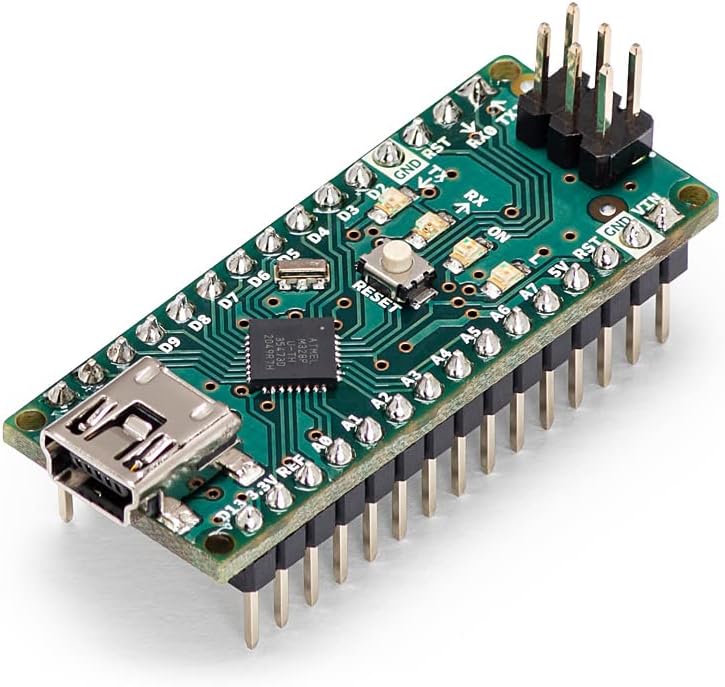
The official Arduino Nano stands as the gold standard for compact microcontrollers. It carries a 4.6 rating due to its rock-solid stability and extensive community support. This board offers the classic experience makers expect with proven performance across countless projects.
We may earn a commission when you buy through this link, at no additional cost to you.
Its ATmega328P chip provides sufficient power for most hobbyist and professional tasks. The 14 digital and 8 analog pins allow versatile interfacing with sensors and actuators. Full compatibility with the Arduino IDE ensures you can upload code without driver headaches.
While the mini USB port feels dated compared to modern USB-C, it remains functional. Lack of Wi-Fi means you need external modules for IoT projects. These trade-offs are acceptable given the board's reliability and seamless ecosystem integration.
Choose this board if you value stability and official support above all else. It is ideal for students learning electronics or engineers needing a trusted prototype platform. This is the safest bet for your next embedded design.
The long history of this board means almost every library works out of the box. Tutorials and forums are filled with solutions specific to this model.
Official boards maintain strict quality control ensuring voltage regulators and components meet safety standards. This reduces risk during testing and prototyping phases.
We may earn a commission when you buy through this link, at no additional cost to you.
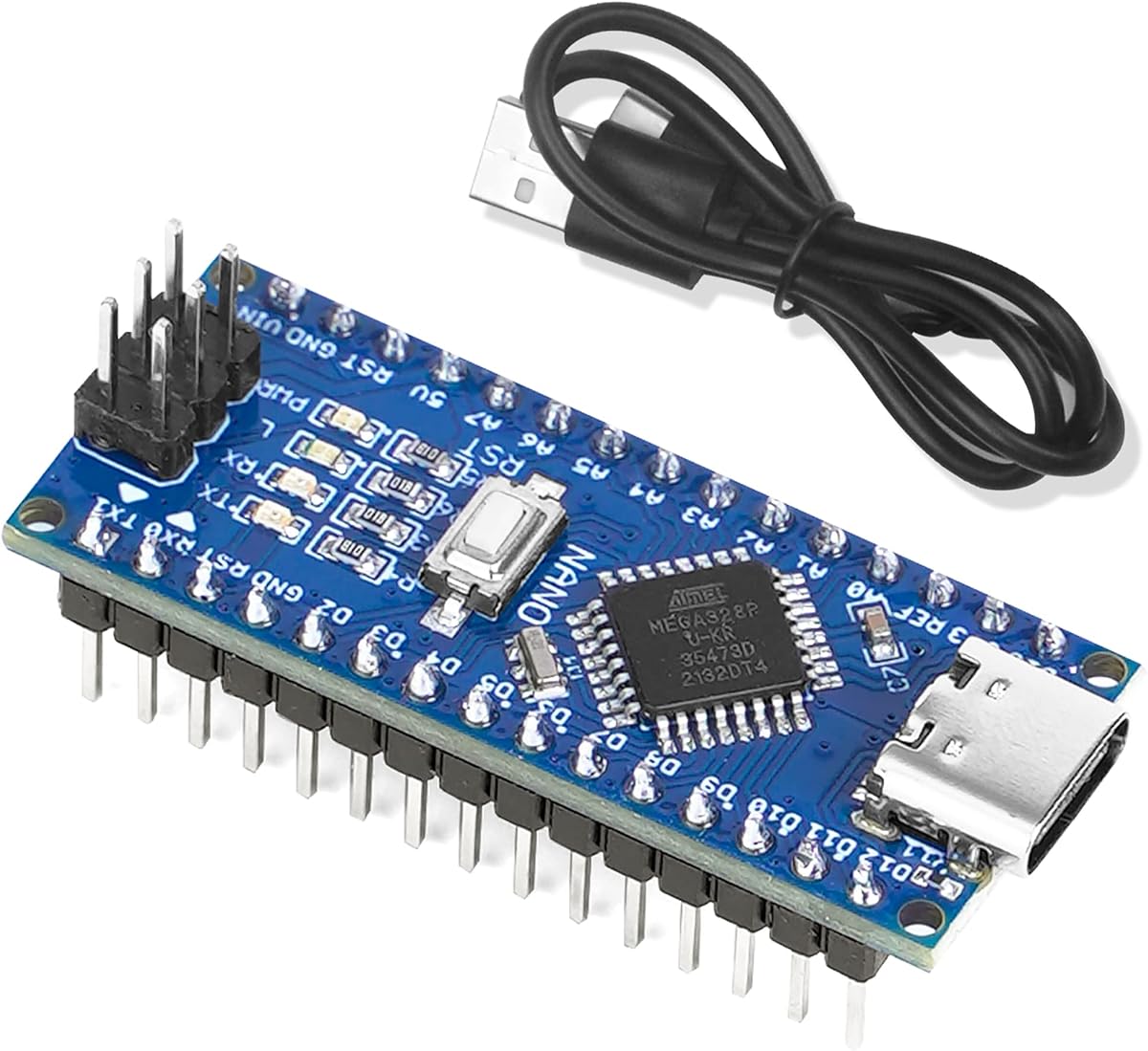
This dual pack offers excellent value for builders needing multiple units. It retains the classic Nano form factor but upgrades to a modern USB-C port. The CH340G chip ensures wide compatibility with Windows Mac and Linux systems.
We may earn a commission when you buy through this link, at no additional cost to you.
Having two boards means you can test code on one while deploying to another. The automatic power source detection simplifies wiring by removing jumper settings. Included cables reduce initial setup costs significantly.
Being third party, quality might vary slightly from official boards. You may need to install specific CH340 drivers before first upload. These minor inconveniences are outweighed by the cost savings for large projects.
Buy this kit if you are teaching a class or working on multi node projects. It is perfect for budget conscious hobbyists who need reliability without the premium price tag. Get started with extra boards for future expansion.
The shift to USB-C means you can use modern cables that are reversible and durable. This simplifies connections and reduces wear over time.
The board automatically selects the best power source whether connected via USB or external supply. This prevents conflicts during development and testing.
We may earn a commission when you buy through this link, at no additional cost to you.
The Nano ESP32 brings powerful wireless capabilities to the classic Nano form factor. Powered by the ESP32-S3 chip it handles complex tasks with ease. This is the top choice for modern IoT and connected device projects.
We may earn a commission when you buy through this link, at no additional cost to you.
You get 2.4GHz Wi-Fi and Bluetooth 5.0 without extra modules. The dual core processor allows running background processes while handling main logic. MicroPython support makes it accessible for developers who prefer Python over C.
Battery life is shorter than AVR boards due to radio usage. The pinout differs slightly from classic Nanos so check wiring carefully. However the added connectivity and performance justify these trade-offs for smart projects.
Select this board for smart home devices or remote sensors. It is perfect if you want to skip adding Wi-Fi modules manually. This is the future proof option for connected embedded systems.
Integrated radios reduce board size and wiring complexity significantly. You can deploy devices instantly without external antenna connections.
MicroPython allows rapid prototyping with simple code. This lowers the barrier for entry compared to traditional C/C++ environments.
We may earn a commission when you buy through this link, at no additional cost to you.
This triple pack from LAFVIN offers significant savings for bulk projects. Each board runs the reliable ATmega328P microcontroller ensuring consistent performance. It is a fantastic choice for workshops or group hobbyists needing multiple units.
We may earn a commission when you buy through this link, at no additional cost to you.
The CH340G chip facilitates communication with most operating systems smoothly. You receive cables to start programming immediately upon arrival. The compact design fits easily into tight enclosures and breadboards.
Using the older USB connection requires specific drivers for some systems. There is no native wireless capability so external modules are needed. These are minor drawbacks considering the volume and reliability provided.
Order this for classroom setups or large sensor networks. It gives you enough units to distribute without breaking your budget. This is the practical choice for scale and distribution.
Getting three boards in one package reduces shipping costs and unit prices. This makes it ideal for educational environments.
The CH340G chip is widely supported across major OS platforms. Drivers are easy to find and install for seamless setup.
We may earn a commission when you buy through this link, at no additional cost to you.
The official Arduino Nano is the reference design for compact embedded projects. It balances size and power effectively for prototyping tasks. You can trust this board to perform consistently across years of use.
We may earn a commission when you buy through this link, at no additional cost to you.
Its I/O layout is standard and well documented in thousands of tutorials. The analog inputs handle sensors with good precision for most tasks. Compatibility with the official IDE ensures code runs without modification.
The physical port is older than modern standards which limits cable choices. You may find it lacks speed features found in newer boards. However its simplicity and reliability remain unmatched for core projects.
Pick this if you need absolute confidence in component quality. It suits professionals who value support over new features. This is the dependable choice for critical applications.
As an official product it meets strict quality assurance standards. Components are sourced to ensure longevity and safety.
Shields and accessories designed for the Nano fit perfectly. This saves time finding compatible expansion modules.
We may earn a commission when you buy through this link, at no additional cost to you.
This ELEGOO kit removes the hassle of soldering header pins manually. All three boards come ready to plug into breadboards immediately. It is designed for rapid prototyping and testing workflows.
We may earn a commission when you buy through this link, at no additional cost to you.
The USB-C cable supports modern power standards effectively. Firmware runs standard AVR sketches without modification. You get immediate usability which speeds up development cycles significantly.
The CH340 chip requires driver installation on some systems. It lacks wireless features so external modules are needed for connectivity. These are minor issues given the time saved on soldering.
Choose this kit for fast projects or educational demos. It eliminates assembly steps allowing you to focus on logic. This is the efficient pick for makers wanting instant results.
Presoldered headers ensure stable electrical contacts from the start. This prevents poor connections caused by loose pins.
Skipping soldering allows you to jump straight to coding. This accelerates prototyping and testing iterations.
We may earn a commission when you buy through this link, at no additional cost to you.
The Nano Every upgrades the classic design with a new AVR chip. It offers significantly more memory for complex code. This makes it suitable for tasks that exceed standard Nano capacity.
We may earn a commission when you buy through this link, at no additional cost to you.
The 48KB flash allows larger programs without external storage. USB-C ensures reliable power and programming on new computers. Performance is improved over older variants for real-time applications.
Some libraries may need updates for the new architecture. Voltage requirements differ slightly so check power supply needs. These are manageable for those seeking better specs.
Upgrade to this for data logging or complex control logic. It bridges the gap between classic and modern needs. This is the powerful choice for advanced embedded work.
Double the RAM allows for better variable handling. This is crucial for multitasking and large data buffers.
The USB-C connector aligns with current industry standards. This future proofs your setup against older cable types.
We may earn a commission when you buy through this link, at no additional cost to you.
This set provides three boards ready for immediate use. It includes cables for easy power and programming connections. The USB-C port is a welcome modern addition for durability.
We may earn a commission when you buy through this link, at no additional cost to you.
Auto switching between power sources simplifies wiring during experiments. The microcontroller handles standard Arduino projects reliably. This kit is great for testing multiple prototypes simultaneously.
Drivers may need to be installed manually on your computer. Support is limited compared to official products. These minor steps are worth the savings for large projects.
Select this for group classes or testing farms. It offers excellent value for bulk acquisition. This is the smart pick for distributed hardware needs.
The board detects the highest voltage source automatically. This prevents conflicts when plugging into multiple power inputs.
Buying three units at once reduces shipping costs. This is ideal for teams needing many nodes.
We may earn a commission when you buy through this link, at no additional cost to you.
The R4 introduces a new Renesas chip with massive memory. It supports advanced features like Qwiic connectors for sensors. This board is designed for professional and educational use.
We may earn a commission when you buy through this link, at no additional cost to you.
Headers are pre soldered saving assembly time. The RGB LED provides visual feedback for debugging. It integrates well with modern IDEs and tools.
Cost is higher than older AVR variants. The ecosystem is newer which may limit legacy library use. These factors are acceptable for cutting edge projects.
Buy this for serious engineering or classroom innovation. It provides the tools needed for complex embedded designs. This is the future ready option for builders.
Standard Qwiic connectors allow easy plug-and-play sensor integration. This reduces wiring errors during setup.
The programmable LED helps indicate status without extra parts. This simplifies debugging processes significantly.
We may earn a commission when you buy through this link, at no additional cost to you.
This module is a compact version of the standard Nano. It offers flexibility with USB-C power options. The OSOYOO brand ensures reliable performance at a reasonable cost.
We may earn a commission when you buy through this link, at no additional cost to you.
You can use USB-C to USB-A or USB-C to USB-C cables. The power sensing feature simplifies connections for testing. It fits perfectly into tight spots in projects.
Drivers may be needed for the USB interface chip. As a single unit it lacks bulk discounts. These are standard for this form factor.
Choose this for portable devices or limited space builds. It balances cost and modern connectivity well. This is the versatile pick for mobile prototypes.
Support for different USB-C cable types offers versatility. This adapts to various power sources easily.
Its small size fits into restricted spaces effortlessly. This allows for sleek and compact designs.
We may earn a commission when you buy through this link, at no additional cost to you.
Selecting the right Nano board requires understanding your specific project needs. From microcontroller speed to connectivity options this guide covers the essential factors.
The chip determines speed and memory. AVR chips like ATmega328P are standard while ESP32 offers Wi-Fi. Renesas RA4M1 brings high memory.
Look for specs that match your code complexity and performance needs.
USB-C is now standard for durability and power. Older Mini USB is cheaper but less convenient. Consider your cable preferences.
Modern ports future proof your setup and simplify connections.
Flash and RAM sizes limit program complexity. Higher capacity allows more features without external storage. Check requirements for complex logic.
Choose boards with ample memory for growth.
Official boards have vast libraries and tutorials. Third party variants may require specific drivers. Community help reduces debugging time.
Prioritize boards with active forums for assistance.
Size matters for wearable or embedded projects. Pre soldered headers save assembly time. Castellated edges suit PCBs.
Pick dimensions that fit your enclosure requirements.
Budget kits offer multiple units. Premium models bring advanced features. Balance cost with long term needs.
Consider total value rather than just unit price.
Install the necessary drivers for your board's USB chip like CH340. Connect to your computer and select the correct port in the IDE.
Avoid overloading pins with high current components. Use appropriate voltage regulators to protect the board during testing phases.
Store boards in anti-static bags to prevent electrical damage. Keep them in a dry environment to ensure longevity.
Many third party boards use CH340 chips requiring specific drivers. Official boards usually install seamlessly. Check device manager for serial port recognition.
Newer models support USB-C power and data. Older boards may only support Mini-USB. Check port type before buying cables.
Classic AvRs need external modules for Wi-Fi. ESP32 variants have built-in radios. Choose based on connectivity needs.
Bulk packs save money on shipping and unit price. They are ideal for testing or classrooms. You get more for your budget.
Most reputable brands match official quality. They offer better value though support varies. Read reviews for specific models.
Use regulated 5V or 7-12V external power. The board switches automatically. Ensure stable power for sensors.
We explored ten top options ranging from classic AVR to modern ESP32 and Renesas boards. Each offers distinct advantages for different needs and budgets.
Prioritize memory and connectivity based on your project scope. For beginners official support ensures smooth setup.
Always check current prices before buying as they fluctuate. Find the best fit for your next build today.