
EBOOT 30 Pieces Photoresistor
4.6Editor score
Thirty photoresistors included
Five millimeter package size
Low cost per unit
This guide compares the top light sensors for Arduino projects including LDR modules photodiodes and digital sensors to help you choose the right component for
Light sensors are essential components for any Arduino project that requires environmental awareness or automation. Whether you are building a smart home device or a simple night light, choosing the right sensor ensures reliable performance and accurate data readings for your circuit.
We compared ten highly rated light sensor modules available on Amazon focusing on accuracy ease of use and compatibility with popular microcontrollers. Our analysis covers analog and digital options ranging from simple photoresistors to advanced ambient light sensors with I2C interfaces.
Each pick in this list highlights key features strengths and potential limitations to help you make an informed decision for your specific project requirements. Please note that product availability and pricing may change over time so always check the current listing before purchasing.
4.6Editor score

4.4Editor score
5.0Editor score
The following table provides a side-by-side overview of the ten selected light sensor modules. It highlights key specifications and output types to help you quickly identify the best match for your Arduino or ESP32 project requirements.


This module combines a standard LDR with an LM393 comparator to provide both analog and digital outputs. It has a solid rating and is designed for easy integration with Arduino and ESP32 projects requiring automatic light control.
We may earn a commission when you buy through this link, at no additional cost to you.
The inclusion of the comparator means you get a clean digital switch signal when light crosses a set threshold. This is ideal for triggering relays or alarms without complex code. The analog output also allows for gradual adjustments and monitoring.
While the potentiometer allows for precise tuning of the brightness threshold, it can be fiddly for beginners. You need to ensure you have a stable power supply to avoid false triggers due to voltage fluctuations in the circuit.
Anyone needing a reliable light switch for automation should buy this module. It offers the best balance of simplicity and flexibility for most hobbyist projects involving daylight harvesting or night lighting systems.
The dual output design supports both binary triggers and continuous monitoring depending on your project needs.
With over 15mA driving strength it can directly interface with many standard relays and indicators.
We may earn a commission when you buy through this link, at no additional cost to you.
The GY-302 module uses the BH1750FVI chip to deliver high precision light intensity measurements via an I2C interface. It is perfect for projects where you need exact lux values rather than simple on-off switching.
We may earn a commission when you buy through this link, at no additional cost to you.
Its compact size makes it easy to fit into tight spaces on a breadboard or custom PCB. The digital output eliminates noise issues common with analog sensors ensuring stable readings across various lighting conditions.
The main downside is that it requires an I2C library which adds a small amount of setup time compared to reading an analog pin. However this is a minor trade-off for the increased accuracy and simplicity of wiring.
Choose this module if you need professional grade light data for weather stations or smart lighting systems. It is the best choice for precise digital light sensing in Arduino and ESP32 environments.
The BH1750 chip provides direct digital output that matches human eye sensitivity for accurate ambient light data.
This module works with any microcontroller that supports I2C communication protocols without additional circuitry.
We may earn a commission when you buy through this link, at no additional cost to you.
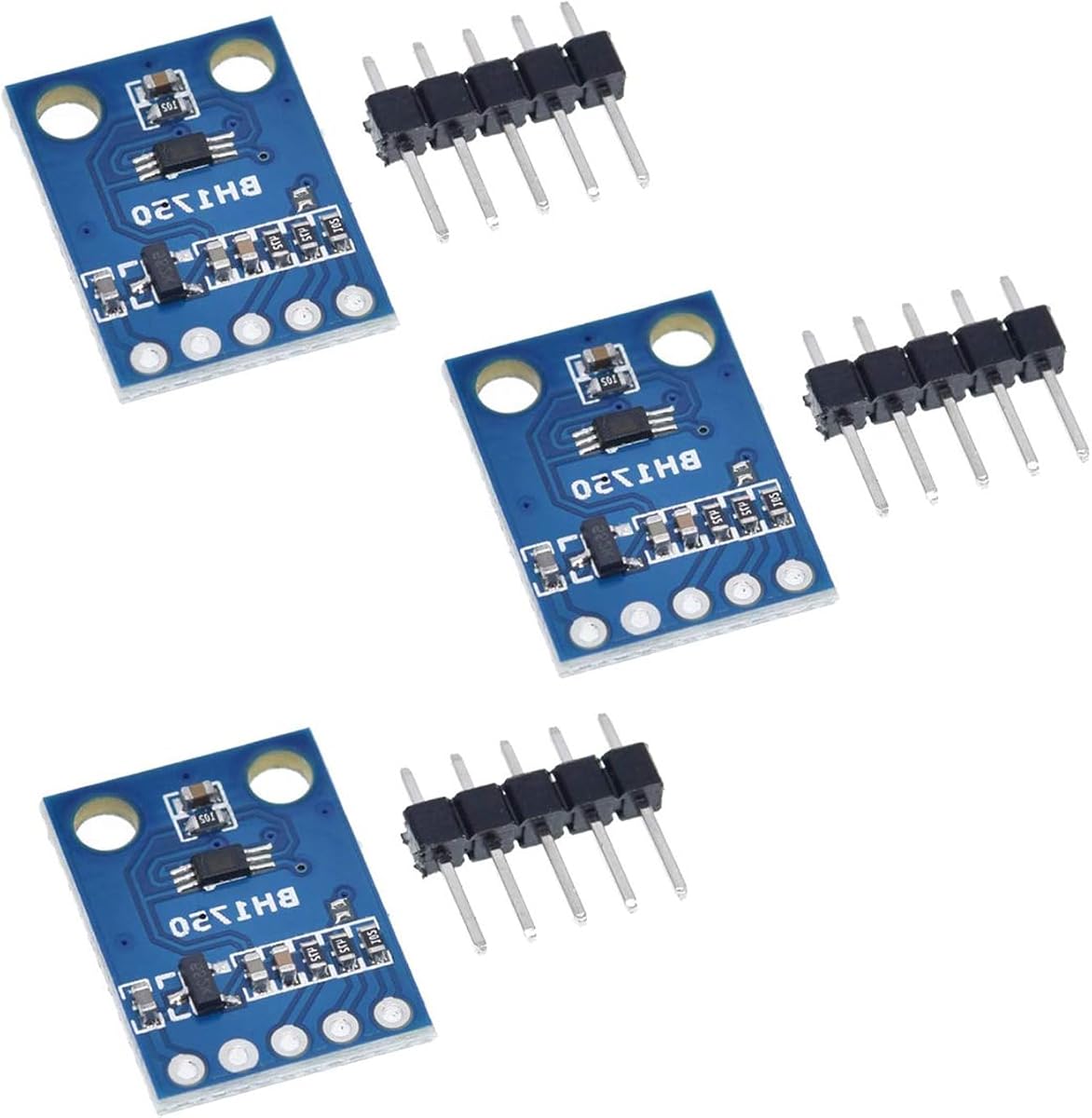
This pack from HiLetgo offers a similar digital experience to the previous option with a focus on original ROHM chips. The module is designed for high quality light detection suitable for industrial or serious hobbyist applications.
We may earn a commission when you buy through this link, at no additional cost to you.
The dimensions are optimized for small boards making it a good fit for wearable tech or compact IoT devices. It runs on a wide voltage range so you can use it with 3.3V ESP8266 or 5V Arduino without issue.
Some users might find the pin spacing slightly tricky when using standard female headers. You may need to adapt the connections or solder wires directly if you do not have compatible jumper cables on hand.
Buy this if you want a reliable digital light sensor at a competitive price. It is an excellent choice for building multiple devices or bulk projects where cost and quality are both priorities.
Using the original ROHM BH1750FVI chip ensures consistent performance and long term reliability for your circuits.
The small footprint allows for easy integration into tight enclosures without sacrificing sensor accuracy.
We may earn a commission when you buy through this link, at no additional cost to you.
Unlike standard LDRs this module uses a photodiode which offers better directionality for light detection. This makes it ideal for projects where you need to sense a specific light source rather than general ambient light.
We may earn a commission when you buy through this link, at no additional cost to you.
The module features both digital and analog outputs giving you flexibility in how you process the light data. The blue digital potentiometer allows you to tweak the sensitivity so you can fine tune the trigger point.
Because the sensor is directional you may need to position it carefully to get consistent readings. This can be a limitation for ambient light monitoring but it is a strength for light tracking or beam break systems.
Select this module for smart car projects or automated systems needing specific light targeting. It provides a robust solution for detection tasks that require precision and a clear line of sight.
The directional design ensures the sensor only responds to light from the front reducing false triggers from side sources.
Built-in fixing bolt holes make it simple to mount the sensor securely in any enclosure or chassis.
We may earn a commission when you buy through this link, at no additional cost to you.
This pack provides thirty discrete photoresistors that you can use to build your own light sensor circuits. It is the most affordable option available and is perfect for those who want full control over their sensor design.
We may earn a commission when you buy through this link, at no additional cost to you.
Each resistor is a standard five millimeter package that is easy to solder into custom PCBs. The electrical specs include a maximum voltage of 150 volts and a resistance range that covers most daylight conditions.
You will need to design the rest of the circuit yourself including voltage dividers and filters if you want a clean signal. This adds complexity but allows you to tailor the performance exactly to your project needs.
Buy this if you are building multiple prototypes or need cheap components for mass production. It is the best choice for learning how light sensors work and for projects with tight budget constraints.
With thirty units in one pack you can afford to experiment with different sensor placements and configurations easily.
The 5mm package is compatible with standard through-hole breadboards and PCB footprints without modification.
We may earn a commission when you buy through this link, at no additional cost to you.
This is a convenient pack of ten pre-assembled modules that save you the trouble of building your own sensor circuits. Each unit includes a comparator chip to convert light levels into usable digital signals for your microcontroller.
We may earn a commission when you buy through this link, at no additional cost to you.
The modules are compact and designed to work directly with 5V or 3.3V logic. You can use them to trigger relays or read analog values for a wide range of automated lighting applications.
While having ten modules is great for classrooms or bulk builds the individual cost may add up compared to buying raw components. You should factor in shipping and handling when calculating the total project cost.
Choose this pack for educational workshops or prototyping multiple stations. It offers a reliable and quick way to deploy light sensing capabilities across many different setups without custom electronics.
These modules come fully assembled so you can connect power and signal lines immediately without soldering.
Getting ten pieces in one order reduces the effort needed to source parts for larger or multiple projects.
We may earn a commission when you buy through this link, at no additional cost to you.
This module is marketed specifically for Arduino and ESP32 users with a focus on ease of use. The package includes tutorials that help you get started quickly with light detection logic on your preferred board.
We may earn a commission when you buy through this link, at no additional cost to you.
The threshold can be adjusted via a potentiometer which lets you set the exact light level that triggers the digital output. This is useful for applications like automatic night lights or security alarms.
The supply voltage range is flexible supporting both 3.3V and 5V systems. This ensures you can integrate it into almost any modern microcontroller setup without worrying about logic level issues or burnout.
Buy this if you need a quick start kit for smart home or IoT projects. The included tutorials make it a good choice for beginners who want to learn how to use light sensors.
Tutorials provided for Arduino and ESP32 simplify the learning curve for first time users of light sensing.
The built-in potentiometer allows you to calibrate the sensor to your specific environment conditions easily.
We may earn a commission when you buy through this link, at no additional cost to you.
This is the largest pack available offering fifty discrete LDRs for your projects. It is an excellent option for bulk production or for projects that require many independent light sensors across a large area.
We may earn a commission when you buy through this link, at no additional cost to you.
The GL5516 type is a standard reliable component with a resistance of 0.2 MOhm in the dark and 5 to 10 KOhm in bright light. This ratio provides a strong signal change for simple detection circuits.
Because these are raw components you must build a voltage divider to read them with an analog pin. This requires basic electronics knowledge but allows for full customization of the sensor sensitivity and response time.
Choose this if you have a large number of sensors to deploy or need spare parts for maintenance. It is the best value for projects requiring high quantities of light detection components.
The difference between dark and bright resistance ensures a strong signal change that is easy to detect.
The GL5516 is a widely used standard component known for consistent performance across many applications.
We may earn a commission when you buy through this link, at no additional cost to you.
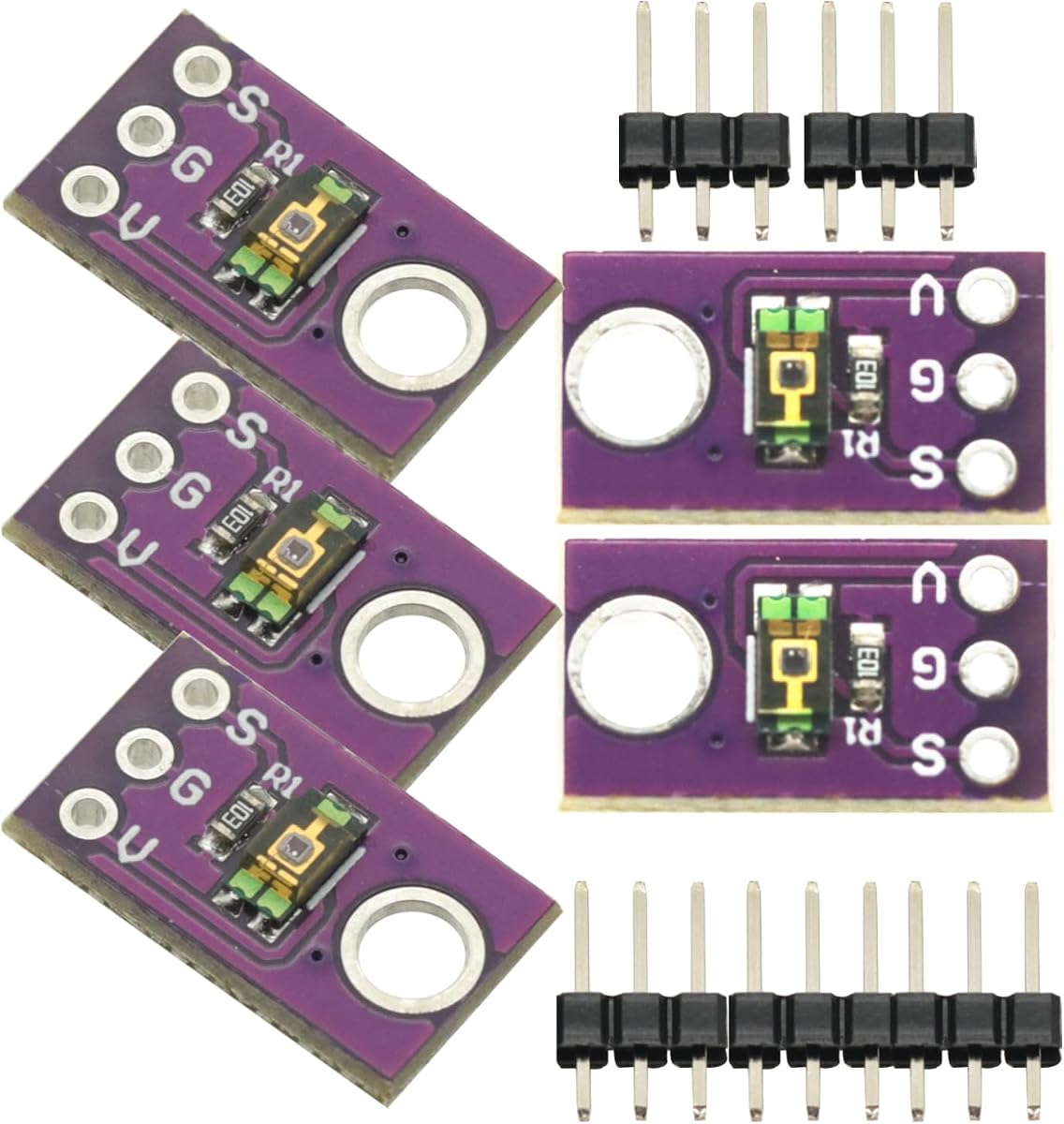
This is a professional grade ambient light sensor designed for precise control of displays and industrial lighting. It has a perfect user rating which reflects its high quality and reliability in demanding environments.
We may earn a commission when you buy through this link, at no additional cost to you.
The sensor is optimized for detecting ambient light to automatically dim displays or keypads which saves power and reduces eye strain. It is suitable for industrial applications where stability and consistency are critical.
The main trade-off is the higher cost compared to standard modules. However the performance and reliability justify the expense if your project requires accurate light detection for critical systems or premium products.
Buy this for high end smart home displays or industrial control panels. It is the best choice for applications where precision and professional quality are more important than cost.
The sensor is tuned to match human perception for smooth and comfortable screen brightness adjustments.
Designed for industrial settings it provides consistent readings even under challenging environmental conditions.
We may earn a commission when you buy through this link, at no additional cost to you.
This module is optimized for smart car and similar projects requiring robust light detection. It uses a wide voltage comparator to ensure stable operation even with varying power supplies common in vehicle environments.
We may earn a commission when you buy through this link, at no additional cost to you.
With both digital and analog outputs you can use it for immediate alerts or for gradual control of systems like headlights. The stability of the LM393 chip ensures reliable performance in noisy electrical environments.
The pack size is limited to three units which is enough for prototyping but may require extra orders for larger builds. This is a minor constraint considering the specialized focus on automotive and mobile applications.
Select this for vehicle based automation or smart home prototypes. It provides a stable and versatile solution for projects where electrical noise and voltage fluctuation are concerns.
The LM393 comparator provides clean signal processing that resists noise interference effectively.
You can choose between direct switching or analog monitoring based on your project requirements easily.
We may earn a commission when you buy through this link, at no additional cost to you.
Selecting the right light sensor depends on your specific project needs and technical skills. This section covers the key factors to consider before making your purchase to ensure compatibility and performance.
Light sensors come in various types including photoresistors LDRs photodiodes and ambient light sensors like BH1750. LDRs are simple and cheap but slower photodiodes are faster and more directional and ambient sensors offer digital precision.
Choose a photoresistor for simple on off tasks a photodiode for beam detection or a digital module for precise lux measurements.
Modules provide either analog voltage or digital switch outputs. Analog outputs allow you to read a range of light levels while digital outputs trigger at a set threshold which is better for automation and alarms.
If you need to dim lights gradually choose an analog output. If you need a simple night light choose a digital output.
Ensure the module operates at the voltage of your microcontroller. Most Arduino boards use 5V but ESP32 and ESP8266 use 3.3V. Many modules support both but it is vital to check the specs to avoid damage.
Look for modules explicitly stating a 3.3V to 5V range for maximum compatibility with modern boards.
Digital sensors like the GY-302 provide higher accuracy than simple LDR modules which can vary by batch. If your project relies on exact light levels for calibration use a dedicated ambient light sensor.
For simple detection basic modules are sufficient and more cost effective for bulk projects.
Some modules use analog pins which are plentiful on most boards while others use I2C which uses fewer pins but requires libraries. Consider how many sensors you plan to connect to your system.
Use I2C if you need to connect multiple sensors to save analog pin space.
The physical footprint of the module matters for tight enclosures or wearable projects. Standard modules are roughly 20mm by 15mm but some compact ones are smaller. Always check dimensions before ordering.
Measure your available space to ensure the module fits comfortably without blocking other components.
Sensors often come in packs of 3 6 or 50. If you are building a single prototype a small pack is fine. If you are building a class or mass producing choose a bulk pack to save on unit cost.
Buy in bulk if you plan to build multiple devices or need spare parts for repairs.
Some modules include extra features like potentiometers for threshold adjustment or mounting holes for easy installation. These can simplify your build and reduce the need for extra wiring or brackets.
Prioritize modules with adjustment pots if you want to fine tune sensitivity without changing code.
Connect the module to your Arduino or ESP32 using the appropriate pins. For analog modules connect the output to an analog input pin and for digital modules use a digital input pin. Ensure the VCC and GND are connected correctly to match your board's voltage.
Install the necessary libraries if you are using an I2C sensor. For basic modules you can read the analog value using the standard analogRead function or check digital values with digitalRead. Write a simple test sketch to confirm readings change with light.
Keep the sensor lens clean and free from dust to maintain accuracy. If using a potentiometer adjust it while the sensor is in the target lighting condition to set the correct threshold. Avoid exposing the module to temperatures beyond its rated range.
Yes most of these modules are compatible with the ESP32 since they support 3.3V logic. Always check the power specifications before connecting to ensure you do not exceed voltage limits. Using a 3.3V regulated supply is recommended for stable operation with ESP32.
Analog output provides a continuous voltage that varies with light intensity while digital output provides a binary high or low signal based on a threshold. Choose analog for measuring light levels and digital for simple on off automation tasks.
If you are using a raw LDR you need a resistor to form a voltage divider. Most modules include this resistor internally so you do not need to add one unless you are building your own sensor circuit from scratch.
Calibration involves adjusting the potentiometer on the module until the desired light level triggers the output. Use a multimeter to verify the voltage levels during adjustment to ensure consistent results across different lighting conditions.
Yes you can connect multiple analog sensors to different analog pins or use I2C sensors which share the same SDA and SCL pins. Just ensure you do not exceed the power capacity of your Arduino board when powering multiple modules.
Most modules are not weatherproof so direct outdoor exposure is not recommended without a protective enclosure. You can place the module inside a transparent housing to allow light in while protecting it from rain and dust.
We reviewed ten top light sensors for Arduino including budget photoresistors digital BH1750 modules and professional ambient sensors. Each option offers unique advantages depending on whether you need simple switching or precise measurement.
Prioritize your project requirements such as accuracy size and budget before buying. If you need simple automation the WWZMDiB module is a great choice while the TEMT6000 offers premium precision for complex displays.
Always verify the latest product details and pricing on Amazon before purchasing. Your specific needs and availability may vary so choose the option that best fits your current hardware and design constraints.