
Anysecu SF-103
4.2Editor score
Affordable price point
Wide frequency coverage
Easy four button control
This guide compares ten top frequency counter for ham radio models to help you choose the right tool for accurate signal measurement and radio maintenance
Choosing a reliable frequency counter for ham radio is essential for enthusiasts who need precise signal measurements. These tools help verify transmitter outputs and ensure compliance with band plans across various frequencies.
We evaluated ten distinct models based on accuracy, range coverage, ease of use, and build quality. Our comparison includes portable handheld units and advanced spectrum analyzers designed for different testing scenarios.
Each pick highlights unique strengths for specific user needs from budget friendly options to professional grade instruments. Keep in mind that pricing and availability may vary so check current listings before purchasing.
4.2Editor score

4.1Editor score

5.0Editor score
The following table provides a side by side comparison of all ten frequency counters. Review the key specifications to find the model that best fits your specific radio testing requirements.


The Surecom SF401 Plus is a versatile frequency counter designed for handheld radio testing. It measures continuous carrier signals across a broad range from 27MHz up to 3000MHz.
We may earn a commission when you buy through this link, at no additional cost to you.
Its TCXO technology ensures stable measurements even when temperatures fluctuate significantly. The device includes both VHF and UHF antennas for immediate use on common amateur bands.
While it lacks advanced spectrum analysis features it excels at basic frequency verification. The signal strength indicator helps identify strong transmitters without complex setup procedures.
This model is ideal for hobbyists needing a reliable tool for routine checks. It balances performance and cost effectively for most general ham radio applications.
The TCXO crystal oscillator maintains accuracy between -45C and 65C ensuring consistent readings in various environments.
Package includes dedicated VHF and UHF antennas saving users from buying separate accessories for common bands.
We may earn a commission when you buy through this link, at no additional cost to you.
This variant of the SF401 Plus offers similar capabilities with a focus on decoder functionality. It is designed specifically for counting continuous wave signals from two-way radios.
We may earn a commission when you buy through this link, at no additional cost to you.
The inclusion of CTCSS and DCS decoding adds value for users working with private line systems. It helps identify sub audio tones alongside the main carrier frequency.
Operation remains straightforward with intuitive button controls. The small form factor allows it to fit easily into a field kit or tool bag.
Ham operators seeking basic frequency validation will find this unit sufficient. It serves well for quick checks without requiring bench top equipment.
Built in decoders allow identification of tone squelch codes which is useful for repeater access verification.
Four buttons provide range selection and basic control without complex menus or software dependencies.
We may earn a commission when you buy through this link, at no additional cost to you.
The FC-2800M brings digital mode support to the frequency counter category. It is suitable for measuring signals from CB to amateur bands and DMR radios.
We may earn a commission when you buy through this link, at no additional cost to you.
Users can select between two main ranges covering low frequency up to 2800MHz. The low PPM crystal time base ensures high accuracy for critical measurements.
A two year warranty provides peace of mind regarding product longevity. This suggests confidence in build quality from the manufacturer.
This unit is a strong candidate for users needing DMR compatibility at an affordable price. It bridges the gap between basic analog counters and expensive analyzers.
Specifically designed to count continuous wave signals from modern digital two-way radio systems effectively.
Switchable ranges allow optimized measurement for both VHF and UHF bands without unnecessary complexity.
We may earn a commission when you buy through this link, at no additional cost to you.
The TinySA offers a visual spectrum view which is a significant upgrade from simple numeric counters. It covers MF through UHF bands with selectable resolution bandwidth.
We may earn a commission when you buy through this link, at no additional cost to you.
The 2.8 inch color touchscreen makes navigating scan points intuitive. This device functions as both a receiver and a signal generator for troubleshooting.
Connectivity to Windows or Linux allows for remote analysis and data logging. This expands its utility beyond field use into detailed station maintenance.
Enthusiasts wanting to see interference sources will appreciate this tool. It provides deep insights into the RF environment at an entry level price.
See interference signals graphically rather than just seeing a single frequency number on a display.
Internal calibration source allows self testing to ensure accurate readings without external references.
We may earn a commission when you buy through this link, at no additional cost to you.
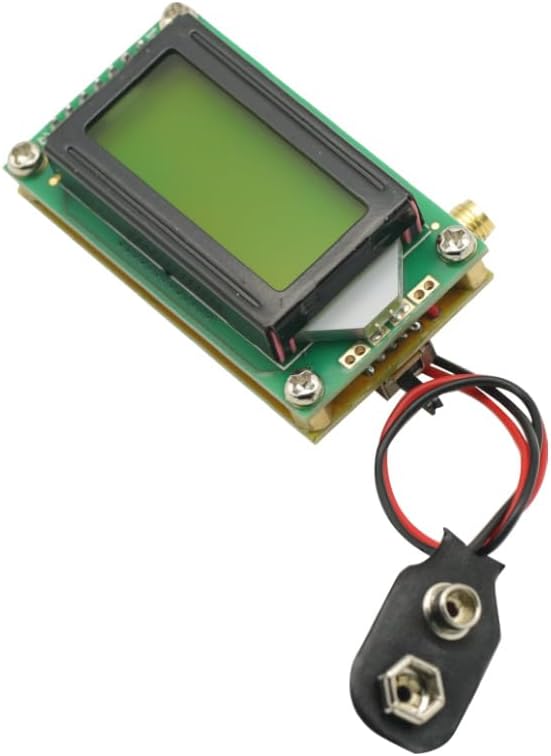
This handheld counter focuses strictly on VHF and UHF segments common for local radio communication. It is small enough to pocket easily while traveling.
We may earn a commission when you buy through this link, at no additional cost to you.
The one button design simplifies operation for quick checks. You simply press to test and next button to cycle through testing after display.
Powered by a standard 9V battery it avoids proprietary charging issues. This ensures you can replace power sources anywhere in the field.
For users needing a simple tool for specific bands this is highly effective. It minimizes complexity for those who only work on local repeaters.
Eliminates complex menus to provide immediate frequency feedback with a single action.
Uses widely available 9V batteries ensuring long term usability without charging stations.
We may earn a commission when you buy through this link, at no additional cost to you.
The Anysecu SF-103 is an upgraded version of the classic SF401 design. It offers broad frequency coverage from 2MHz to 2.8GHz at a low cost.
We may earn a commission when you buy through this link, at no additional cost to you.
Its simple four button interface makes it accessible for beginners. The unit covers most frequencies found in modern two way radios.
Maintenance personnel can rely on it for routine signal strength and frequency tests. It is a practical tool for general wireless enthusiast tasks.
If you need a no frills counter without spending much this is ideal. It balances performance and cost better than most competitors in this range.
Provides essential frequency measurement capabilities at a very accessible price point for hobbyists.
From low MHz to UHF the ranges cover almost all common two way radio requirements.
We may earn a commission when you buy through this link, at no additional cost to you.
This handheld unit features a temperature compensated oscillator for improved accuracy. It is designed to measure frequencies across most VHF and UHF bands.
We may earn a commission when you buy through this link, at no additional cost to you.
Battery level indication helps prevent unexpected shutdowns during critical measurements. The four button control remains intuitive for quick adjustments.
Caution is needed as direct antenna output can damage the device. Users should ensure signal levels stay within the safe input range.
For ham radio calibration needs this offers stable readings in a small package. It is a reliable choice for field testing and station maintenance.
TCXO maintains accuracy between -45C and 65C ensuring reliable readings in all weather.
Display shows battery status so you are not caught off guard by low power.
We may earn a commission when you buy through this link, at no additional cost to you.
This module is intended for integration into custom projects or hobbyist kits. It covers frequencies up to 500MHz with a basic digital display.
We may earn a commission when you buy through this link, at no additional cost to you.
It uses standard PCB materials which are robust enough for typical electronic testing. The package includes the core module for immediate use.
Accuracy is limited to the second decimal digit which is sufficient for general checks. Users should expect less precision compared to handheld commercial units.
DIY electronics builders can use this to test oscillators or circuits. It serves a niche role where cost and integration matter more than absolute precision.
Designed to be embedded into larger circuits or test benches rather than used standalone.
Simple LCD shows frequency but lacks advanced features like signal strength bars.
We may earn a commission when you buy through this link, at no additional cost to you.
This board offers basic frequency counting capabilities for up to 500MHz. It is ideal for simple ham radio kits or educational electronics projects.
We may earn a commission when you buy through this link, at no additional cost to you.
Low power consumption makes it suitable for battery powered custom devices. The LCD provides a clear readout for visual verification of signal frequencies.
While less accurate than commercial handhelds it fulfills the basic role of counting cycles. It is a practical choice for budget conscious builders.
Use it for general checks where high precision is not critical. It helps students and hobbyists understand signal behavior without high costs.
Designed to consume minimal power making it suitable for portable custom electronics projects.
LCD screen displays frequency but lacks advanced tuning or stability indicators.
We may earn a commission when you buy through this link, at no additional cost to you.
The TinyGTC is a professional grade frequency counter with GPS disciplining for extreme precision. It offers 40ps resolution for accurate frequency and phase measurements.
We may earn a commission when you buy through this link, at no additional cost to you.
Two independent counters allow simultaneous measurement of two signals or time intervals. The device supports long term stability via built-in GPSDO and TCXO.
Advanced features include FFT analysis and ADEV measurements directly on the touchscreen. Data logging to SD cards supports professional reporting requirements.
This tool is best for serious calibration tasks and SDR tuning. While expensive it delivers laboratory grade accuracy in a portable field unit.
Locked to GPS the oscillator maintains precision over time without drifting like standard crystals.
Measure two channels simultaneously to compare frequencies or calculate phase differences efficiently.
We may earn a commission when you buy through this link, at no additional cost to you.
Selecting the right frequency counter depends on your specific testing needs and budget. Consider these factors to ensure you get a reliable tool for your ham station.
Ensure the device covers the bands you use most. Most handheld units cover 2MHz to 3GHz which is sufficient for VHF UHF and HF signals. Check if it supports HF or just VHF UHF.
Choose a range that matches your primary activities.
TCXO technology provides better temperature stability than standard quartz. For precision work look for units with low ppm error rates. Stability is critical for calibration tasks.
Prioritize TCXO or GPSDO for accurate long term use.
If you use CTCSS DCS tones verify the counter has decoders built in. This allows you to see sub audio signals alongside the carrier. It simplifies repeater verification work.
Look for explicit mention of CTCSS DCS decoder in specs.
Handheld units should be small and light for field use. Check battery type to ensure availability in the field. Portability matters if you test remotely often.
Select compact designs with standard battery options.
Digital displays should show numbers clearly in bright light. Advanced units offer touchscreens for interactive control. Readability impacts how fast you can work in conditions.
Opt for clear digital displays with good contrast.
Durable housing protects internal components from drops. Metal or high quality plastic cases last longer. Check input limits to prevent damage from strong RF.
Pick rugged builds with safe input ranges.
Some units offer signal generators or spectrum views. Analyzers help visualize interference instead of just frequency numbers. These features expand utility for troubleshooting.
Consider units with extra tools like generators.
Basic counters are very affordable while professional units cost more. Match the price to your actual needs to avoid overpaying. Balance features with your budget constraints.
Select the tier that fits your budget.
Begin by powering on the unit and allowing it to warm up for a few minutes. This helps internal oscillators stabilize and ensures accurate readings during measurement.
Position the antenna close to the source but avoid direct contact with high power transmitters to prevent device damage. Use attenuators if necessary for strong signals.
Clean the exterior with a soft dry cloth and store in a protective case when not in use. Regularly check battery levels to ensure readiness for field testing.
A frequency counter measures the exact frequency of a radio signal. It helps operators verify their transmitter output and ensure they are transmitting on the correct frequency.
A spectrum analyzer visualizes interference while a counter just gives a number. Use a counter for basic frequency checks but consider an analyzer for complex signal analysis.
Portable units with TCXO oscillators typically achieve accuracy within a few parts per million. This is sufficient for most amateur radio verification tasks.
Many modern counters support frequencies starting from 2MHz which covers part of the HF spectrum. Check the minimum frequency spec to confirm HF compatibility.
Avoid connecting the counter directly to high power antenna outputs. Use attenuators or keep the device at a safe distance from the transmitter.
GPSDO uses satellite signals to discipline the internal clock for extreme long term stability. This is vital for high precision calibration work requiring exact frequency reference.
The Surecom SF401 Plus and Anysecu SF-103 offer reliable solutions for general maintenance. The TinyGTC stands out for professional applications requiring GPS disciplined accuracy.
Prioritize frequency range and stability based on your typical testing scenarios. Selecting the right tool ensures your measurements remain accurate over time.
Always verify current availability before purchase as models may update. A good frequency counter is a lasting investment for any serious radio operator.