
Sipeed Tang Nano 20K
4.5Editor score
Affordable open source design
Built-in RISC-V Linux
RGB LCD and JTAG port
Discover the top Fpga Retro Consoles for 2026. This guide compares performance, compatibility, and value to help you choose the perfect retro gaming system
Fpga Retro Consoles offer unparalleled accuracy and performance for classic gaming enthusiasts seeking authentic hardware replication without the hassle of original consoles.
We evaluated ten top models based on FPGA capacity, connectivity options, emulator support, and build quality to ensure you find the best device for your needs.
Each pick highlights unique strengths and ideal use cases while noting that prices and availability may vary, so verify current details before making your final purchase decision.
4.5Editor score

4.8Editor score
4.7Editor score
This side-by-side comparison highlights key specifications across all ten models to help you quickly identify which device best matches your technical requirements and gaming preferences.



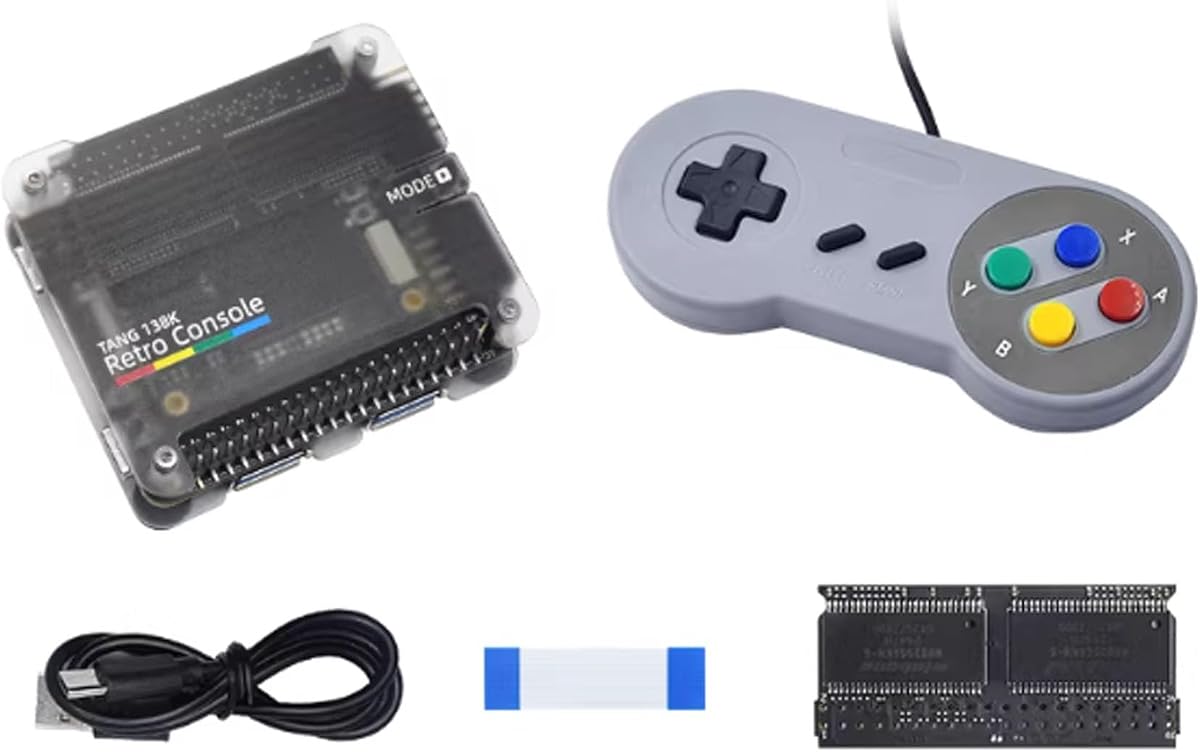
The Sipeed Tang Console 138K stands out as the top choice for serious FPGA enthusiasts seeking a premium retro console solution with robust development capabilities.
We may earn a commission when you buy through this link, at no additional cost to you.
Its massive 138K LUT4 logic capacity allows for running complex emulator cores with high accuracy while the HDMI and dual PMOD ports provide extensive connectivity options.
While the premium price may deter casual users, the ability to integrate it as a Raspberry Pi 5 HAT justifies the investment for those needing both gaming and development features.
Buyers interested in building custom FPGA projects or experiencing authentic retro gaming will find this console offers unmatched flexibility and performance.
The 138K logic capacity ensures smooth emulation of demanding systems without compromising speed or accuracy during gameplay.
Dual PMOD ports and HDMI output make it easy to connect various displays and peripheral devices for a complete setup.
We may earn a commission when you buy through this link, at no additional cost to you.
The 60K version of the Tang Console offers an accessible entry point for those interested in FPGA development without breaking the bank.
We may earn a commission when you buy through this link, at no additional cost to you.
It includes the powerful BL616 MCU and supports Linux natively, making it an excellent dev kit that doubles as a capable retro gaming device.
While it may lack the sheer logic capacity of the 138K model, its performance is sufficient for most popular emulator cores and hobbyist projects.
This model is ideal for beginners or hobbyists who want to experiment with FPGA programming before committing to higher-end hardware.
Priced lower than premium models, it provides essential FPGA features at a fraction of the cost for budget conscious buyers.
Built-in Linux support allows developers to use the console as a small single board computer for various non gaming tasks.
We may earn a commission when you buy through this link, at no additional cost to you.
This version of the Tang Console integrates a RISC-V hardcore and offers fanless operation for a truly silent retro gaming experience.
We may earn a commission when you buy through this link, at no additional cost to you.
With support for up to 138K LUT4s and 1080P HDMI output, it delivers high fidelity visuals and performance for demanding emulator cores.
The compact design makes it perfect for portable setups or integration into smaller cases where space and noise are critical factors.
Those seeking a premium, quiet solution that bridges development power and gaming performance will find this model unmatched in its category.
Running without a fan ensures noiseless operation which is perfect for living rooms or quiet environments.
The built-in RISC-V AE350 hardcore allows for more complex logic and custom applications on the device itself.
We may earn a commission when you buy through this link, at no additional cost to you.
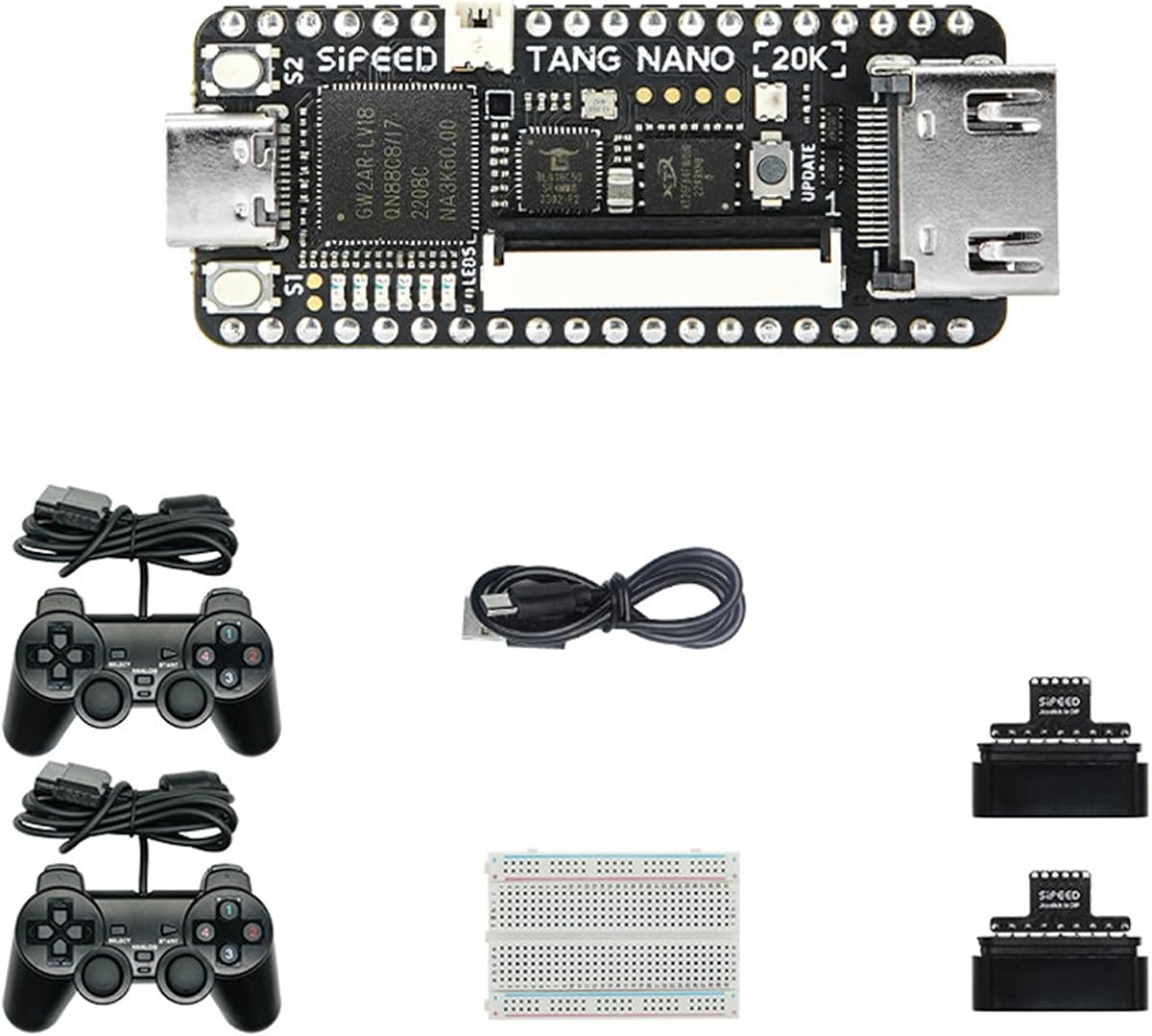
The Tang Nano 20K is an excellent choice for open source advocates who want to experiment with FPGA retro gaming on a budget.
We may earn a commission when you buy through this link, at no additional cost to you.
Its 20K LUT4 logic and 64Mbits SDRAM provide sufficient resources for classic console emulation and small scale development projects.
The inclusion of a JTAG port and RGB LCD support makes it a versatile board for developers looking to customize their display inputs.
While it lacks the raw power of larger boards, its affordability and open nature make it a standout for hobbyists and students.
Full access to source files and wiki documentation encourages community contributions and learning opportunities.
Small form factor allows it to be easily integrated into custom enclosures or portable handheld prototypes.
We may earn a commission when you buy through this link, at no additional cost to you.
This kit version provides a BL616 debugger and simplified access to FPGA development tools making it easier for new users to get started.
We may earn a commission when you buy through this link, at no additional cost to you.
Running RISC-V Linux out of the box gives users immediate access to a modern operating environment for their FPGA tasks.
The HDMI port and LED indicators help ensure visual feedback and connectivity are straightforward during the initial setup process.
For those starting their journey into FPGA programming, this kit offers all the necessary components to learn and build effectively.
Pre-assembled debugger and necessary components save time and reduce compatibility issues during initial deployment.
Immediate boot into Linux allows users to test applications and code without needing complex configuration steps.
We may earn a commission when you buy through this link, at no additional cost to you.
This board is optimized for users needing multiple display outputs allowing for flexible setups in dual screen or custom projects.
We may earn a commission when you buy through this link, at no additional cost to you.
Support for NES emulator cores makes it a viable option for those focused on 8-bit retro gaming and lightweight emulation tasks.
The BL616 debugger ensures that developers can quickly troubleshoot issues without needing external hardware or complex tools.
It serves as an ideal secondary board for testing logic before moving to more expensive models or main production systems.
Ability to drive multiple outputs opens up creative possibilities for arcade cabinets or multi-screen setups.
Specialized cores for NES provide high accuracy rendering of classic titles with minimal resource usage.
We may earn a commission when you buy through this link, at no additional cost to you.
The Arduboy FX-C takes retro gaming to the extreme with a credit card sized form factor that fits easily in your wallet.
We may earn a commission when you buy through this link, at no additional cost to you.
It comes preloaded with over 300 classic games providing instant entertainment without any setup or external storage requirements.
Beyond gaming it serves as a powerful tool for STEM education allowing users to learn C++ coding via the Arduino IDE.
This device is perfect for enthusiasts who want a portable coding and gaming toy that encourages creativity and skill building.
Small enough to fit in a pocket or wallet it ensures gaming is always accessible wherever you go.
Built-in coding features turn the console into an interactive learning tool for aspiring developers of all ages.
We may earn a commission when you buy through this link, at no additional cost to you.
The Trimui Brick Pro offers a massive 3.95-inch display making it one of the most immersive handheld retro gaming experiences available.
We may earn a commission when you buy through this link, at no additional cost to you.
Powered by the Allwinner A133P chip it handles multiple emulators smoothly ensuring consistent frame rates during gameplay.
While it requires a memory card purchase and game setup it offers extensive customization options for users who want total control.
This console is best suited for players who prioritize screen size and battery life over out-of-the-box game selection.
The 3.95-inch screen provides vibrant colors and wide viewing angles perfect for outdoor or casual gaming.
Hall effect sensors eliminate drift issues common in traditional analog sticks ensuring long-term precision.
We may earn a commission when you buy through this link, at no additional cost to you.
The RG40XXV is a robust Linux-based handheld console that offers a solid experience for retro gaming enthusiasts seeking reliability.
We may earn a commission when you buy through this link, at no additional cost to you.
Its Linux system allows for deep customization and supports a wide range of emulator cores without compromising speed or quality.
With a perfect user rating it has gained trust among buyers who appreciate its straightforward interface and consistent performance.
This console is a great choice for those who want a preloaded system that can be expanded with personal game libraries easily.
Operating on Linux gives power users full control over system settings and emulator configurations.
Perfect scores from users indicate high reliability and ease of use for casual and hard core gamers alike.
We may earn a commission when you buy through this link, at no additional cost to you.
TRIMUI Brick PRO features a fully open source Linux interface allowing users to install their own games via TF card up to 1TB.
We may earn a commission when you buy through this link, at no additional cost to you.
It boasts a high resolution 1024×768 display with RGB mood lighting ensuring a premium look and sharp visuals for any game.
Hall effect joysticks provide drift-free control while the massive 5000mAh battery supports extended play sessions without interruptions.
This handheld is perfect for those who prioritize open source freedom and high quality hardware controls in a portable device.
The 1024×768 resolution delivers crisp images that enhance the retro visuals on a larger screen.
Hall effect sensors ensure consistent performance over time by eliminating wear and tear common in mechanical sticks.
We may earn a commission when you buy through this link, at no additional cost to you.
Selecting the right Fpga Retro Consoles requires understanding key technical factors that influence performance and compatibility.
Logic capacity determines how complex an emulator core you can run. Higher LUT counts like 138K allow for advanced systems while 20K may be limited to classic 8-bit cores.
Always choose a device with enough logic headroom for the games you plan to play and future core upgrades.
Look for HDMI outputs and USB ports to ensure you can connect to modern TVs and controllers. Some boards offer PMOD ports for custom expansions.
Verify that the console supports the necessary interfaces for your specific display and peripheral requirements before buying.
Many FPGA consoles run on Linux or RISC-V systems which offer flexibility and ease of use. Ensure the OS has active community support.
A well supported operating system simplifies updates and troubleshooting when you need to fix configuration issues.
Handheld devices need robust batteries for portable use while board-based systems require stable power sources. Check battery capacity and charging ports.
For handhelds prioritize models with at least 5000mAh batteries to ensure long play sessions without frequent recharging.
Consider the size and weight of the device especially if you plan to use it on the go. Compact designs like the Tang Console offer excellent portability.
Ensure the device supports SD cards or other storage options so you can store a large library of games easily.
Strong community support means more available cores and documentation. Look for active forums and wiki pages like those for the Tang series.
A large community ensures you have help available when you encounter errors or need help optimizing configurations.
Check if the specific FPGA model supports the emulator cores for your favorite systems. Some boards focus on 8-bit while others handle 32-bit systems.
Verify core compatibility lists to ensure your desired games will run smoothly without performance issues or crashes.
High resolution video output like 1080P is essential for crisp retro visuals. Some models also include audio jacks for analog sound.
Prioritize devices that support both modern HDMI outputs and analog ports if you have older displays or speakers.
To get started with your Fpga Retro Consoles begin by installing a compatible Linux or core system via the provided microSD or USB connection.
Ensure all HDMI cables are securely connected and the device is powered correctly before attempting to launch any emulator cores.
Regularly update your FPGA bitstreams and operating system firmware to maintain security and performance while keeping the device clean from dust.
Fpga Retro Consoles use Field Programmable Gate Arrays to replicate original hardware at the logic level offering near perfect accuracy. They are preferred for their low latency and authentic experience.
Basic setup is often simple but advanced customization requires some knowledge of FPGA development. Many prebuilt systems are user friendly for casual gamers.
Yes most models support multiple emulator cores allowing you to play games from NES SNES and GBA systems on one device easily.
You will need a microSD card for ROM storage as internal memory is limited. Ensure you have a high capacity card for large game libraries.
Many popular models like the Sipeed Tang Nano are open source allowing you to modify the hardware and software. Check documentation for specific device status.
Battery life varies by model but high capacity ones offer around 5 to 8 hours of continuous gaming before needing a recharge.
The Sipeed Tang Console 138K remains our top pick for its unparalleled performance and versatility in both gaming and development scenarios.
Prioritize logic capacity and connectivity options when making your decision to ensure the device meets your long term gaming needs.
Always verify current pricing and availability as these details fluctuate frequently across different online retailers.