
Handheld Fish Finder Portable
4.2Editor score
Portable neck strap design
328 feet depth range
Four AAA battery powered
Finding a reliable cheap depth finder does not have to break your bank account. Whether you are fishing from a kayak, shore, or small boat, knowing the water depth is crucial for safety and success. This guide explores budget-friendly options that deliver accurate sonar readings without the high price tag of premium units.
We evaluated ten different models based on their sonar frequency, display clarity, battery life, and ease of installation. Each product offers unique features tailored to specific fishing environments such as ice, saltwater, or freshwater. Our analysis focuses on value for money while ensuring essential performance metrics are met.
Each pick in this list highlights key strengths and potential trade-offs to help you decide quickly. We include detailed specifications and real-world usage scenarios to provide a comprehensive overview. Please note that prices and availability are subject to change so check the latest listings before purchasing.
4.2Editor score
4.6Editor score

4.5Editor score
As an Amazon Associate we earn from qualifying purchases.
The following table provides a side-by-side comparison of all ten models including their key specifications and primary use cases to help you narrow down your choice.


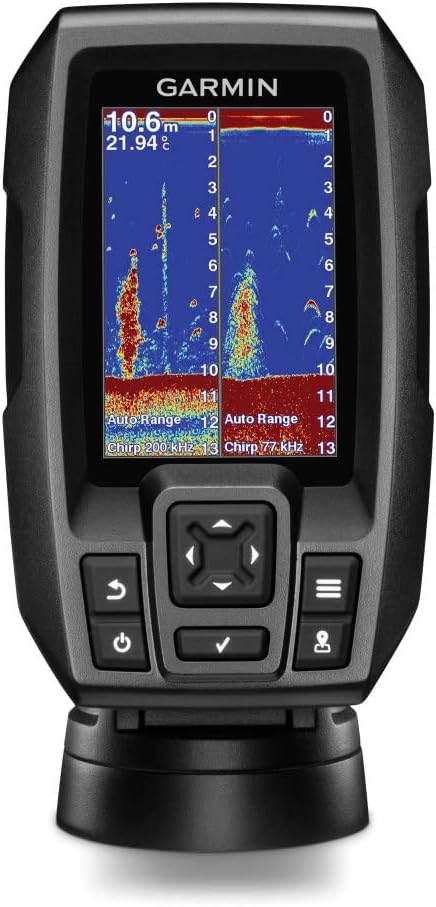
The Garmin 010-01550-00 Striker 4 stands out as a top contender for anglers seeking a cheap depth finder that delivers professional performance. With a 4.5 star rating it is praised for its simplicity and reliability. This unit offers near photographic sonar images that help you identify structure and fish clearly.
We may earn a commission when you buy through this link, at no additional cost to you.
Its CHIRP Sonar technology sends a continuous sweep of frequencies which provides a wider range of information compared to standard sonars. This results in crisper fish arches and better target separation. The device features a keyed interface with dedicated buttons making it easy to operate even while wearing gloves.
While the display is compact at 3.5 inches it remains highly readable in various lighting conditions. The IPX7 water rating ensures durability against splashes and rain. Some users note that the screen size may be small for those accustomed to larger displays but the functionality remains robust.
This model is ideal for casual anglers and boat owners who need dependable depth tracking without complex setups. The included transducer and waypoint map feature add significant value. For those wanting a balance of price and performance this is a strong recommendation.
CHIRP Sonar provides detailed representations of objects and fish that standard sonars often miss.
Dedicated buttons simplify navigation so you can focus on fishing instead of menu diving.
We may earn a commission when you buy through this link, at no additional cost to you.
For anglers on a tight budget this handheld fish finder offers an accessible entry point into sonar technology. It runs on four AAA batteries and lasts about four to five hours of continuous use. The device is designed for portability making it perfect for kayak or shore fishing.
We may earn a commission when you buy through this link, at no additional cost to you.
It uses a 200 kHz sonar to detect water depth and fish location up to 328 feet deep. The transducer can be tossed into the water allowing you to fish from various positions. You can adjust sensitivity and use a fish alarm to alert you when schools pass by.
The simplicity of this unit is both a strength and a limitation. It lacks advanced mapping or large screens but it does the core job well. The waterproof design handles splashes but it is not submersible. It is a great backup tool for weekend trips.
Choose this if you need a basic depth reading tool without investing much money. It is lightweight enough to carry in a tackle box. While it may not replace a full chartplotter it is excellent for verifying depths quickly.
Its compact design and battery power mean you can take it anywhere without heavy gear.
Suitable for both fresh and saltwater environments making it a versatile companion.
We may earn a commission when you buy through this link, at no additional cost to you.
The LUCKY FFC1108 combines wireless convenience with a budget friendly price point. It features a castable design allowing you to tie the sensor to your line and cast it to deep spots. This is particularly useful for kayak anglers who cannot mount a transducer permanently.
We may earn a commission when you buy through this link, at no additional cost to you.
The display shows fish icons and depth numbers clearly with a backlight for low light conditions. It supports both feet and meters measurement units for international users. The sensor floats if it falls off the boat reducing the risk of loss. You can adjust sensitivity to filter out debris.
While it offers advanced features like wireless casting the battery life may vary with usage. Some users report needing to recharge or replace batteries frequently. The display is smaller than dedicated units but sufficient for basic needs.
This model is best for kayakers and shore fishermen who need flexibility. It bridges the gap between cheap handhelds and premium wired units. If you want wireless freedom without breaking the bank this is a solid choice.
Cast the sensor to remote spots without drilling holes or mounting hardware.
Fish icons and depth numbers are displayed clearly for instant interpretation.
We may earn a commission when you buy through this link, at no additional cost to you.
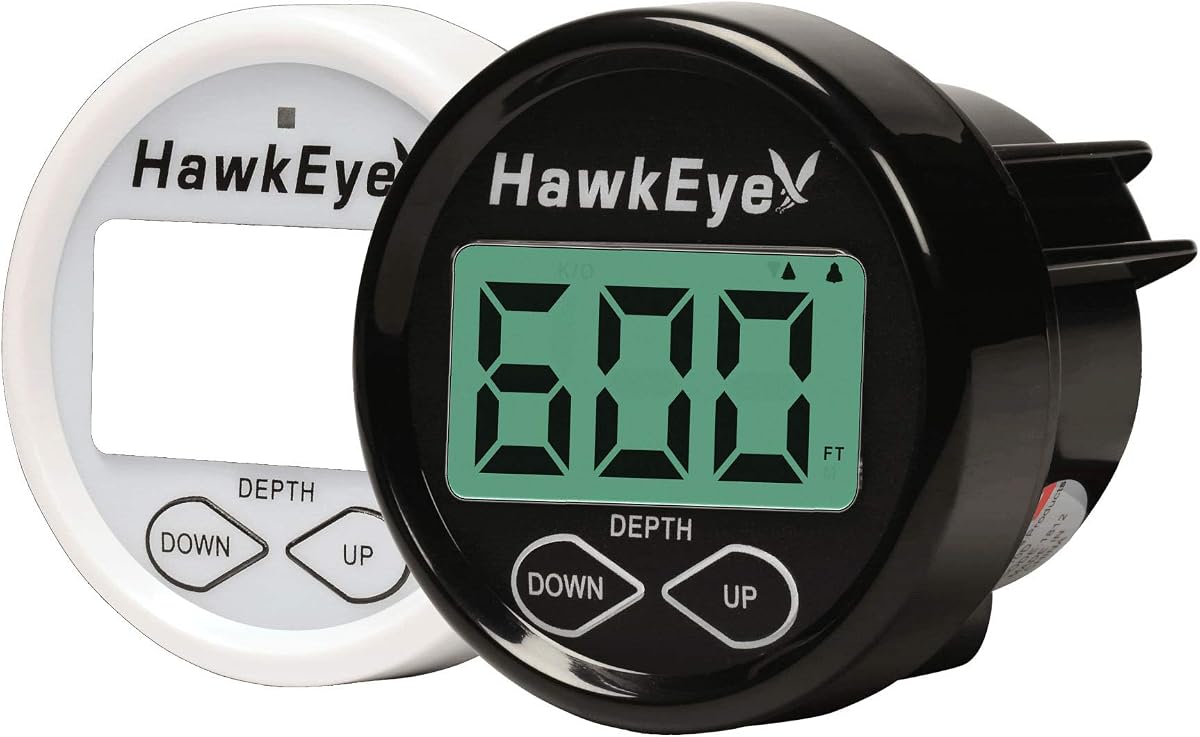
The DepthTrax 2B is designed for boat owners who want a permanent dash mounted solution. It delivers uninterrupted depth readings up to 600 feet even while moving at speeds up to 60 mph. The polarized LCD display ensures visibility without glare even in bright sunlight.
We may earn a commission when you buy through this link, at no additional cost to you.
It includes a dual mount transducer that can be glued into fiberglass or aluminum hulls. The 3-stage advanced warning system alerts you to shallow water with alarms and lights. Algorithmic programming reduces false readings to provide more accurate data for navigation.
Installation requires careful planning especially for the glue-in transducer which suits non-cored hulls. Once installed it offers a seamless experience for daily boaters. The large display makes it easy to monitor depth without taking eyes off the water.
This unit is ideal for small boats that need a reliable depth sounder. It may not offer GPS or mapping but it excels at its primary function. If you need a fixed mount with clarity this is a strong contender.
Polarized LCD icons remain clear in sunlight without needing sunglasses.
Maintains accuracy even when boating at high speeds up to 60 mph.
We may earn a commission when you buy through this link, at no additional cost to you.
The Hawkeye DT1H is a straightforward handheld depth finder that includes water temperature readings. It provides depth measurements up to 300 feet which covers most common fishing environments. The device is easy to operate with minimal button presses needed.
We may earn a commission when you buy through this link, at no additional cost to you.
Its compact size makes it easy to store in a pocket or tackle box. The temperature sensor helps you understand water conditions that affect fish behavior. While it lacks advanced sonar imaging it provides the essential data you need.
This model is best for anglers who value simplicity and portability. It does not require mounting or complex setup. The battery powered design means you can take it anywhere without worrying about wiring.
If you just need depth and temperature checks this unit delivers reliable performance. It is a great addition to a starter fishing kit. For more advanced needs you may need to upgrade later.
Monitor water temperature to understand fish activity patterns better.
Turn it on and start reading depths immediately without setup.
We may earn a commission when you buy through this link, at no additional cost to you.
The Humminbird PiranhaMAX 4 offers dual beam sonar to choose between narrow and wide coverage. This flexibility helps you identify fish and structure depending on your needs. The tilt and swivel mount allows quick adjustment of the viewing angle for comfort.
We may earn a commission when you buy through this link, at no additional cost to you.
It comes with a transom-mount transducer and includes a one year limited warranty. The display is clear and the controls are straightforward. It is a solid choice for those brand a traditional sonar experience.
While it lacks modern features like GPS it performs well for depth and fish finding. The brand reputation adds confidence to the purchase. It is priced competitively for the features offered.
Choose this if you want a proven sonar from a trusted name. It is suitable for small boats where simplicity is key. The dual beam option is a nice bonus for versatility.
Switch between narrow detail and wide coverage as needed.
Tilt and swivel mount lets you find the best viewing position.
We may earn a commission when you buy through this link, at no additional cost to you.
The Lowrance Eagle features a 4 inch IPS portrait screen that stays clear in bright sunlight. Auto-Tuning Sonar optimizes settings automatically so you can focus on catching fish. The wide viewing angles allow visibility from different positions in the boat.
We may earn a commission when you buy through this link, at no additional cost to you.
Its twist-lock connector simplifies installation and removal for storage. The display shows fish icons with depth and includes a zoom feature for a closer look. The compact design fits well in limited spaces on small vessels.
This model balances advanced display tech with user friendly operation. While it is pricier than basic units the screen quality justifies the cost. It is a significant upgrade from entry-level handhelds.
Ideal for anglers who prioritize display clarity and ease of use. The auto-tuning feature reduces the need for manual adjustments. If you want a modern look and feel this is a great option.
IPS display ensures clear viewing from wide angles without glare.
Automatic optimization saves time and ensures consistent readings.
We may earn a commission when you buy through this link, at no additional cost to you.
This portable ice fish finder provides contour readout and temperature data for detailed insights. It is designed to withstand splashes and can be used up to 100 feet underwater for other activities. The depth data updates four times per second for quick reactions.
We may earn a commission when you buy through this link, at no additional cost to you.
It includes a two-color lure fish lamp that attracts light sensitive fish. The unit is suitable for various fishing methods including ice lake and river. Its durable construction ensures it survives rough outdoor conditions.
The fish lamp is a unique feature but works only on certain species. The waterproof design adds value beyond just depth finding. It is a practical tool for multi-use anglers.
Choose this for ice fishing or situations where durability is key. The temperature and contour data help locate fish precisely. A solid option for those needing more than just depth.
Contour readout helps visualize bottom structure accurately.
Water resistant build withstands splashing and harsh conditions.
We may earn a commission when you buy through this link, at no additional cost to you.
The LUCKY MT-202 offers a massive 853 foot operation distance which is one of the longest on the market. It uses a rechargeable battery to reduce waste and save money. The 90 degree beam scans schools of fish effectively in a large area.
We may earn a commission when you buy through this link, at no additional cost to you.
The 3.5 inch horizontal LCD displays fish icons with exact depth marks. The screen scrolls to show a history of what passed under the sensor. This allows tracking fish movement over time without constant monitoring.
This unit is designed for freedom of movement without wires. You can cast the sensor like a bobber to explore new spots. The lightweight design makes it easy to carry for spontaneous trips.
If you need long range wireless capability this is the top choice. The rechargeable feature adds convenience. It is suitable for kayaks boats and shore fishing alike.
Operate up to 853 feet away without any cables.
Track fish movement with a scrolling display of past readings.
We may earn a commission when you buy through this link, at no additional cost to you.
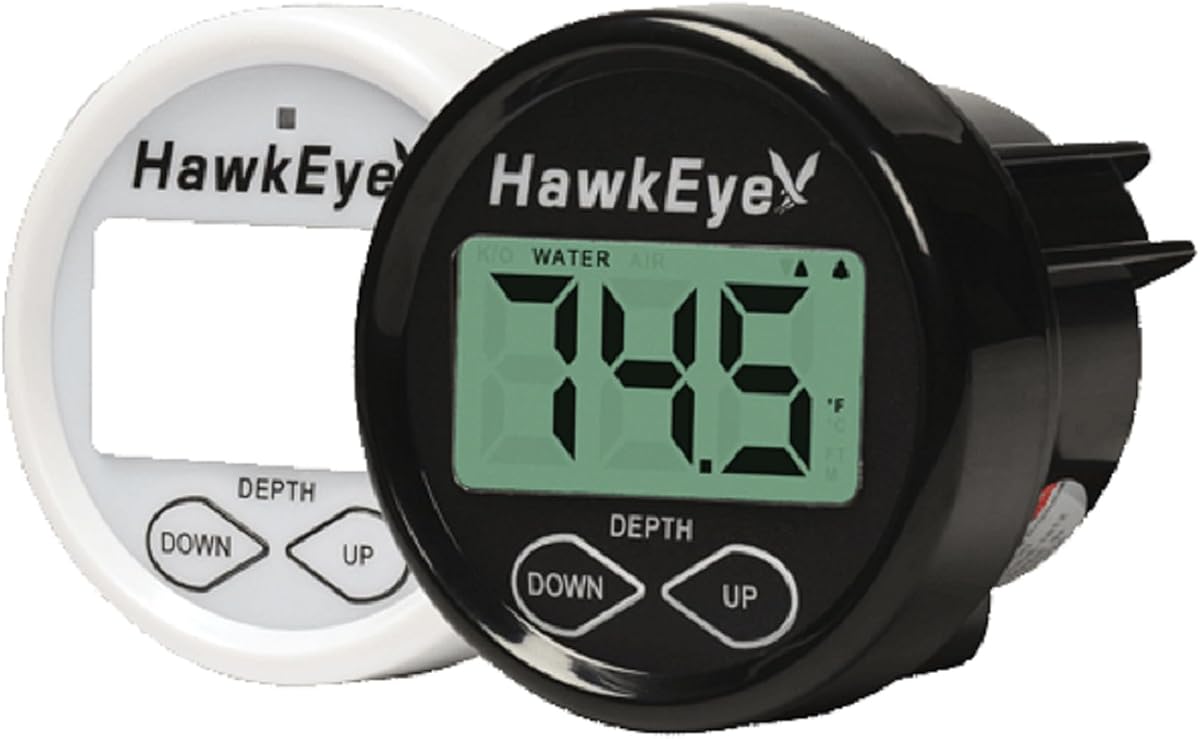
The HawkEye DT2BX-TM is an in-dash depth sounder that displays both air and water temperature. It delivers depth readings up to 600 feet on a soft glow backlit LCD. The polarized display ensures visibility even with sunglasses on.
We may earn a commission when you buy through this link, at no additional cost to you.
A three-stage warning system alerts you with alarms and lights when approaching shallow water. One-touch alarm muting allows quick silencing of unwanted alerts. The transducer comes with 30 feet of cable for flexible mounting.
This unit integrates well into existing boat consoles. The temperature sensors provide extra data for weather and water condition checks. It is built with technology designed in the USA.
Ideal for boat owners seeking a fixed solution with temperature features. The alarm system adds safety for navigation. A reliable choice for daily use on the water.
View both air and water temperature on the display.
Advanced warning system alerts you to shallow water hazards.
We may earn a commission when you buy through this link, at no additional cost to you.
Selecting the right cheap depth finder requires understanding your specific fishing needs and budget constraints. This guide covers key factors to consider before making a purchase.
Sonar frequency determines the level of detail and range your device provides. Higher frequencies like 200 kHz offer better detail for shallow water while lower frequencies penetrate deeper. For most budget units 200 kHz is standard and sufficient for general fishing.
Choose a frequency that matches your typical water depth. High frequency is ideal for freshwater lakes while lower frequencies are better for deep saltwater.
Displays range from simple LCD screens to colorful IPS panels. A backlit display is essential for early morning or late evening fishing. Larger screens provide easier reading but increase the device size.
Opt for a backlight and polarized display if you fish in bright sunlight. Ensure the font size is readable from your typical viewing angle.
Mounting options include handheld, transom, or in-dash. Handheld units offer portability while transom mounts provide stability. In-dash models look professional but require installation effort.
Consider how permanently you want to install the unit. If you boat multiple vessels a handheld might be more practical than a fixed mount.
Depth range indicates the maximum depth the sonar can measure accurately. Most budget finders cover 300 to 600 feet which suits most recreational fishing. Ensure the range meets the deepest water you typically fish.
Check the manufacturer's stated maximum depth. Saltwater units often support greater depths than freshwater specific models.
Battery life varies significantly between portable and fixed units. Portable models may run for 4 to 8 hours on AA batteries. Fixed units draw power from the boat battery but require installation.
Look for battery save modes if you plan long fishing trips. Rechargeable options are more eco-friendly than disposable batteries.
Water resistance is critical for any device used on or near water. Look for IPX7 ratings or waterproof claims. Some units are designed to float or survive splashes.
Verify the waterproof depth rating if you plan to use the device near water edge. A rugged build protects against drops and impacts.
Extra features like temperature sensors, fish alarms, and GPS add value. Temperature data helps predict fish behavior. Alarms notify you of fish activity without constant monitoring.
Prioritize features that matter to your fishing style. Not every feature is necessary for basic depth finding.
A warranty provides peace of mind against manufacturing defects. Many brands offer 1 to 2-year coverage. Check for available customer support channels in case of issues.
Choose a brand with a reputation for reliability and service. Read reviews about customer support responsiveness before buying.
Begin by installing the transducer correctly. For transom mounts ensure it is flat against the hull and not obstructed. For handhelds cast it into the water and let it settle.
Turn on the unit and allow it to calibrate to the water. Adjust sensitivity settings to reduce clutter from debris. Use the backlight for low light visibility.
After use rinse the unit with fresh water to remove salt and dirt. Dry it thoroughly before storage. Check battery contacts regularly to ensure good connection.
Yes, most budget models provide accurate depth readings sufficient for recreational fishing. While they lack advanced features like mapping they reliably measure water depth and locate fish.
Some models support speeds up to 60 mph but handhelds work best when stationary or moving slowly. Moving fast can disturb the transducer signal and reduce accuracy.
CHIRP sonar sends a continuous sweep of frequencies providing clearer images and better fish separation. Standard sonar uses a single frequency which may miss small details.
Check the hull material and thickness. Most transducers work on fiberglass and thin aluminum. If using a glue-in method ensure it matches your hull type.
Many budget finders are suitable for both fresh and saltwater. Verify the saltwater rating in the specs to avoid corrosion damage over time.
Battery life varies by model and usage. Expect 4 to 8 hours on AA batteries. Rechargeable models can last longer depending on the charge cycle.
Handheld units require no installation. Transom and in-dash models need basic tools and drilling. Most come with hardware and instructions for easy setup.
Yes, many handheld models are designed for ice fishing. Ensure the display is visible in low light and the unit can withstand cold temperatures.
We have reviewed ten top cheap depth finder models ranging from basic handhelds to advanced wireless units. Each offers unique benefits tailored to different fishing styles and budgets.
When selecting a model prioritize depth range and display clarity. Consider how portable you need to be and whether fixed or wireless suits your boat.
Prices and availability change frequently so verify current listings before purchasing. The best cheap depth finder is one that meets your specific needs at a great value.