
10 Pack 3 Pins AMS1117-3.3
4.1Editor score
Simple 3 pin design
800mA current capacity
Affordable bulk pack
This guide compares the top 5V to 3V voltage regulator modules for stable power conversion, focusing on efficiency, size, and compatibility for electronics
Finding the right voltage regulator is crucial for protecting sensitive electronics. A good 5V to 3V voltage regulator ensures stable power delivery to your microcontrollers and sensors.
We compared ten highly rated modules based on input range, output current, size, and user reviews. This list covers both buck converters and linear regulators for various needs.
Each pick shows key specs and pros to help you decide quickly. Remember that stock and pricing change frequently on Amazon, so check current availability before ordering.
4.1Editor score

4.6Editor score

5.0Editor score
This table provides a side-by-side look at all ten selected voltage regulators. Compare input ranges, output currents, and package sizes to find the perfect match for your circuit.


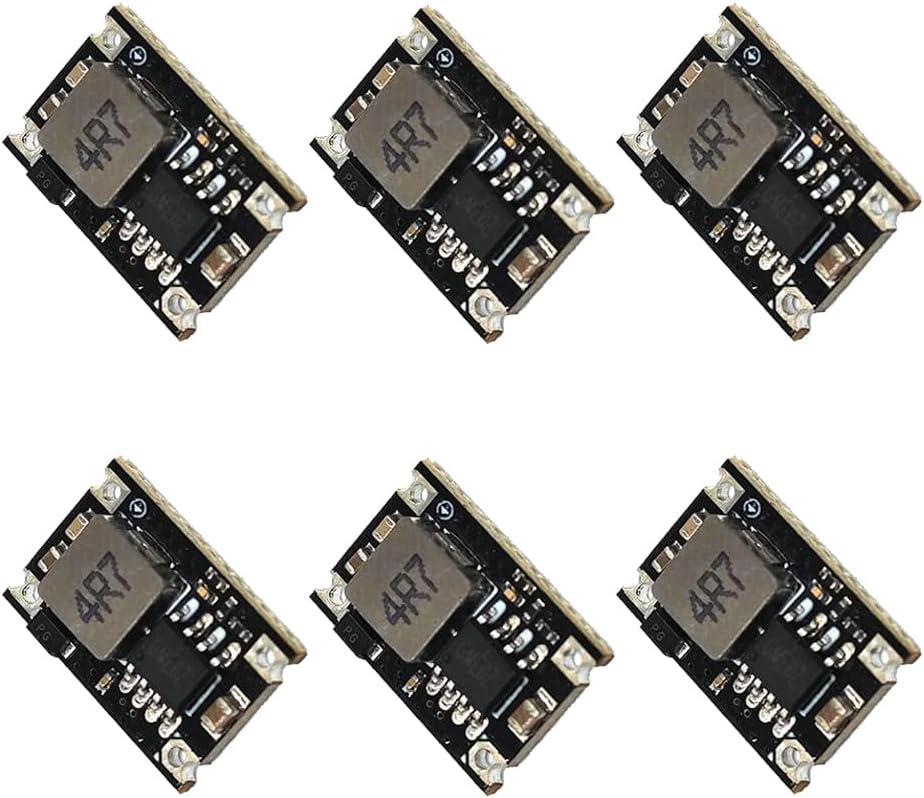
This module is our top pick for its versatility and performance. It offers a wide input range and high current output in a tiny package. The stable output makes it ideal for powering sensitive microcontrollers directly from various battery sources.
We may earn a commission when you buy through this link, at no additional cost to you.
The 4.5V to 24V input range allows you to use it with 5V, 9V, 12V, or 24V power supplies. It can supply up to 1.8A which is plenty for most sensor arrays and development boards. The low ripple ensures clean power for your circuits.
Its compact size fits easily into tight spaces in DIY and portable projects. The switching frequency is high which helps keep the module small while maintaining efficiency. This balance of size and power is hard to beat at this price point.
Buy this if you need a reliable power converter for multiple projects or a single robust build. It works well with Arduino, ESP32, and STM32 boards. Ensure you add protection diodes if driving inductive loads like motors.
The wide input voltage range means you can use it with almost any common battery or power adapter without needing extra components.
Its tiny footprint allows you to integrate it into wearables or drones where every millimeter of PCB space counts.
We may earn a commission when you buy through this link, at no additional cost to you.
This pack offers excellent value for hobbyists building multiple circuits. The AMS1117 is a classic linear regulator known for simplicity and reliability. It steps down voltage efficiently for small loads where heat is manageable.
We may earn a commission when you buy through this link, at no additional cost to you.
The 3-pin design makes soldering straightforward even for beginners. You can connect it directly to development boards like Arduino or STM32. It supports 4.75V to 12V input which covers most standard logic level scenarios.
The main trade-off is the current limit of 800mA and higher heat generation compared to switching regulators. For low power projects this is negligible. The overheat protection adds a layer of safety against accidental overloads.
Choose this if you need basic regulation for small sensors or logic circuits. The 10-pack ensures you have spares for prototyping. It is perfect for educational kits or simple home automation tasks.
The dual panel design and simple pinout make it easy to connect to your existing MCU development boards without complex wiring.
The overheat shutdown circuit protects your chip and your project from damage if conditions get too hot during operation.
We may earn a commission when you buy through this link, at no additional cost to you.
This module stands out with perfect user ratings and premium build quality. It uses high-end switching technology to deliver clean power efficiently. The small size belies its powerful output capabilities and advanced protection features.
We may earn a commission when you buy through this link, at no additional cost to you.
You get a massive input range of 4.5V to 24V with a stable 3.3V output. The switching frequency is high which keeps the ripple very low under 30mV. This ensures sensitive components like analog sensors receive clean power.
It handles up to 1.8A which is significant for such a small board. The thermal management is good but you should still add capacitors for inductive loads. The protection against surges is excellent for automotive or motor applications.
Buy this for critical projects where power quality matters. It is ideal for drones, wearables, or anything running on batteries. The 5-pack provides enough for your main build and future upgrades without searching for a replacement.
With less than 30mV of ripple your sensitive analog circuits and precision sensors will operate without noise interference.
The 1.5MHz switching frequency allows for a much smaller physical footprint while maintaining high efficiency and performance.
We may earn a commission when you buy through this link, at no additional cost to you.
This converter is unique because it handles both step down and step up operations. It works with input voltages below 3.3V such as single cell batteries. This makes it essential for battery powered devices that discharge over time.
We may earn a commission when you buy through this link, at no additional cost to you.
The input range covers 1.8V to 5V allowing you to use lithium cells or coin cells efficiently. It provides a stable 3.3V output regardless of whether the input is higher or lower. This flexibility is rare in standard regulators.
The current limit of 100mA restricts it to low power logic. You cannot run motors or high draw LEDs with it. However for powering just a microcontroller or sensor it is sufficient. The size is extremely small for any PCB.
Choose this if your project runs on single cell batteries. It ensures your device works even as the battery drains below 3.3V. It is a great companion for low power IoT sensors that need long battery life.
Unlike standard buck converters this unit can boost voltage from low inputs ensuring your device works even as the battery drains.
Perfect for IoT sensors and wearable devices that need minimal power consumption and can operate on single cell batteries.
We may earn a commission when you buy through this link, at no additional cost to you.
This module is a robust choice for general purpose conversion. It offers a very high current output of 1.8A in a mini package. The performance is consistent across the wide input voltage range for various applications.
We may earn a commission when you buy through this link, at no additional cost to you.
Its compact dimensions make it easy to fit into tight enclosures or crowded PCBs. The switching frequency ensures minimal energy loss which keeps heat generation low. It works well with standard microcontrollers and logic systems.
The ripple output is kept very low which protects your chips from noise. This is crucial for analog to digital conversion or precision measurements. Ensure you add external capacitors if you connect inductive loads like gears.
Buy this for general electronics builds requiring stable 3.3V power. It handles high loads without overheating. The 5-pack allows you to build multiple boards or keep spares for quick prototyping.
The stable output voltage protects your chips in the rear stage circuit even when connected to demanding power sources.
Its tiny size makes it easy to fit into narrow spaces of DIY embedded or portable projects without adding bulk.
We may earn a commission when you buy through this link, at no additional cost to you.
This pack provides a great introduction to voltage regulation for students. The AMS1117 chip is widely used and well documented. It simplifies power supply design by offering a fixed 3.3V output with minimal external components.
We may earn a commission when you buy through this link, at no additional cost to you.
The 3 pin layout makes it simple to connect to boards. You just need to wire input output and ground. It supports inputs from 4.75V up to 12V which covers most standard USB or battery scenarios for logic circuits.
At 800mA it is suitable for driving sensors and small logic loads. It is not designed for high current motors or heavy LEDs. The overheat protection ensures safe operation even if you exceed the limits briefly by mistake.
Choose this if you are new to electronics and need a basic power solution. The price is low enough to experiment freely. Use it for school projects or simple hobbyist builds where cost is a primary concern.
The easy to connect 3 pin design simplifies circuit connections for your MCU development without requiring complex wiring.
Overheat protection prevents chip damage due to abnormal working conditions ensuring your project remains safe.
We may earn a commission when you buy through this link, at no additional cost to you.
This is a massive pack of reliable linear regulators suitable for large scale prototyping. The AMS1117-3.3 offers precise output accuracy of +/-2 percent ensuring stability under load changes. It is built for low power consumption scenarios.
We may earn a commission when you buy through this link, at no additional cost to you.
The dynamic voltage difference control minimizes power loss. This is particularly suitable for battery powered scenarios where efficiency matters. It operates over a wide temperature range and includes overheat protection for safety.
It is designed for standard logic loads and low current devices. The 800mA limit is a bottleneck for heavy duty use. However for small sensors and MCUs it is perfect. The plug and play design saves assembly time.
Buy this if you run a lab or teach classes and need spares. The volume per unit is excellent. It is ideal for students building identical circuits for a project or workshop assignment.
The dynamic voltage difference control significantly reduces power consumption making it suitable for battery powered scenarios.
High output voltage accuracy ensures minimal voltage fluctuation when the load changes.
We may earn a commission when you buy through this link, at no additional cost to you.
This board supports high input voltages up to 30V making it great for automotive environments. It delivers 1.8A at 3.3V stable output. The small PCB board design is convenient for tight mounting spaces in vehicles.
We may earn a commission when you buy through this link, at no additional cost to you.
The switching frequency is high which helps in stability and efficiency. It includes a reverse polarity mark to suppress ripple and protect the circuit from accidental wire reversal. This is a safety feature often missing in cheaper modules.
The output ripple is kept under 30mV which is good for electronics. While ratings are mixed the current performance is strong. Ensure you solder it securely as the pads are small. It is robust for daily needs.
Choose this if you are powering electronics from a vehicle battery. The high input range handles alternator spikes. The 5-pack provides redundancy so one faulty unit does not stop your main project.
The PCB board has a reverse polarity mark which can suppress ripple and protect the circuit from wiring errors.
Its stable output voltage makes it an ideal choice for a variety of places including sensitive electronics.
We may earn a commission when you buy through this link, at no additional cost to you.
This module offers an ultra wide input range of 4.5V to 30V. It is ready to power Arduino and Raspberry Pi directly from various sources. Each unit is tested before shipping which adds confidence to the purchase.
We may earn a commission when you buy through this link, at no additional cost to you.
The output ripple under 30mV ensures clean power for microcontrollers and sensors. The switching frequency is high for stability. It fits wearables and IoT devices easily due to its compact dimensions.
It works with 12V 24V batteries and vehicle power. The peak current is 1.8A which covers most hobbyist needs. Soldering is straightforward and wires can be connected easily to start your project.
Buy this for general purpose IoT and vehicle electronics. The wide range makes it versatile for different battery types. The 5-pack is great for prototyping multiple nodes in a larger system.
Output ripple under 30mV at 1.5MHz switching ensures clean power for microcontrollers and sensitive sensors.
Ready for Arduino and ESP32 projects. You can solder wires and go immediately.
We may earn a commission when you buy through this link, at no additional cost to you.
This is a solid entry level option for small logic circuits. The input range is focused around standard 5V logic inputs. It provides 3.3V output with an 800mA limit which suits basic microcontrollers.
We may earn a commission when you buy through this link, at no additional cost to you.
The board supports automatic adjustable start limit voltage which helps in protecting your circuit. It is a simple step down power supply. You get a 10 pack which is great for classroom or bulk projects.
Ensure you do not exceed operating voltage or it will be damaged easily. This regulator is not for high power but for control logic. It is a reliable choice for powering small components like relays or sensors.
Choose this if you need many regulators for a group project. It is affordable and simple. The 10 pack ensures you have enough for every station or prototype without worrying about running out.
This step down power supply is simple to use and integrates easily into basic circuits.
Automatic adjustable boost board start limit voltage helps protect your circuit from overvoltage conditions.
We may earn a commission when you buy through this link, at no additional cost to you.
This module is designed for high performance aircraft models and drones. It uses the MP1584EN chip for high efficiency switching. The size is minimal which is critical for weight sensitive builds.
We may earn a commission when you buy through this link, at no additional cost to you.
It supports up to 1.8A output current at 3.3V. This handles flight controller electronics with ease. The low ripple protects sensitive navigation sensors from noise interference during flight operations.
You should add Zener and capacitor protection when using motors or gears. This prevents ripple from affecting chips in the rear stage circuit. The 6-pack is perfect for multiple drones or replacements.
Buy this for any RC or drone electronics project. The power to weight ratio is excellent. It provides stable 3.3V to your flight controller regardless of battery voltage fluctuations.
Very small size allows you to fit it into tight PCB layouts in aircraft models.
Output ripple less than 30mV and 1.5MHz switching frequency ensure reliable operation.
We may earn a commission when you buy through this link, at no additional cost to you.
Selecting the right regulator depends on your power needs and environment. Consider input range, current, and heat generation to find the best fit.
Ensure the regulator supports your power source. Some units work from 4.5V to 30V while others stop at 12V. A wider range gives you more flexibility with battery types.
Check your battery or adapter specs before buying to avoid incompatibility issues.
Check the max current the regulator can handle. Buck converters often support 1.8A whereas linear ones handle 800mA. Your load must not exceed this limit or voltage will drop.
Choose a regulator that exceeds your load current by 20 percent for safety.
Compact regulators are vital for wearables and drones. Look for dimensions that fit your enclosure. Most modules are small but some have headers that add bulk.
Measure your available space before purchasing to ensure a proper fit.
Linear regulators generate more heat than switching ones. If you run high current loads you may need a heatsink. Switching regulators stay cooler and are more efficient.
Prioritize switching regulators for battery powered projects to save energy.
Low ripple ensures clean power for sensitive sensors. Most buck converters keep ripple under 30mV which is safe for electronics. High ripple can cause data errors in analog systems.
Read specs for output ripple to ensure it meets your sensitivity needs.
Buying packs of 5 or 10 is often cheaper per unit. It also saves you from ordering single units if you need spares. Compare price per unit when choosing between brands.
Buy in bulk if you plan to build multiple projects over time.
Look for built-in overheat and overcurrent protection. Some units include reverse polarity marks to prevent damage. Protection circuits save your components from accidental short circuits.
Always ensure your regulator has safety features for long term use.
Drone projects need lightweight high efficiency regulators. Home automation might prioritize cost. Matching the device type to the regulator type ensures reliable operation.
Choose a module optimized for your specific project type to avoid compromises.
Connect the input wires to your power source and output wires to your load. Ensure the polarity matches the markings on the module to prevent damage.
Solder wires carefully using a low heat iron to avoid damaging the small pads. Use heat shrink tubing to insulate the connections for safety.
Monitor the temperature during high load use. If the module gets too hot add a small heatsink or improve airflow. For motors add external protection capacitors as advised.
Yes if the regulator supports a wide input range like 4.5V to 24V. Check the specs before connecting. Standard linear regulators may not work with high inputs without excessive heat.
Buck converters are more efficient and generate less heat. They are better for battery projects. Linear regulators are simpler and cheaper but produce heat at high loads.
Yes you should add capacitors when driving inductive loads. This protects the regulator from voltage spikes generated by the motor coils.
Most buck converters support up to 1.8A while linear ones support 800mA. Check the specific product specs to confirm the limit.
Yes most of these modules work directly with Arduino and STM32. They provide the stable 3.3V these boards require.
Unstable output could be due to high ripple or load issues. Add capacitors or check if your load exceeds the regulator current limit.
This guide covered ten top options ranging from bulk packs to high performance modules. The top picks offer the best balance of size efficiency and cost.
Prioritize current and heat management for your project needs. Buck converters are generally preferred for efficiency and battery life.
Always check current prices and availability on Amazon before ordering. Stock changes quickly so verify details to ensure you get the right module.