
Anycubic Kobra X
4.2Editor score
Native 4-color system
2X faster printing time
LeviQ 3.0 leveling
AI monitoring included
Discover the top 3D printers for fast printing speed in October 2026. We compare speed, quality, and features to help you choose the right machine.
Finding a 3D printer for fast printing speed is essential for makers who value efficiency. High-speed models reduce wait times significantly while maintaining precision. This guide explores the best options available for rapid prototyping and production needs.
We evaluated ten leading models based on acceleration, max speed, and build quality. Each printer offers unique features like auto leveling and multi-color capabilities. Our analysis focuses on performance metrics that matter most to experienced users and beginners alike.
Each pick highlights specific strengths such as CoreXY motion or smart calibration systems. Prices and availability change frequently so verify details before purchasing. Use this resource to find a printer that matches your project requirements and budget constraints today.
4.2Editor score
4.7Editor score

4.5Editor score
This side-by-side comparison highlights key specifications across all ten models. We focus on speed capabilities, build volumes, and unique features that define each printer. Use this data to quickly identify which machine fits your specific workflow requirements.
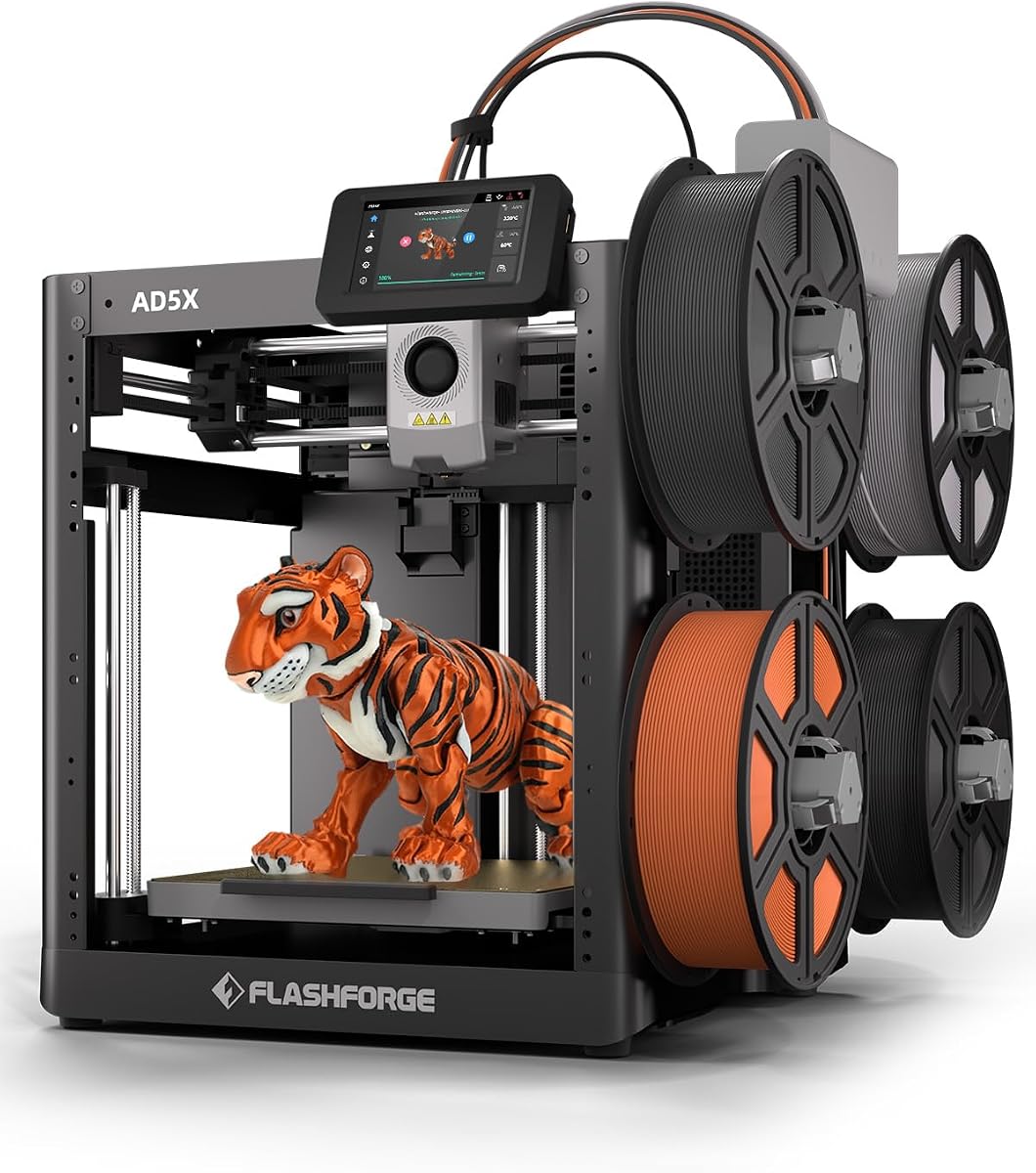


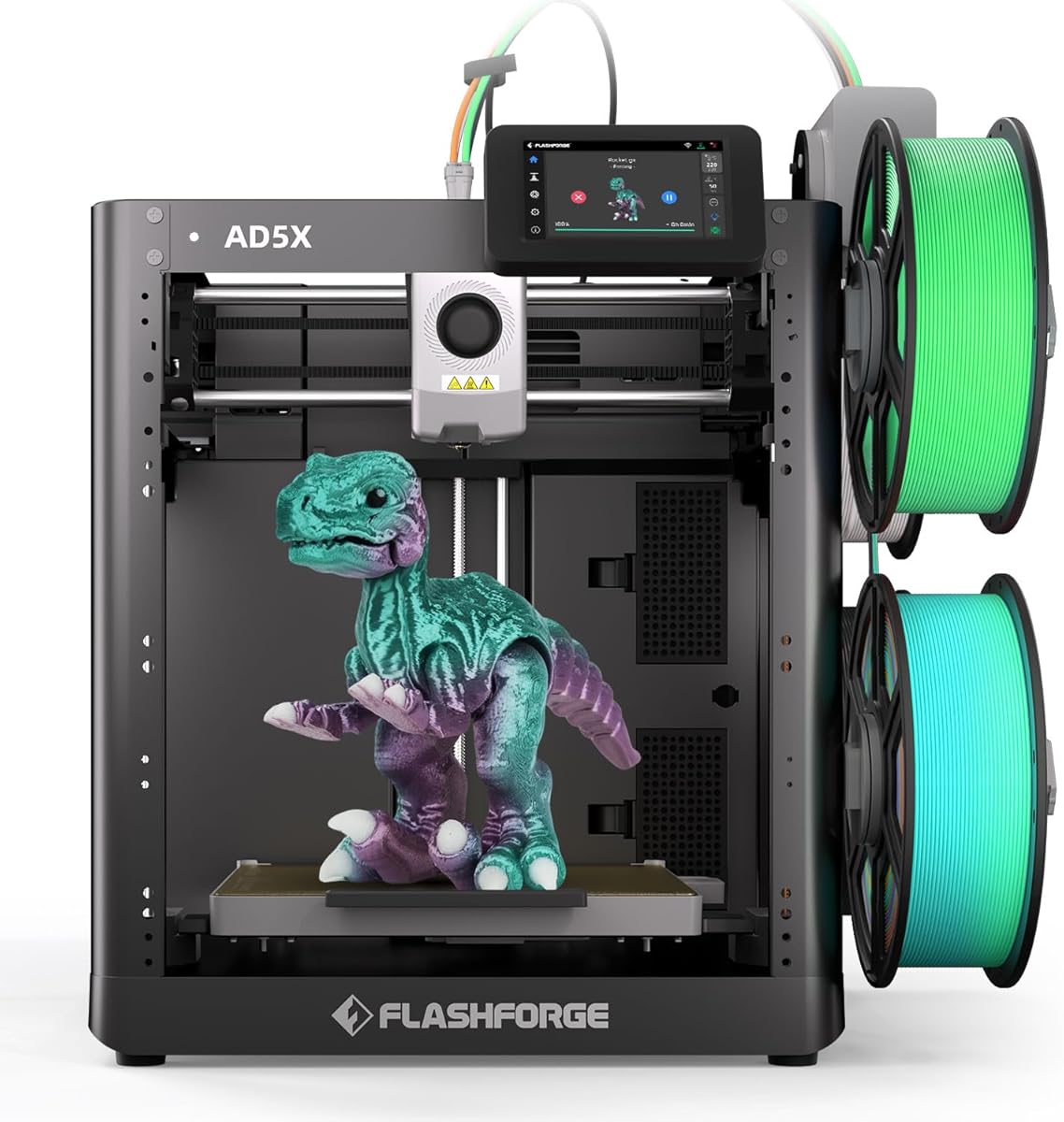
The FLASHFORGE AD5X is a compelling choice for users seeking fast 3D printing capabilities without breaking the bank. With a rating of 3.9, it balances speed and quality effectively. Its CoreXY structure ensures stability at high speeds, making it ideal for prototyping.
We may earn a commission when you buy through this link, at no additional cost to you.
Its standout feature is the 600mm/s max speed paired with 20,000mm/s² acceleration. The direct drive extruder reaches 300°C, supporting a wide range of filaments. Auto leveling simplifies setup, while the multi-color option allows for vibrant designs.
While the build volume is smaller at 220mm, this compact design suits desktop users. The lack of an enclosure may limit high-temp materials like ABS. However, for PLA and PETG, it delivers reliable results with minimal vibration issues.
Buyers prioritizing speed and color versatility will find this model valuable. It is best for hobbyists needing quick iterations. Consider upgrading nozzles for specific detail needs. Overall, it offers strong performance for its price point.
The printer supports up to 4 colors simultaneously, enabling creative designs without post-processing.
A 300°C extruder handles high-temp filaments and flexible materials with ease.
We may earn a commission when you buy through this link, at no additional cost to you.
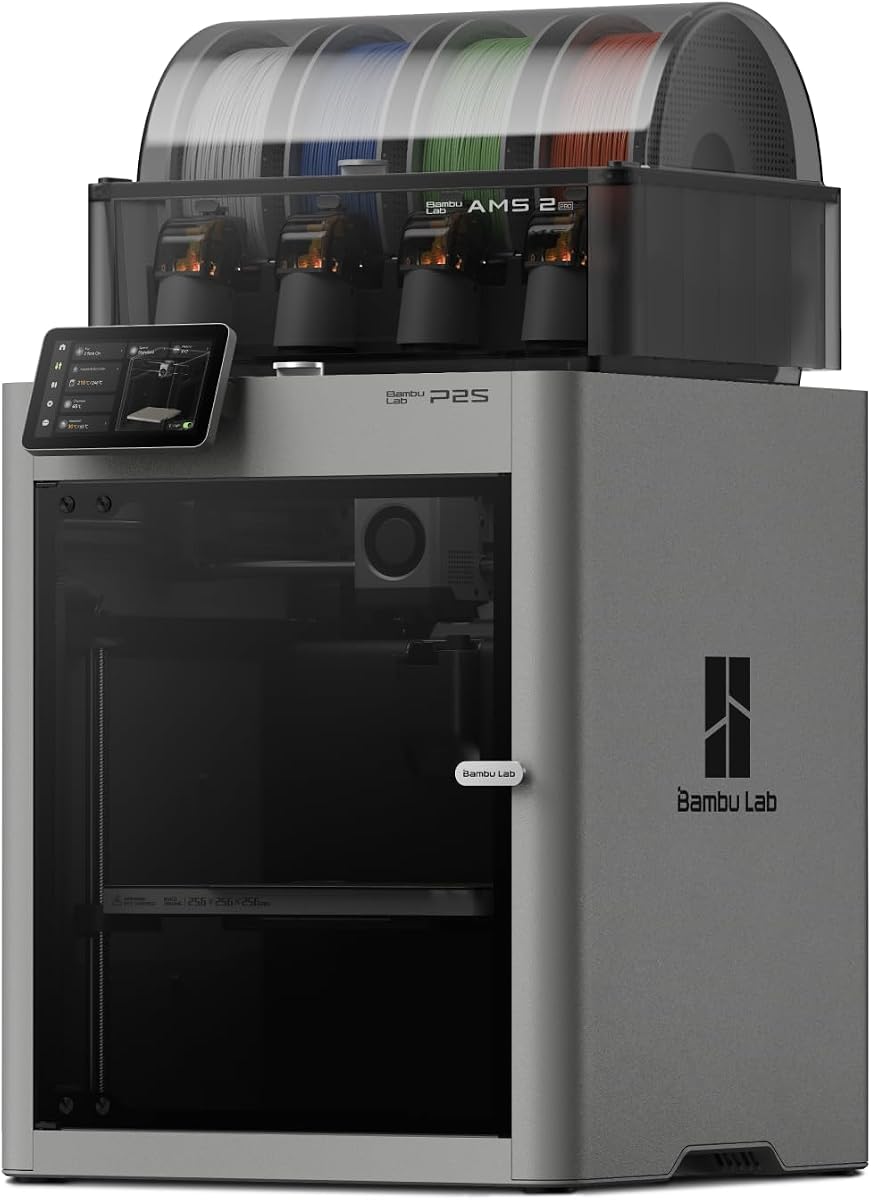
The Bambu Lab P2S Combo stands out with a 4.7 rating and top-tier performance metrics. It delivers 600mm/s speed while maintaining exceptional accuracy. The combo includes AMS 2 Pro, enabling true multi-color printing effortlessly. This model is perfect for professional workflows.
We may earn a commission when you buy through this link, at no additional cost to you.
Its PMSM Servo Extruder ensures smooth layers and flawless corners. Active flowrate compensation maintains consistency across every print. The adaptive airflow system manages overhangs and engineering-grade materials like ASA. AI failure detection adds reliability for unattended printing sessions.
Setup takes just 15 minutes, reducing downtime significantly. While the price is higher, the productivity gains justify the cost. The AMS 2 Pro filament drying feature prevents moisture issues. Only downside is dependency on combo for color features.
Ideal for users needing professional-grade speed and multi-material flexibility. Its ecosystem supports over a million models on MakerWorld. Prioritize this if you value speed and precision. The investment pays off through reduced waste and faster output.
PMSM Servo Extruder ensures sharp, smooth layers at high speeds.
Balances cooling and heat retention for various filament types.
We may earn a commission when you buy through this link, at no additional cost to you.
Snapmaker U1 earns a 4.5 rating for its innovative 5-second tool changer. It supports true multi-material printing without purging, reducing waste by 5X. The 4-toolhead system enables complex designs with flexible and rigid materials. This is a premium choice for advanced projects.
We may earn a commission when you buy through this link, at no additional cost to you.
CoreXY motion system achieves 500mm/s with carbon fiber rails for stability. Smart calibration ensures dimensionally accurate prints. The built-in model library and Orca software simplify workflow. Remote app control and AI monitoring enhance usability for all skill levels.
While expensive, it saves time on manual swaps and material waste. The 270mm build volume supports larger projects. Tool change validation shows 1 million swaps without failure. However, the price may limit budget-conscious buyers.
Select this if you need maximum multi-material versatility. It fits workshops and professionals requiring flexibility. The warranty adds peace of mind. Overall, it redefines speed in multi-head printing with minimal downtime and superior output quality.
Reduces tool change time to 5 seconds with zero failures.
Combine rigid and flexible materials in a single print.
We may earn a commission when you buy through this link, at no additional cost to you.
The Anycubic Kobra X offers an affordable path to high-speed 3D printing with 4.2 rating. It features native 4-color printing and 600mm/s speeds. LeviQ 3.0 leveling ensures perfect first layers in 15 minutes. This model is ideal for home use and education.
We may earn a commission when you buy through this link, at no additional cost to you.
Hardened steel nozzle and vibration compensation improve consistency. The AI monitoring detects foreign objects and spaghetti failures remotely. Dual-band Wi-Fi allows app control. Build volume reaches 260mm. Support for flexible materials expands creative options.
Filament is not included, so factor in material costs. Multi-color requires specific spools but reduces purging waste. The app provides access to 10,000 models. While not as refined as premium units, it delivers exceptional value for money.
Buyers seeking an entry-level multi-color machine will love this. It suits schools and hobbyists. Remote monitoring adds convenience. Overall, it balances speed and cost effectively. Choose it for quick projects with vibrant color needs.
49-point calibration ensures 100% bed flatness automatically.
Remote control and failure detection via smartphone app.
We may earn a commission when you buy through this link, at no additional cost to you.
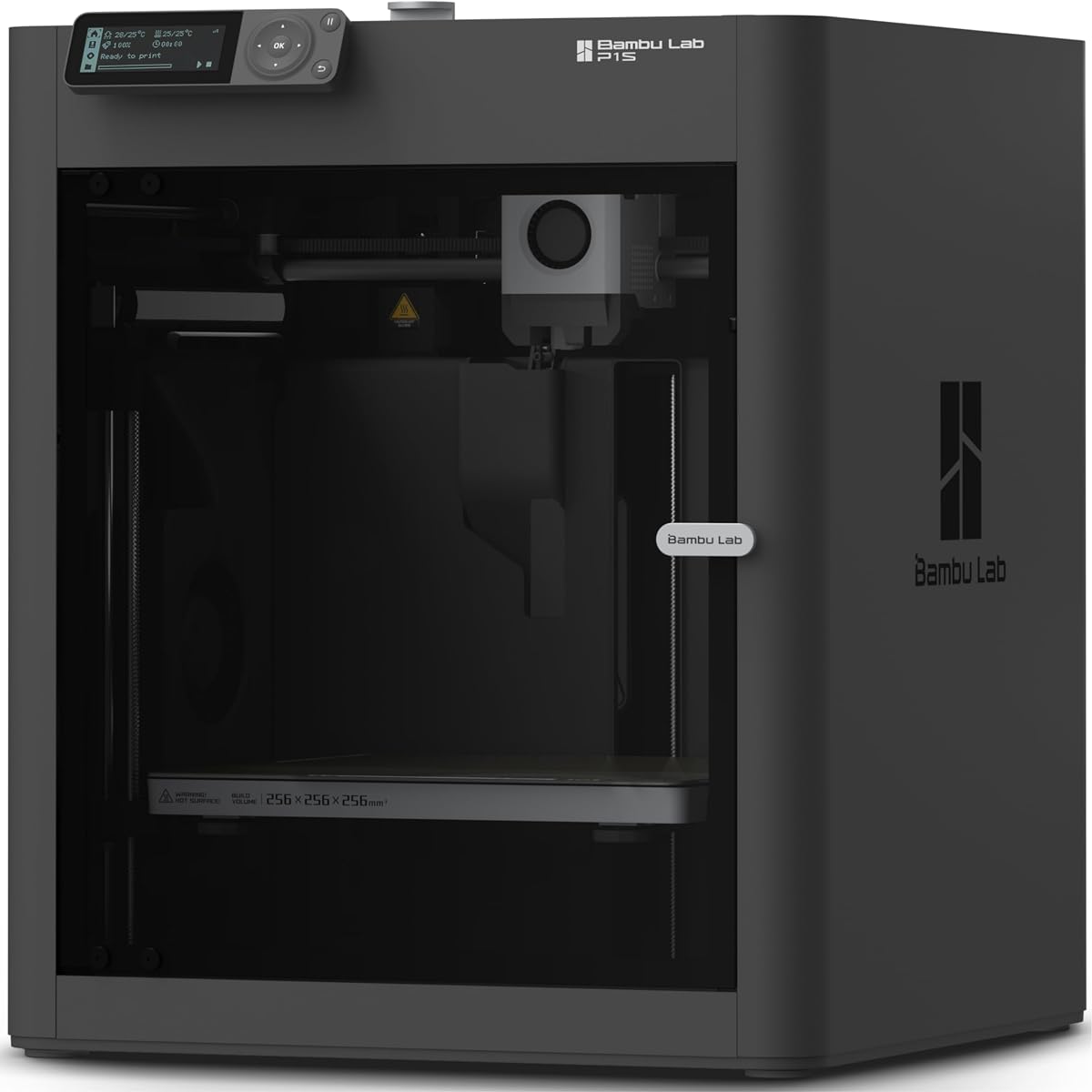
Bambu Lab P1S holds a 4.5 rating and features a fully enclosed design for better heat retention. It supports speeds up to 500mm/s with 20,000mm/s² acceleration. Setup takes 15 minutes with auto bed leveling. This printer is great for engineering filaments.
We may earn a commission when you buy through this link, at no additional cost to you.
While it supports up to 16 colors via AMS, that unit is sold separately. It handles PLA, PETG, and ABS reliably. The open design simplifies cleaning. Bambu Studio workflow ensures smooth operations. It is ideal for users needing stability.
Without AMS, multi-color adds cost. However, single-color prints are fast and consistent. The enclosure prevents warping. It balances speed with durability well. Consider this if you prioritize quality and enclosure benefits over color features.
Best for professionals needing reliable ABS or ASA prints. It avoids the need for external chambers. The auto leveling reduces setup time. Overall, it delivers strong performance for technical projects requiring enclosed environments.
Improves performance for advanced filaments like ABS.
500mm/s speed focuses on creating instead of waiting.
We may earn a commission when you buy through this link, at no additional cost to you.
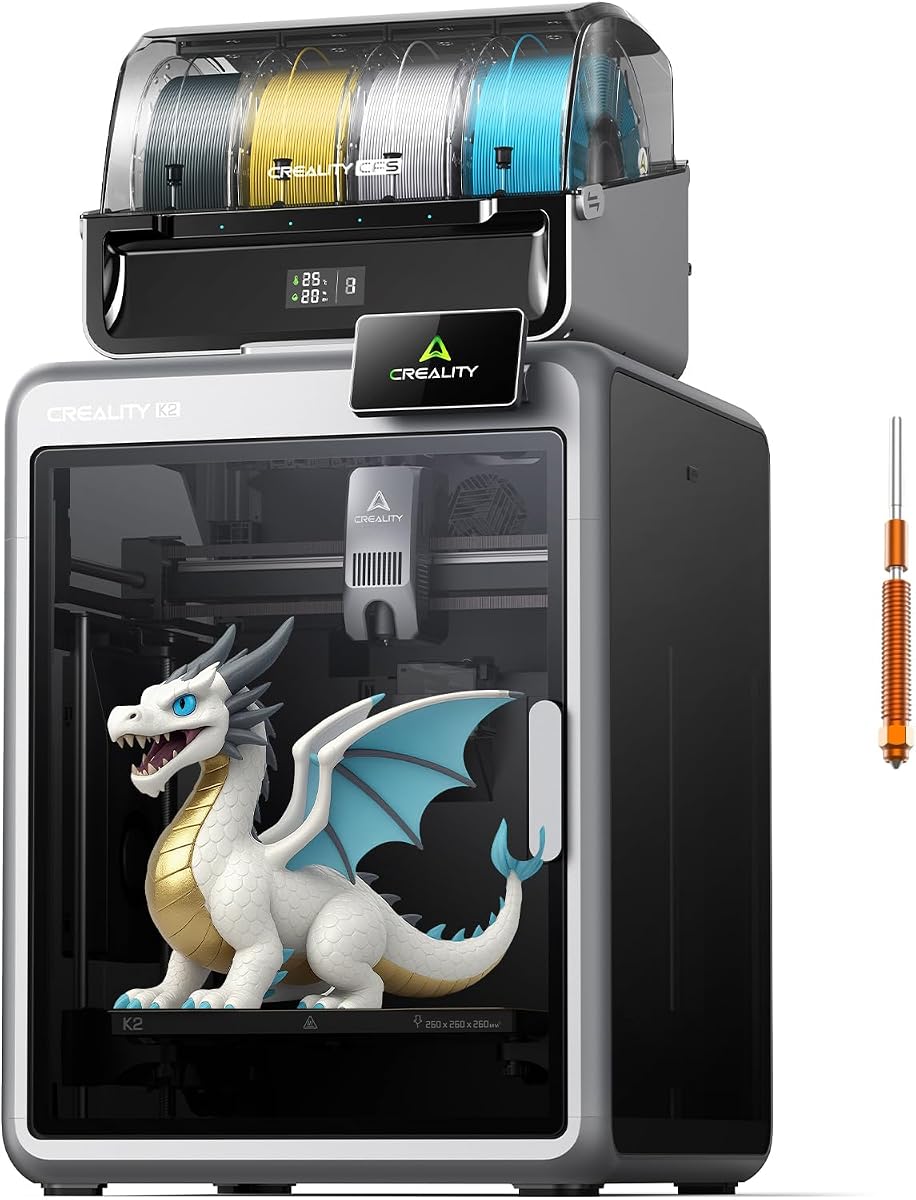
Creality K2 Combo offers plug-and-play convenience with 95% pre-assembly. It supports 600mm/s speeds and multi-color with CFS units. The smart AI camera monitors prints for failures. Silent mode keeps noise low during operation. This suits users wanting minimal setup.
We may earn a commission when you buy through this link, at no additional cost to you.
Step-servo motors adjust torque dynamically for accuracy. The build volume reaches 260mm. Auto leveling focuses only on the print area. AI camera tracks spaghetti failures in real-time. However, adding CFS units increases cost significantly.
The CFS limits to one unit in the base combo. Expansion to 16 colors requires more units. Noise is low but leveling may beep. It is versatile for various materials. Consider if you value ease of setup over budget.
Ideal for small businesses needing quick deployment. The direct drive extruder supports PLA and ABS well. Silent mode is great for home offices. Overall, it balances assembly ease with professional features efficiently.
Ready to print right after unpacking and screen installation.
Real-time monitoring detects failures and idle errors.
We may earn a commission when you buy through this link, at no additional cost to you.
Bambu Lab A1 has a 4.7 rating for being beginner-friendly with auto calibration. It delivers fast printing with 10,000 mm/s² acceleration. Quiet operation and simple touchscreen make it ideal for homes. This is great for kids or new users.
We may earn a commission when you buy through this link, at no additional cost to you.
Multi-color requires AMS lite, sold separately. Active flow rate compensation ensures smooth prints. It supports PLA and PETG well. The open build makes cleanup easy. However, lack of enclosure limits high-temp materials.
Auto leveling and Z-offset save time. 1-Clip quick swap nozzle aids maintenance. It is affordable and reliable. Best for basic prototyping. Consider adding AMS later for multi-color needs.
Ideal for students and families entering 3D printing. The learning curve is minimal. Quiet mode allows use during class. Overall, it balances speed with user-friendliness perfectly. Choose this for easy entry into fast printing.
Automatically handles Z-offset and bed leveling.
Active noise canceling reduces motor sounds.
We may earn a commission when you buy through this link, at no additional cost to you.
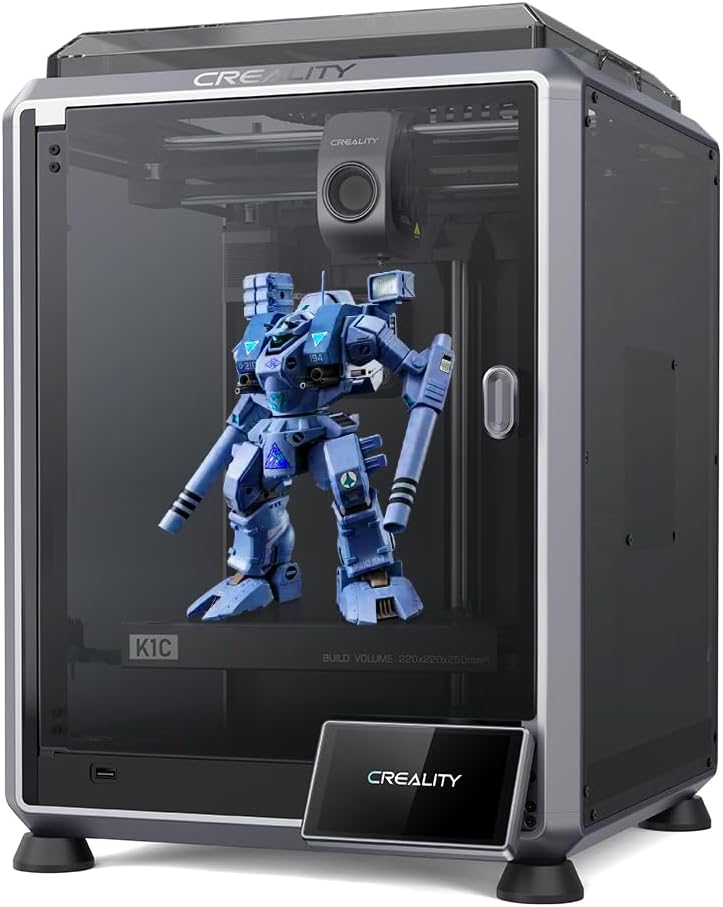
Creality K1C earns a 4.3 rating for supporting carbon fiber filament at high speeds. It reaches 600mm/s with 20,000mm/s² acceleration. Clog-free extruder grips filament tightly. AI camera detects failures. This suits users needing durable prints.
We may earn a commission when you buy through this link, at no additional cost to you.
Boot-up takes 3 minutes. Auto leveling saves time. Upgraded cooling improves layer bonding. The build size is smaller. However, the steel-stipped copper nozzle resists wear. It handles 300°C hotends well.
Smaller volume limits big prints. Cooling fans might be noisy. Still, it is fast and reliable. Best for small parts requiring strength. Consider if material durability is key.
Ideal for makers using engineering-grade materials. The auto calibration simplifies use. AI monitoring adds safety. Overall, it offers robust performance for tough filaments. Choose this for functional, strong prototypes.
Supports carbon fiber for durable engineering parts.
Tight filament grip prevents feeding issues.
We may earn a commission when you buy through this link, at no additional cost to you.
FLASHFORGE AD5X MC holds a 4.0 rating with a compact multi-material design. It prints at 600mm/s with CoreXY stability. IFS allows up to 4 colors. Auto leveling ensures consistent layers. This suits tight spaces.
We may earn a commission when you buy through this link, at no additional cost to you.
Full-auto calibration handles Z-offset and bed. Vibration compensation reduces shifts. Filament backup adds reliability. The side-by-side spools save desk space. However, build volume is smaller. Ideal for desktop users needing speed.
Limited volume restricts large prints. IFS simplifies setup. It is good for rapid prototyping. Consider if space is tight. Overall, it balances size and speed well.
Best for home offices with limited room. It is fast and versatile. Auto features reduce effort. Overall, it offers great value for small-scale production. Choose this for quick, multi-color jobs.
Intelligent Filament System enables multi-color printing.
Modular design allows flexible placement.
We may earn a commission when you buy through this link, at no additional cost to you.
Creality K2 (A) Combo earns a 4.0 rating with expandable multi-color features. It supports 16 colors via CFS units. Speeds reach 600mm/s. The RFID system identifies filaments. This suits artists needing vibrant prints.
We may earn a commission when you buy through this link, at no additional cost to you.
Auto relay and moisture-proof storage keep spools ready. Silent mode reduces noise. AI camera filters VOCs. 8G local storage aids offline use. However, base lacks CFS. Expansion costs more.
Direct drive hotend handles engineering materials. Dual Z-axis delivers layer consistency. The frame is aerospace aluminum. Setup is guided. Consider if you want color flexibility.
Ideal for creators needing 16 colors. The CFS system simplifies workflow. Smart features add safety. Overall, it offers strong scalability. Choose this for high-color professional needs.
Expandable up to 4 CFS units for vibrant results.
RFID system reads info and stores dry.
We may earn a commission when you buy through this link, at no additional cost to you.
Selecting a 3D printer for fast printing speed requires checking acceleration and max speed specs. This guide covers factors like build volume and calibration systems.
Max speed dictates how fast a nozzle moves, measured in mm/s. Acceleration impacts how quickly it reaches that speed. Look for models with 600mm/s and high acceleration for quick results.
Prioritize acceleration for rapid starts and stops without losing detail.
Build volume defines the max dimensions of a print. Larger volumes allow bigger objects but may reduce speed due to travel distance. Match size to your project needs.
Balance size with speed for efficient batch printing.
Auto leveling and calibration save setup time. High-speed printers need stable beds to maintain accuracy. Features like 1-click leveling reduce human error.
Choose models with robust auto calibration to maintain speed.
Multi-color systems add versatility but may slow printing during switches. Look for tools like tool changers or multi-material setups that minimize waste and downtime.
Select options with seamless color transitions.
CoreXY systems reduce moving mass, allowing higher speeds. Check for rigid frames that prevent vibration at high acceleration. This impacts print quality significantly.
Opt for CoreXY and sturdy frames.
Smart systems with auto-drying and RFID save time. Moisture causes failures, slowing workflow. Enclosed storage ensures consistent material quality.
Verify filament handling features.
Fast printers can be loud due to fans and motors. Silent modes or balanced fans reduce noise. This matters for home or office use.
Check noise specs for workspace fit.
Slicing software affects speed settings and quality. Integrated apps for monitoring simplify control. Look for open-source support for flexibility.
Ensure software supports high-speed profiles.
Start by calibrating the bed with auto leveling before first use. Ensure the nozzle is clean and temperature set correctly. Check filament alignment to avoid jams.
Monitor prints with camera tools to catch errors early. Clean nozzles regularly using appropriate temperatures. Use a dry filament box to prevent moisture issues.
Update firmware to access new speed profiles. Store filaments in dry conditions. Replace worn parts like nozzles to maintain print quality.
Several models reach 600mm/s, including the P2S and Kobra X. Speed depends on acceleration and setup. Check specs for acceleration rates to ensure quick prints.
High speeds can reduce detail if not calibrated. Vibration compensation and rigid frames help. Balance speed settings with filament type.
Not always, but enclosures help with ABS. They stabilize temperature. For PLA, open frames are fine. Consider material needs.
Prices range from budget to premium. High-speed units often cost more. Compare features to find value. Entry models offer good speed.
They add convenience for designs. Color switching may slow total time. Use tool changers for efficiency. Assess your color needs.
Clean nozzles and check belts regularly. Update firmware often. Use high-quality filament. Calibrate bed periodically.
Our top picks include the P2S Combo and Kobra X for speed. Each offers unique features like multi-color or auto leveling. Choose based on your specific workflow needs.
Prioritize acceleration and build volume for best results. Consider how often you switch colors. Balance speed with ease of use for efficiency.
Always check current prices before purchasing. Availability may vary. Use this guide to make informed decisions. Happy printing with your new fast 3D printer.