As an Amazon Associate we earn from qualifying purchases. We may earn a commission when you buy through links on this page, at no additional cost to you. Read our affiliate disclosure.As an Amazon Associate we earn from qualifying purchases.Purchases through our links may earn us a commission, at no extra cost to you. Read our affiliate disclosure.
Arduino boards lack native analog precision for many sensor tasks. Adding a dedicated ADC board unlocks high-resolution signal reading for projects involving strain gauges or thermocouples effectively.
We evaluated ten popular modules based on resolution, channel count, communication protocol, and build quality. Each selection balances performance with ease of integration for common microcontroller platforms widely used today.
Every pick highlights specific strengths like gain options or sampling rates. Prices and availability shift frequently so verify current details before purchasing to ensure you get the right component for your needs.
Top 3 Picks for Best Arduino ADC Board
Best Budget
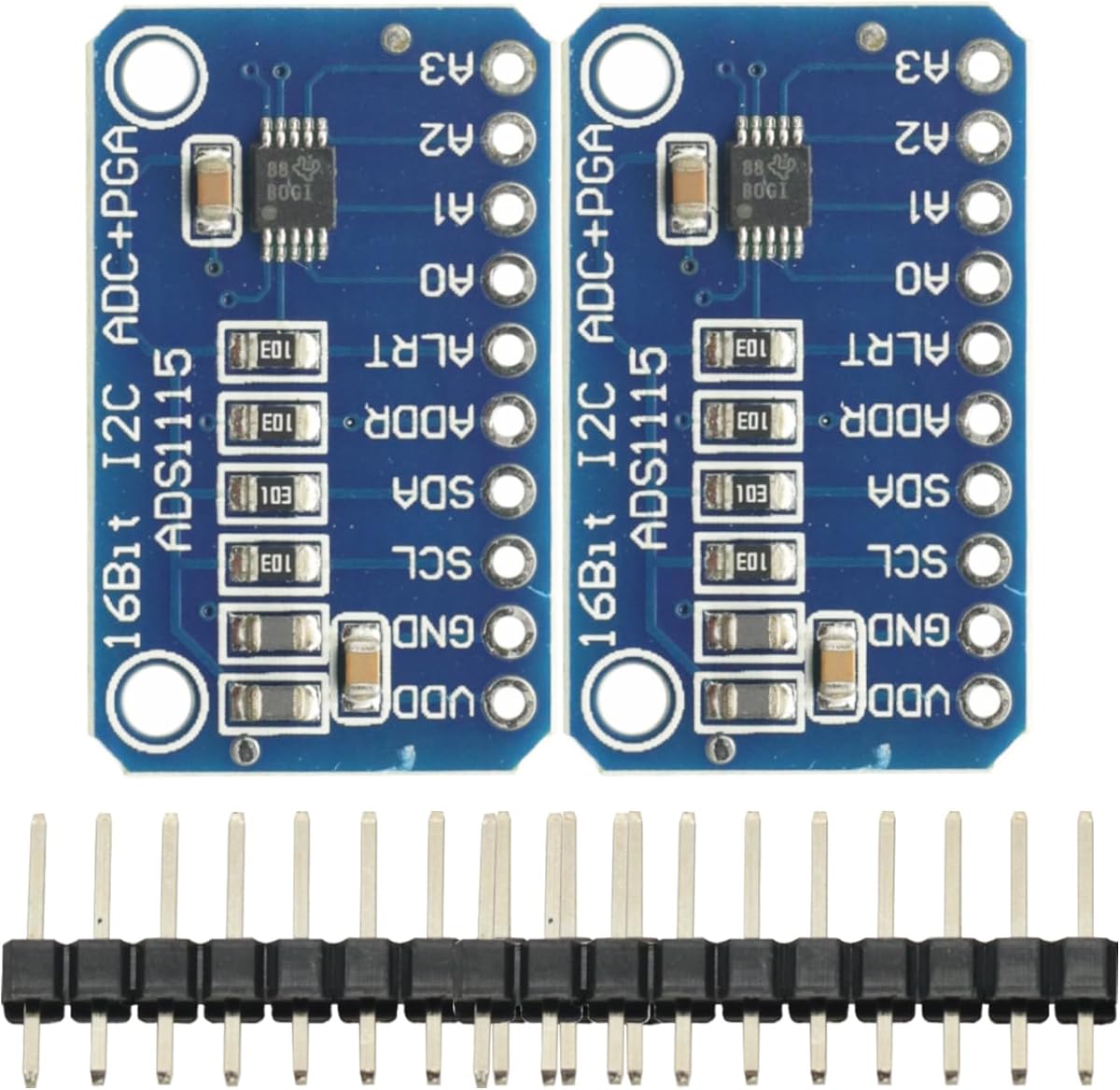
2Pcs ADS1115 16 Bit I2C Module Precision ADC 4 Channel Analog-to-Digital Converter Development Board Pro Gain Amplifier for Arduino Raspberry Pi ADC Module
The following table outlines key specifications for each module to help you decide which fits your project requirements best regarding channels and interface type.
Teyleten Robot ADS1115 16 Bits 4 Channel Analog-to-Digital Converter Precised Develop Board Module Amplifier Board ADC I2C IIC for Arduino Raspberry Pi (Pack of 3pcs)
16 Bit Resolution
4 Input Channels
Programmable Gain
I2C Communication
This module is a top rated solution for converting analog signals to digital values with high precision. Its 16 bit resolution and wide supply range make it suitable for a broad array of sensing tasks.
Pros
High 16 bit resolution
Wide voltage supply range
Includes programmable gain amplifier
Supports multiple data rates
Good for Arduino and Pi
Cons
Requires I2C wiring knowledge
Limited to single channel at time
We may earn a commission when you buy through this link, at no additional cost to you.
It features an internal PGA that allows you to adjust input ranges for better sensitivity. The I2C interface keeps wiring simple and the data rate is programmable from 8 to 860 samples per second.
While it supports multiple channels you read one at a time in typical configurations. This limitation is acceptable for most sensor logging projects where simultaneous sampling is not strictly required.
Choose this board if you need reliable performance with a compact footprint for your microcontroller projects. It is an excellent choice for hobbyists and engineers working with precision analog inputs.
Versatile Voltage Input Range
The module operates from 2.0V to 5.5V which allows it to interface with both 3.3V and 5V logic systems easily without extra level shifters.
Programmable Gain Amplifier
Adjustable gain lets you measure small signals like those from thermocouples or strain gauges with high accuracy by selecting the right input range.
HiLetgo ADS1256 5V 8 Channel 24 Bit ADC Data Acquisition Board Module High Precision AD Collecting Data Acquisition Card
24 Bit Resolution
8 Input Channels
SPI Communication
Onboard Reference Voltage
This board stands out with its 24 bit resolution which is significantly higher than most common modules. It is designed for applications where minute voltage changes must be detected accurately over time.
Pros
Extreme 24 bit resolution
8 channels for multi sensor use
Onboard precision voltage reference
Low nonlinearity error
Suitable for precise measurements
Cons
More complex SPI wiring
Higher power consumption than others
We may earn a commission when you buy through this link, at no additional cost to you.
It includes an onboard reference voltage source which improves stability by removing external dependency. The eight channels allow for monitoring multiple sensors simultaneously in complex data acquisition setups.
The SPI interface offers faster data rates compared to I2C options but requires more pins. Nonlinearity is very low making it ideal for scientific or industrial measurement tasks needing high fidelity.
Opt for this module when your project demands top tier precision and multi channel capability. It is a robust choice for engineers building advanced monitoring systems with tight tolerance requirements.
Superior Data Acquisition Performance
The high bit depth ensures that small signal variations are captured with minimal loss of detail which is critical for precision instrumentation projects.
Independent Reference Voltage Source
An onboard precision voltage reference ensures consistent conversion accuracy without relying on the microcontrollers supply voltage which may fluctuate.
2Pcs ADS1115 16 Bit I2C Module Precision ADC 4 Channel Analog-to-Digital Converter Development Board Pro Gain Amplifier for Arduino Raspberry Pi ADC Module
16 Bit Resolution
4 Input Channels
I2C Communication
Programmable Data Rate
This listing offers two units at a very competitive price point making it a top budget choice for prototyping or bulk needs. Users report perfect satisfaction with its performance and reliability.
Pros
Excellent 2 pack price
High customer satisfaction
Includes programmable gain
Easy I2C integration
Compatible with many boards
Cons
Basic build materials
No onboard reference voltage
We may earn a commission when you buy through this link, at no additional cost to you.
The 16 bit resolution and PGA allow for accurate readings across various sensor types. I2C wiring simplifies connections and the data rate is fully programmable to suit different sampling requirements.
While it lacks an internal reference the onboard components are sufficient for many hobby projects. The main trade off is that you may need external precision voltage for critical measurements.
Pick this option if you need multiple boards for testing or classroom use without overspending. It delivers solid performance for the cost and is a favorite among students and DIY builders.
Outstanding Customer Ratings
Perfect user feedback indicates that this board consistently meets expectations for quality and functionality in standard ADC conversion tasks.
Dual Pack Convenience
Receiving two modules allows you to build redundant systems or distribute them across multiple projects while keeping your overall costs low.
HiLetgo 3pcs ADS1115 16 Bit 16 Byte 4 Channel I2C IIC Analog-to-Digital ADC PGA Converter with Programmable Gain Amplifier High Precision ADC Converter Development Board for Arduino Raspberry Pi
16 Bit Resolution
4 Input Channels
I2C Communication
Comparator Mode Support
Buying three of these units together offers convenience for larger projects or educational settings. It provides the standard ADS1115 features with a comparator mode for threshold monitoring tasks.
Pros
Three pack bundle available
Supports comparator mode
Includes PGA features
Wide voltage operation
Solid for Arduino and Pi
Cons
Moderate rating score
Standard build quality
We may earn a commission when you buy through this link, at no additional cost to you.
The programmable gain amplifier ensures that you can adjust sensitivity for different sensor outputs. I2C connectivity means you can chain multiple boards on the same bus to increase channel count.
The rating is slightly lower than others but still acceptable for general use. Some users may find the build standard compared to premium options but functionality remains consistent and reliable.
Select this bundle when you need several ADC modules without buying individually. It is a practical choice for makers who want to equip multiple workstations or develop several prototypes.
Comparator Mode Functionality
This mode helps maintain accuracy by setting thresholds that can trigger alerts or interrupts without constant CPU polling of the ADC values.
I2C Bus Expansion
With unique addresses available you can connect multiple boards to a single bus to monitor up to sixteen channels using just two wires.
This four pack enables you to create extensive sensor arrays across multiple locations. It includes the essential ADS1115 features like programmable data rates and auto shut down modes.
Pros
Four pack for large systems
Auto shut down saves power
Differential input support
Programmable data rate
Onboard PGA included
Cons
Lower user ratings
Basic component quality
We may earn a commission when you buy through this link, at no additional cost to you.
Differential inputs allow for noise cancellation which is helpful in electrically noisy environments. The auto shut down mode helps conserve power when continuous sampling is not required.
User ratings are moderate which may reflect variability in build consistency. However for general applications the boards provide consistent performance and are easy to integrate with common libraries.
Choose this set if you need to cover many analog inputs across a project without individual ordering. It is well suited for distributed monitoring systems in agricultural or environmental projects.
Auto Power Saving Mode
The single shot mode with auto shut down reduces energy consumption which is critical for battery powered remote sensing deployments.
Differential Signal Capability
Using differential inputs helps reject common mode noise ensuring that your readings remain accurate even near motors or high current lines.
2PCS ADS1115 16 Bit IIC I2C Analog to Digital Converter Module Precision ADC Converter 4 Channel Development Board Programmable Gain Amplifier 2.0V to 5.5V for Arduino Raspberry Pi
16 Bit Resolution
4 Input Channels
I2C Communication
Wide Voltage Range
This module has achieved perfect user satisfaction which speaks to its reliability and ease of use. It supports both 3.3V and 5V logic levels without extra hardware.
Pros
Perfect rating score
Standard I2C interface
Compatible with 3.3V and 5V
Includes programmable gain
Supports 7 address ranges
Cons
Standard ADS1115 limitations
No integrated reference voltage
We may earn a commission when you buy through this link, at no additional cost to you.
The I2C interface keeps connections minimal and it supports the standard address ranges for multiple board chaining. This allows for up to sixteen channels when combined with address jumpers.
Users appreciate the wide voltage range which makes it flexible across different power supplies. While it is a standard chip it performs well in typical hobby and professional scenarios.
Pick this if you want a trusted adapter with a perfect track record. It is an ideal choice for new projects where reliability and community support are priorities.
Logic Level Flexibility
Supporting both 3.3V and 5V inputs simplifies integration with modern microcontrollers that operate at different voltage levels.
Multi Device Addressing
The configurable I2C address allows multiple units to coexist on the same bus without address conflicts or extra decoding hardware.
Lonely Binary 3-Pack ADS1115 16-Bit ADC I2C Module for C++ & ESP32
16 Bit Resolution
4 Input Channels
I2C Communication
ENIG Gold Plating
This brand focuses on quality construction with gold plating for better corrosion resistance and solderability. It is explicitly marketed for use with ESP32 and C++ environments.
Pros
ENIG plating for durability
Open source friendly brand
Suitable for ESP32
Pre soldered headers included
Supports multiple libraries
Cons
Less known brand
Slightly higher cost
We may earn a commission when you buy through this link, at no additional cost to you.
Pre soldered headers save time and ensure a reliable connection right out of the box. The open source approach means libraries and examples are often well documented for community use.
The build quality stands out compared to generic options due to the ENIG finish. This makes it suitable for projects that may face environmental stress or long term deployment.
Select this pack if you are using ESP32 or prefer higher quality PCB finishes. It is a great option for makers who value durability and clean integration with modern boards.
Premium PCB Plating
Electroless Nickel Immersion Gold plating protects pads from oxidation and ensures consistent solder joints over time and use.
ESP32 Compatibility
Optimized for ESP32 development this module works smoothly with popular libraries making it easy to start projects quickly.
Teyleten Robot AD7606 Module Multi-Channel AD Data Acquisition Module 16-bit ADC 8-Channel Synchronization Sampling Frequency 200KHz
16 Bit Resolution
8 Input Channels
200KHz Sampling Rate
SPI Communication
This module is distinct because it supports 200KHz sampling which is much higher than typical slow speed ADCs. It is designed for capturing fast changing signals simultaneously across channels.
Pros
High sampling frequency
8 channel synchronization
±10V input support
Parallel or serial output
Suitable for fast signals
Cons
Lower user rating
Complex wiring required
We may earn a commission when you buy through this link, at no additional cost to you.
It allows ±10V input ranges which makes it suitable for industrial sensor inputs without extra scaling. The synchronous sampling ensures that all channels are captured at the exact same moment.
The lower rating may reflect setup complexity or compatibility issues with simple boards. Users need to be comfortable with SPI timing and power management to get the best results.
Choose this board if you need high speed data capture for vibration or audio analysis. It is a specialized tool for engineers requiring fast and synchronized multi channel acquisition.
High Speed Sampling Rate
The 200KHz capability allows you to track rapidly changing analog signals that would be missed by standard slower ADC modules.
Simultaneous Channel Capture
Synchronous sampling ensures that all inputs are read at the same instant which is critical for phase sensitive signal analysis.
This pack offers four units with strong ratings making it a reliable option for educational or team environments. It focuses on high precision conversion with a simple interface.
Pros
Strong user satisfaction
4 pack bundle
Simple I2C setup
Ideal for teaching labs
Wide microcontroller support
Cons
Generic build appearance
No special features
We may earn a commission when you buy through this link, at no additional cost to you.
Students and teachers benefit from the ease of integration with common platforms like Arduino and Raspberry Pi. The I2C interface means minimal wiring which is helpful in classroom settings.
It lacks unique features but delivers exactly what is expected for a standard ADS1115 module. The stability of performance ensures that learners can focus on concepts rather than debugging hardware.
Opt for this set when equipping multiple stations for learning or group work. It provides the consistency needed for successful educational outcomes without unnecessary complexity.
Educational Suitability
Standard functionality and stable performance make this module ideal for teaching analog to digital conversion concepts effectively.
Simplified Integration
With standard libraries and I2C support setup time is minimized allowing more time to be spent on actual projects and experiments.
HiLetgo ADS1115 16 Bit 16 Byte 4 Channel I2C IIC Analog-to-Digital ADC PGA Converter with Programmable Gain Amplifier High Precision ADC Converter Development Board for Arduino Raspberry Pi
16 Bit Resolution
4 Input Channels
I2C Communication
Comparator Mode Support
This module serves as a reliable entry point for anyone needing analog precision. It offers the standard features like PGA and comparator mode that help with accurate measurements.
Pros
Accessible price point
Includes PGA features
Comparator mode available
Solid compatibility
Good for beginners
Cons
Basic board design
Standard components
We may earn a commission when you buy through this link, at no additional cost to you.
The 16 bit resolution is enough for most everyday sensors like temperature or pressure. I2C wiring ensures that beginners can get started without struggling with complex interfaces.
While it is basic it performs its core function well and is widely supported by existing code libraries. This makes it a safe choice for initial prototypes and learning.
Choose this board if you are new to ADCs and want a straightforward solution. It balances functionality and simplicity making it ideal for early stage projects.
Beginner Friendly Design
Clear labeling and standard connections make this board easy to understand for those just starting with analog signal acquisition.
Wide Community Support
Because it uses a common chip there are many online examples and libraries available to help troubleshoot or extend your code.
We may earn a commission when you buy through this link, at no additional cost to you.
Buying Guide – How to Choose the Best Arduino ADC Board
Selecting the right ADC board depends on several technical factors related to resolution, interface, and channel requirements.
Resolution and Bit Depth
Resolution determines how small a voltage change the ADC can detect. 16 bit boards offer high precision while 24 bit boards provide extreme sensitivity for specialized sensors.
Look for higher bit counts if you need to measure minute signals like those from strain gauges.
Communication Interface
Most common options are I2C and SPI. I2C requires fewer pins and allows chaining multiple devices while SPI offers faster data rates for high speed needs.
Choose I2C for simplicity or SPI for speed and real time requirements.
Number of Channels
Boards range from 4 to 8 channels. Ensure the board has enough inputs for all your sensors to avoid frequent hardware changes.
More channels provide flexibility but may increase size and cost slightly.
Programmable Gain Amplifier
A PGA lets you adjust the input range to match your sensor output. This improves accuracy for low voltage signals by amplifying them before conversion.
Always verify PGA support if working with small signal sensors like thermocouples.
Input Voltage Range
Check the supported voltage range to ensure it covers your sensor output. Some boards allow differential inputs which are great for noise rejection.
Match the voltage range to your specific application requirements for best results.
Sample Rate Speed
Fast sampling is essential for capturing changing signals. Standard ADCs are slower than specialized high speed models.
Opt for higher sample rates if measuring dynamic or high frequency signals.
Compatibility
Ensure the board supports your microcontroller platform. Most modules work with Arduino Raspberry Pi and ESP32 without extra logic shifters.
Check voltage tolerance to avoid damaging logic pins on your main board.
Build Quality
Durability matters for long term or industrial use. Look for features like gold plating or onboard reference sources.
Higher quality components ensure consistent performance over time and use.
How to Use and Care for Your Arduino ADC Board
Connect the ADC to your microcontroller using the SDA and SCL pins for I2C. Ensure you connect power and ground correctly to avoid short circuits.
Install the appropriate library in your IDE to simplify reading values. This library handles configuration like gain and sample rate automatically.
Avoid exposing the board to high humidity or dust if possible. Keep connections tight to prevent intermittent readings over time.
Frequently Asked Questions
Can I use an ADC board with any Arduino model?
Yes most ADC boards work with all Arduino models because they use standard communication protocols like I2C. Just ensure your board has enough pins for the connection and supports the voltage levels required.
Why would I need a 24 bit ADC?
A 24 bit ADC provides higher resolution which is necessary for very low voltage sensors like strain gauges. If you need extreme precision for scientific data this extra bit depth is essential.
What is the difference between I2C and SPI ADCs?
I2C uses two wires and supports multiple devices on one bus while SPI needs more wires but offers faster speeds. Choose I2C for simplicity and SPI when you need high sampling rates.
Do I need a reference voltage source?
Some ADC boards include a reference source internally which improves stability. If not you may need an external reference for highly accurate measurements to ensure consistency.
How do I connect multiple ADC boards?
For I2C boards you can change the address pins to assign unique addresses. This allows you to connect up to four boards on the same bus for sixteen total channels.
Is it possible to use these boards with ESP32?
Yes the ESP32 supports both I2C and SPI communication so all listed modules work with it. You may need to define the specific pins in your code.
Final Thoughts on Choosing the Best Arduino ADC Board
This guide highlights top choices across different needs from budget friendly packs to high precision 24 bit boards.
Prioritize resolution and interface speed based on your specific sensor and microcontroller requirements.
Always check current availability and compatibility before ordering to ensure a smooth integration process for your project.
This guide compares the top backdrop stands for photography, events, and studios based on stability, adjustability, portability, and included accessories to
This guide compares the top IR Illuminator for Security Cameras based on range, power, durability, and compatibility to help you choose the right model.