
Luster Leaf 1625 Digital Soil Thermometer
4.2Editor score
Fast seasonal planting checks
Compact easy-to-use design
Reliable temperature readings
Discover the top 10 Digital Soil Thermometer models for 2026. Compare features, accuracy, and ease of use to find the perfect tool for your garden or farm
Choosing the right Digital Soil Thermometer is essential for maintaining healthy plants and optimizing growth conditions. Accurate temperature readings help gardeners know when to plant seeds, transplant seedlings, or adjust watering schedules for maximum success in any environment.
We compared ten leading models based on accuracy, durability, ease of use, and additional features like pH or moisture sensing. Our analysis focuses on real-world performance, user feedback, and technical specifications to ensure you get a reliable tool for indoor and outdoor gardening tasks.
Each pick highlights specific strengths, from budget-friendly options to advanced multi-sensor kits. Remember that prices fluctuate frequently, so check the current listings before purchasing. This guide aims to simplify your decision by breaking down what matters most for your unique gardening requirements.
4.2Editor score

4.2Editor score

4.2Editor score
This side-by-side comparison highlights key specifications for all ten models. Each entry includes essential details to help you quickly identify which device matches your specific gardening needs and budget constraints.




The YAMRON 4-in-1 Soil Moisture Meter stands out as a top choice for gardeners needing versatile data. With a 4.2 rating, it delivers accurate readings for moisture, pH, temperature, and sunlight. Its large LCD screen and rotating head make it exceptionally user-friendly for all ages.
We may earn a commission when you buy through this link, at no additional cost to you.
Key strengths include its multifunctional design, allowing you to monitor multiple soil conditions simultaneously. The backlight ensures readability in low light, while the 45-degree rotating head lets you view data without bending. This reduces physical strain during extensive garden checks.
While it offers great value, users should note the soil preparation requirement. Testing dry or hard soil can damage the probe, so moistening the area beforehand is crucial. Additionally, batteries are not included, which is a minor inconvenience for immediate use.
This meter is ideal for home gardeners and plant enthusiasts who want scientific data without complex tools. Whether managing indoor houseplants or outdoor garden beds, the YAMRON provides reliable insights to optimize watering and lighting schedules effectively.
Measures moisture, pH, temperature, and sunlight to give a complete picture of plant health.
The rotating head allows comfortable viewing without bending over, reducing back strain.
We may earn a commission when you buy through this link, at no additional cost to you.
The Luster Leaf 1625 is a trusted tool for determining soil temperature during planting seasons. Rated 4.2 stars, it offers reliable readings without the complexity of multi-function devices. Its simplicity makes it a favorite for gardeners focused on temperature accuracy.
We may earn a commission when you buy through this link, at no additional cost to you.
Its main advantage is cost-effectiveness combined with durability. The device is built to withstand regular use in various soil conditions. Users appreciate its quick response time, which helps make timely decisions about transplanting or seed sowing.
However, it lacks additional sensors like moisture or pH, which some gardeners might find useful. The display is straightforward, lacking backlight or advanced features. This keeps the price low but means you need separate tools for other soil metrics.
Buy this if you need a dedicated thermometer for seasonal planting without extra costs. It is perfect for gardeners who prioritize temperature data and want a no-fuss, reliable tool for their early-season gardening tasks.
Essential for knowing when soil is warm enough to plant seeds or transplant seedlings.
Offers reliable temperature measurement at a budget-friendly price compared to multi-sensor models.
We may earn a commission when you buy through this link, at no additional cost to you.
This 7-in-1 Digital Soil Tester Kit offers extensive monitoring capabilities for serious plant enthusiasts. With a 4.4 rating, it measures moisture, pH, temperature, light, fertility, EC, and TDS. This breadth of data supports scientific plant care across various environments.
We may earn a commission when you buy through this link, at no additional cost to you.
The device shines with its detailed fertility and water quality functions. Gardeners can assess nutrient levels and water conductivity alongside basic metrics. The large backlit screen ensures clear readings in any lighting condition, enhancing usability during evening checks.
A trade-off is the cost relative to simpler thermometers. Also, like many probes, it requires moist soil to function correctly without damage. Users must water the test area before checking to ensure accuracy and preserve the device lifespan.
Ideal for advanced gardeners or those managing diverse plant collections, this kit replaces multiple tools. Its comprehensive data helps optimize watering, fertilizing, and lighting schedules effectively for healthier growth.
EC and TDS functions help monitor nutrient content and water quality for precise care.
White backlight ensures data is visible even in low-light conditions without external help.
We may earn a commission when you buy through this link, at no additional cost to you.
The Reotemp K83B1 is designed specifically for composting and deep soil temperature checks. Its 4.7 rating reflects excellent durability and accuracy for organic matter monitoring. The 12-inch stem allows deep insertion into compost piles or large soil areas.
We may earn a commission when you buy through this link, at no additional cost to you.
Its stainless steel construction ensures long-term use in harsh conditions. Included is a free digital composting guide, adding value for beginners learning to manage piles efficiently. The waterproof and dust-proof design withstands outdoor elements reliably.
While it lacks a digital LCD display found in other models, the analog dial is clear and easy to read. However, it is less versatile for general gardening compared to multi-sensor devices. It excels where composting is the primary focus.
This thermometer is perfect for compost enthusiasts and farmers managing large soil beds. Its robust build and guide make it a reliable companion for maximizing compost efficiency and monitoring deep soil warmth.
Free digital guide helps users manage compost piles for efficient and effective decomposition.
304 stainless steel case resists corrosion and damage in outdoor environments.
We may earn a commission when you buy through this link, at no additional cost to you.
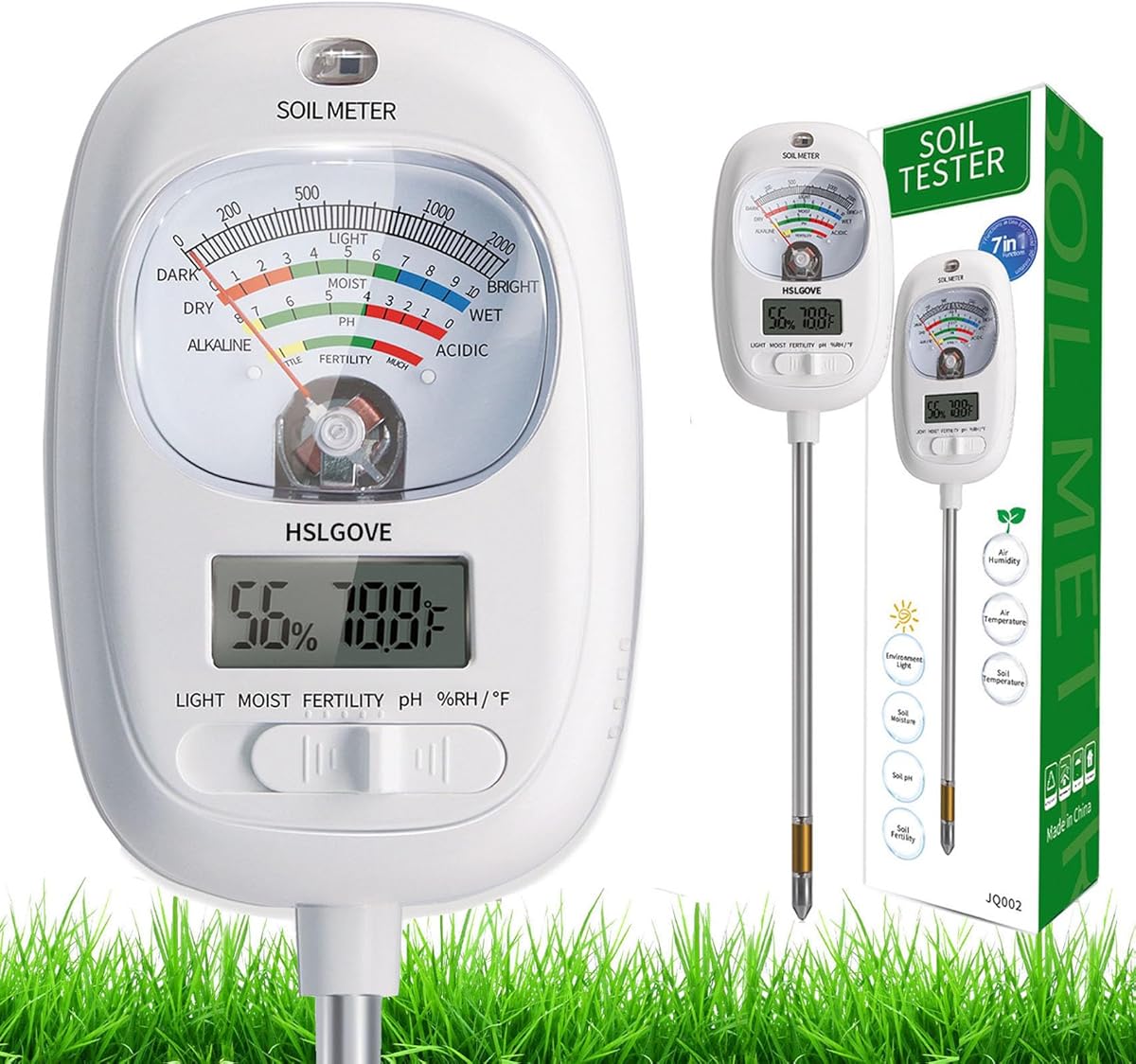
The HSLGOVE Soil Test Kit distinguishes itself with a dual-screen design that monitors both soil and air conditions. Rated 4.4 stars, it covers seven parameters including humidity and temperature. This offers a broader view of the growing environment than single-display models.
We may earn a commission when you buy through this link, at no additional cost to you.
Its patented dual-dial system simplifies reading multiple data points simultaneously. The probe is built from three durable metals for accuracy and longevity. Users can switch modes with a single button, making quick checks efficient during garden walks.
One limitation is the lack of backlighting, which can make reading difficult in shade or evening. Additionally, it requires replacing all batteries at once, which may be slightly inconvenient. However, the comprehensive data compensates for these minor drawbacks.
Ideal for gardeners tracking microclimates, this kit helps manage seedlings scientifically. Its ability to monitor air humidity alongside soil metrics makes it valuable for indoor and outdoor plant care.
Simultaneously tracks soil and air temperature and humidity for complete environment monitoring.
Built with three metal materials to ensure long-term durability and accurate readings.
We may earn a commission when you buy through this link, at no additional cost to you.
The Urban Worm Soil Thermometer is specifically designed for vermicomposting enthusiasts. Its 4.6 rating highlights its effectiveness in monitoring worm bin conditions. The color-coded tick marks make it easy to see if temperatures are within the ideal 55°F to 90°F range.
We may earn a commission when you buy through this link, at no additional cost to you.
Its 5-inch stainless steel stem ensures durability and precise depth for typical worm bins. The simple analog display reduces confusion, allowing quick checks without complex settings. This focus on simplicity makes it accessible for anyone managing composting worms.
While it lacks digital features or multi-functionality, it excels in its niche. Worms are sensitive to temperature, and this device provides the essential data needed to prevent overheating or chilling. It is less versatile for general soil gardening.
This tool is best for vermicomposters who need reliable temperature monitoring. Its straightforward design and specific scale ensure worm health and efficient compost production without unnecessary complexity.
Color-coded marks simplify monitoring to ensure worms stay within their happy temperature range.
Five-inch stem penetrates deep into compost to provide accurate core temperature readings.
We may earn a commission when you buy through this link, at no additional cost to you.
The ECOWITT WN34BS is a premium digital soil sensor designed for advanced monitoring. With a 4.2 rating, it offers wireless connectivity for real-time data viewing on smartphones. This transforms how gardeners track soil temperatures across multiple locations.
We may earn a commission when you buy through this link, at no additional cost to you.
Its IP65 waterproof rating ensures durability in outdoor environments. The 11.8-inch probe penetrates deep enough for accurate readings in beds or pots. Support for up to eight channels allows expansion as your garden grows, making it a scalable solution.
To unlock full remote features, you need a separate Wi-Fi gateway, which adds to the cost. While the base sensor works for local reading, remote monitoring requires setup. This complexity is acceptable for users valuing convenience and automation.
Ideal for tech-savvy gardeners or large-scale farms, this sensor provides actionable data anywhere. Its connectivity and durability make it a top choice for those seeking modern, smart gardening tools.
Pair with a gateway to view live data via smartphone apps for instant alerts.
Supports multiple channels to track temperatures across different garden zones simultaneously.
We may earn a commission when you buy through this link, at no additional cost to you.
This Digital Soil EC Meter focuses on electrical conductivity and temperature for nutrient management. Rated 4.1 stars, it helps gardeners understand salt content and soil health. Its ATC function ensures readings remain accurate across temperature variations.
We may earn a commission when you buy through this link, at no additional cost to you.
The IP67 waterproof electrode protects the sensor during outdoor use. A backlight LCD display improves readability, while the included batteries make it ready to use. Calibration is straightforward, though it requires a separate solution not included in the kit.
While it provides valuable nutrient data, it is specialized for fertilization tracking rather than general moisture or pH. Users need to understand EC values to interpret results correctly. This adds a learning curve but offers precision for advanced needs.
Ideal for serious growers optimizing plant nutrition, this meter helps prevent over-fertilization or nutrient deficiencies. Its professional accuracy and durability make it a strong tool for enhancing crop performance.
Electrical conductivity readings help monitor salt and nutrient levels for healthy root systems.
Automatic temperature compensation ensures consistent accuracy regardless of environmental conditions.
We may earn a commission when you buy through this link, at no additional cost to you.
This wireless plant moisture meter allows checking plants from across your home or yard. Rated 4.5 stars, it uses TDR technology for consistent readings. You can monitor up to 12 plants from one display, making it ideal for extensive collections.
We may earn a commission when you buy through this link, at no additional cost to you.
The long wireless range and large screen eliminate the need to bend down for checks. Inserting the probe once means less disturbance to roots over time. Real-time alerts help prevent overwatering or underwatering by providing timely notifications.
Setup involves pairing sensors with the display unit, which may require initial patience. While not a traditional thermometer, it includes temperature data alongside moisture. This trade-off offers convenience and comprehensive plant health tracking.
Perfect for busy gardeners or those with mobility challenges, this system simplifies plant care. Its remote capabilities and multi-device support make it a modern solution for maintaining healthy indoor and outdoor plants.
Monitor conditions from your couch or office with up to 328 feet wireless range.
Insert probe once to continuously track moisture without repeatedly disturbing roots.
We may earn a commission when you buy through this link, at no additional cost to you.
This 7-in-1 Soil Meter offers robust monitoring for farms and large gardens. Its 5-probe system ensures faster and more precise data compared to standard models. The split HD display makes reading comfortable, reducing the need to crouch for results.
We may earn a commission when you buy through this link, at no additional cost to you.
Built with corrosion-resistant materials, it withstands long-term outdoor exposure effectively. Users can monitor pH, temperature, humidity, and fertility in one tool. It also supports hydroponic substrate testing, adding versatility for diverse growing systems.
While the rating is slightly lower, the heavy-duty build and large screen make it practical for professional use. Careful soil preparation is needed to avoid probe damage, similar to other electronic testers. This ensures reliable results over time.
Ideal for commercial growers or large home gardens, this meter consolidates multiple functions. Its durability and display design make it a practical choice for managing extensive planting areas efficiently.
Five-probe system offers significantly enhanced data precision for multiple soil metrics.
Premium materials ensure the tool withstands tough soil and long-term outdoor use.
We may earn a commission when you buy through this link, at no additional cost to you.
Selecting the right Digital Soil Thermometer involves considering accuracy, durability, and additional features that match your gardening style. This guide outlines key factors to ensure you invest in a tool that supports healthy plant growth.
Accuracy is the most critical factor when choosing a digital soil thermometer. Look for devices with calibration features and fast response times to ensure reliable data. Precision impacts how well you can time your planting or watering schedules effectively.
The length of the probe determines how deep you can test soil temperature. Stainless steel probes resist corrosion and last longer in wet conditions. Choose a length that suits your plant types, from shallow potted plants to deep garden beds.
A clear display with backlight helps in low-light conditions or when bending over. Larger screens make reading values easier without squinting. Consider ergonomic designs like rotating heads to reduce strain during extended use.
Multi-function devices offer moisture, pH, and light data alongside temperature. Decide if these extra features justify the cost for your needs. Basic thermometers may suffice for seasonal planting, while comprehensive kits help overall plant health.
Wireless models allow remote monitoring without walking to each plant. These often require a gateway but provide convenience for large or hard-to-reach gardens. If you want real-time alerts, check app support and range specifications.
Outdoor tools face weather and soil conditions, so waterproof ratings like IP65 or IP67 are valuable. Corrosion-resistant materials extend the tool's lifespan. Ensure the device can handle frequent insertion and removal without damage.
Simple interfaces and quick readings save time during garden checks. Avoid overly complex menus if you prefer straightforward operation. Battery life and replacement ease also factor into daily usability.
Prices vary from basic thermometers to advanced kits. Determine your budget and prioritize features that offer the most value. Sometimes a dedicated tool costs less than a multi-function device with unnecessary capabilities.
To get accurate readings, insert the probe into moist soil at the desired depth. Wait for the display to stabilize, usually around 10 seconds, before noting the value. Avoid testing in dry or hard ground, as this can damage the sensor.
Clean the probe after each use to prevent soil residue buildup. Store the device in a dry place away from direct sunlight or extreme temperatures. If it has batteries, remove them during long periods of non-use to prevent corrosion.
Regularly check calibration if your model supports it. For models requiring specific solutions, follow the manufacturer's instructions. Proper maintenance ensures long-term accuracy and extends the lifespan of your gardening tool.
Insert the probe about 4 to 6 inches deep for accurate soil temperature readings. For compost, deeper insertion may be needed to measure core heat. Always ensure the soil is slightly moist to avoid damaging the sensor.
Most digital probes require moist soil to function correctly without damage. Dry or hard soil can prevent accurate readings or break the sensor. Lightly water the test area before measuring if the ground is dry.
Ideal temperatures vary by plant type, but many seeds germinate between 60°F and 75°F. Check specific seed packets for exact requirements. Using a thermometer helps you plant at the optimal time for successful growth.
Yes, many models are designed for compost piles to monitor heat levels. Compost should reach 135°F to 160°F to kill pathogens and weed seeds. A longer probe helps measure deep pile temperatures accurately.
Most digital probes stabilize in 10 to 60 seconds depending on the model. Modern sensors often provide results faster than analog dial types. Follow the manual for specific wait times to ensure accuracy.
Some high-end models require periodic calibration for sustained accuracy. Basic devices often come pre-calibrated and need minimal adjustment. Check the instructions to see if calibration solutions are recommended for your tool.
Wireless models are worth it if you want remote access to data. They save time and effort when managing many plants. However, they require a gateway and battery maintenance which adds complexity.
Wipe the probe with a damp cloth and mild soap after use. Dry it thoroughly before storing to prevent rust or corrosion. Avoid using harsh chemicals that might damage the sensor coating.
Choosing the right Digital Soil Thermometer ensures you provide optimal conditions for your plants. Whether you need a basic tool for seasonal planting or a comprehensive kit for detailed analysis, there is a model for every gardener.
Prioritize accuracy and durability based on how often you plan to use the device. Consider additional features like wireless connectivity or extra sensors only if they align with your gardening goals.
Prices and availability may change, so always verify current listings before purchasing. Investing in a reliable tool saves time and effort in the long run, helping your garden thrive with minimal guesswork.