
Zigbee Human Presence Sensor
4.0Editor score
Wide Zigbee compatibility with hubs
Long battery life up to two years
Detects stationary presence reliably
Compare the top Home Assistant Human Presence Sensor models for accurate detection, automation, and seamless integration into your local smart home ecosystem
Finding the right Home Assistant Human Presence Sensor can transform your smart home automation by ensuring lights and devices respond accurately to your actual presence rather than just motion.
We compared ten leading models based on radar technology, connectivity options, integration ease, and overall reliability to help you choose the best fit for your specific setup and needs.
Each pick highlights key strengths and trade-offs to guide your decision, though keep in mind that product availability and pricing can fluctuate frequently on major online marketplaces.
4.0Editor score

4.4Editor score

3.6Editor score
This side-by-side comparison breaks down the core specifications and capabilities of each model so you can quickly identify which sensor aligns best with your Home Assistant environment and budget.




The Akamatis Human Presence & Light Sensor Litos v3 stands out as a top tier choice for Home Assistant users seeking reliable detection without complex wiring or hub dependencies. It earned a strong rating for its ability to detect both motion and stationary presence accurately while integrating ambient light data directly into the device.
We may earn a commission when you buy through this link, at no additional cost to you.
Its standout quality lies in the combination of 24GHz mmWave radar and a dedicated ambient light sensor. This allows for truly smart automations where lights turn on only when someone is present and the room is dark, eliminating the need for separate sensors or complex logic chains. The light permeable front panel ensures the light sensor readings are not skewed by the device housing.
While it requires a Home Assistant installation which might be a barrier for beginners the pre-flashed ESPHome firmware makes connecting to your network straightforward without manual flashing. The main trade-off is the Wi-Fi dependency which could be less ideal if your network has spotty coverage in certain rooms but for most users it is a reasonable compromise for the ease of integration.
This sensor is ideal for Home Assistant enthusiasts who value local control and precise automation logic. If you are looking to upgrade from traditional motion sensors and want a device that understands context like lighting conditions this Litos v3 is a highly recommended pick that delivers performance right out of the box.
Detecting presence alone is not enough for smart lighting. Knowing if the room is already bright enough to skip turning on lights saves energy and improves comfort by preventing unnecessary illumination when natural light is sufficient.
Most mmWave sensors require manual flashing which can be daunting for new users. With Litos v3 you simply connect to its Wi-Fi hotspot enter your credentials and it is ready to join Home Assistant instantly through the native ESPHome integration.
We may earn a commission when you buy through this link, at no additional cost to you.
The Akamatis Human Presence Sensor v2.2 is a solid contender for those who want powerful mmWave detection at a competitive price point while maintaining strict compatibility with Home Assistant. It builds on the success of previous versions by refining the antenna design and maintaining an easy plug-and-play experience for users who value local control.
We may earn a commission when you buy through this link, at no additional cost to you.
This model shines with its external Wi-Fi antenna which significantly improves signal stability compared to internal antennas found on many budget devices. Combined with the Seeed C3 controller and HLK-LD2410B radar it offers reliable detection up to 20 feet indoors. The FCC certification also ensures that the hardware meets safety and compliance standards for home use.
The main limitation compared to the Litos v3 is the lack of an integrated ambient light sensor meaning you may need a separate device if you want light-aware automations. Additionally like all models in this series it requires Home Assistant to be running which might be a hurdle for those preferring cloud-based ecosystems but for local-first setups it is ideal.
If you prioritize connectivity stability and cost efficiency this sensor is a great choice. It is particularly well suited for rooms where signal strength is an issue or where you already have a separate light sensor setup in place. The USB-C power option also means no battery changes are ever needed.
Wi-Fi signals can struggle to penetrate thick walls or travel long distances. An external antenna boosts the range and reliability ensuring your sensor stays connected and responsive even in larger homes or areas with physical obstacles.
By working exclusively with Home Assistant this device ensures your automation data stays local. This reduces latency and increases privacy while avoiding reliance on external servers that might experience downtime or slow response times.
We may earn a commission when you buy through this link, at no additional cost to you.
For buyers looking for an affordable way to bring mmWave presence detection into their smart home the Zigbee Human Presence Sensor delivers a compelling balance of performance and price. It has earned a solid rating for its ability to detect stationary people reliably which solves the common frustration of lights turning off unexpectedly when reading or sleeping.
We may earn a commission when you buy through this link, at no additional cost to you.
The key strength here is the versatility of connectivity. It works with any Zigbee compatible hub including popular options like Echo devices SmartThings Hubitat and Home Assistant itself. This means you do not need to buy a new gateway if you already have one in place. The long battery life also reduces maintenance as the two AAA batteries can last up to two years.
While it is a budget friendly option it is not without compromises. The rating is slightly lower than premium models which may reflect occasional sensitivity calibration issues. Also reliance on a Zigbee hub means you cannot use it with Wi-Fi only networks but for most smart home setups this is a non-issue.
This sensor is perfect for renters or anyone on a budget who wants reliable presence detection without investing in expensive hardware. It is an excellent option for guest rooms hallways or spaces where cost efficiency is a priority without sacrificing the core benefit of accurate human presence sensing.
Unlike Wi-Fi sensors that need constant power this unit runs on batteries. This wireless installation means you can place it anywhere without worrying about outlet proximity which is especially useful for walls ceilings or corners.
Not everyone uses Home Assistant exclusively. Because this sensor supports multiple Zigbee ecosystems you can easily move it to a different platform later without replacing the hardware if your smart home strategy changes.
We may earn a commission when you buy through this link, at no additional cost to you.
The Aqara Presence Sensor FP300 represents a premium all-in-one solution for those who want to consolidate multiple sensors into one compact device. While it carries a higher price tag it offers unique features like temperature and humidity monitoring alongside presence detection which can enrich your Home Assistant automations significantly.
We may earn a commission when you buy through this link, at no additional cost to you.
This model stands out with its combination of 60GHz mmWave radar and PIR technology. The higher frequency radar provides more detailed spatial awareness while the AI-powered learning adapts sensitivity over time to minimize false triggers from things like ceiling fans or heating vents. It also supports Matter over Thread which is a forward-thinking choice for future home automation compatibility.
The main drawback is the requirement for a Thread border router if you wish to use Matter features which might not be available in all setups. Additionally the price point puts it out of reach for some buyers who only need basic presence detection. However the environmental data it collects adds value for climate control automation.
Choose this sensor if you value environmental monitoring and want a device that is ready for the next generation of smart home protocols. It is best suited for living rooms or bedrooms where climate and lighting control matter most and where you can justify the investment for an all-in-one hub.
Having temperature and humidity sensors built in means you can trigger HVAC systems based on actual room conditions rather than relying on separate expensive devices. This simplifies your wiring and reduces clutter in your smart home setup.
Matter provides better interoperability across different brands while Thread offers a mesh network that improves reliability. This dual support ensures your sensor remains compatible with future updates and new devices added to your home ecosystem.
We may earn a commission when you buy through this link, at no additional cost to you.
The SONOFF SNZB-06P24 brings advanced zoning capabilities to the Home Assistant market allowing you to define specific areas where presence is detected. This level of control is rare at this price point and makes it highly suitable for rooms with multiple furniture zones or complex layouts where standard sensors might fail.
We may earn a commission when you buy through this link, at no additional cost to you.
Key strengths include the seven-zone detection area and self-learning calibration. You can map out zones to ignore areas like windows or hallways while focusing on key spots like desks or sofas. The calibration feature adapts to your specific environment over time to filter out repetitive interference from appliances or airflow which stabilizes performance.
One challenge is that it requires a Zigbee bridge which some users might not have if they rely on Wi-Fi devices. Additionally the zone mapping process can be a bit more involved than simple plug-and-play options. The USB-C power is a nice plus but means you need an outlet nearby which limits placement options compared to battery models.
This is the ideal choice for rooms where precision is key such as home offices or living rooms. If you need to tailor detection to specific zones to avoid false positives this sensor offers the flexibility you need while keeping integration simple with major platforms including Home Assistant.
Being able to ignore specific areas prevents false alarms caused by pets or movement in corners. This ensures your lights only respond when someone is in the main usage area of the room.
Many sensors struggle with environmental noise like HVAC systems. This unit learns over time to identify and ignore these patterns ensuring consistent detection without constant manual adjustments.
We may earn a commission when you buy through this link, at no additional cost to you.
The SONOFF SNZB-06P offers a reliable entry into mmWave presence detection with a focus on simplicity and compatibility. It supports Zigbee 3.0 which ensures broad hub compatibility and includes a built-in light sensor to help automate lighting based on ambient conditions.
We may earn a commission when you buy through this link, at no additional cost to you.
Its standout feature is local scene linkage which allows devices to talk to each other even without internet access. This is crucial for reliability during network outages or if your Home Assistant server goes down. The light sensor also adds context awareness so lights do not turn on during the day even if someone is present.
The lower 5.8GHz radar frequency means it is slightly less precise than 24GHz models but for most general use cases it performs well. The main dependency is the need for a Zigbee bridge which adds a small cost if you do not already have one. However for budget conscious users it remains a strong option.
Pick this sensor if you already have a Zigbee ecosystem and want a straightforward presence detector. It is best for entryways or secondary rooms where budget is a priority and advanced zoning or high precision is not strictly required.
Automation that happens locally on the hub is faster and more reliable than cloud-based rules. This means your lights respond instantly even if your internet is slow or disconnected.
Without a light sensor you might trigger lights during the day. This feature ensures your automation logic respects the time of day and natural lighting conditions.
We may earn a commission when you buy through this link, at no additional cost to you.
This compact Zigbee Presence Sensor Combo delivers a 3-in-1 experience by combining mmWave detection with temperature humidity and light monitoring. Its small form factor makes it easy to hide away while providing rich data for automations beyond just presence detection.
We may earn a commission when you buy through this link, at no additional cost to you.
The standout feature is the versatility of the integrated sensors. You can track climate and lighting conditions alongside presence which allows for complex automations like adjusting fans when humidity rises and someone is in the room. The magnetic base allows for quick repositioning on metal surfaces like radiators or refrigerators.
It uses a CR2450 battery which offers long life but you will need to replace it eventually. The requirement for a Zigbee bridge is standard for this type of device but may be a consideration if you only have Wi-Fi infrastructure. The small size also means it might be less visible in larger rooms.
Choose this model if you want to consolidate multiple sensors into one device to reduce clutter. It is ideal for bathrooms or kitchens where humidity and temperature data are just as important as knowing if someone is present.
Magnetic mounting allows you to test placement before committing to screws or adhesive. This is useful for finding the perfect spot for optimal detection without damaging walls or surfaces.
Knowing humidity levels helps prevent mold or discomfort. By linking this data with Home Assistant you can automate dehumidifiers or fans only when necessary based on actual room conditions.
We may earn a commission when you buy through this link, at no additional cost to you.
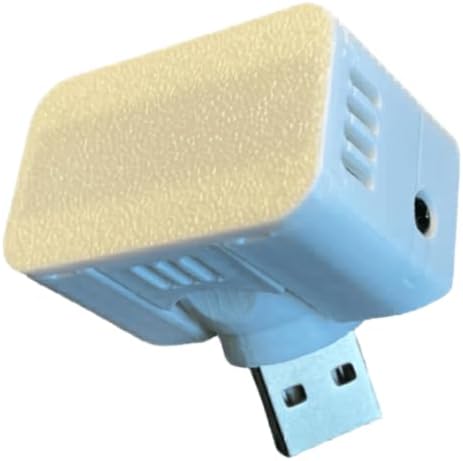
The Akamatis Human Presence Sensor v1.3 has earned a near perfect rating for its reliability and ease of use within the Home Assistant ecosystem. It is designed for users who want a straightforward setup without the need for a hub or complex flashing procedures.
We may earn a commission when you buy through this link, at no additional cost to you.
Its strengths include the robust HLK-LD2410B radar module which provides stable detection up to 20 feet. The USB-A male connector allows for flexible power options and the pre-flashed ESPHome firmware ensures you are ready to go within minutes. The compact design also helps it blend into any room decor.
The main limitation is the dependency on Home Assistant which means it won't work with other cloud systems. Additionally lack of a light sensor means you will need separate devices if you want light-aware automations. But for a pure presence sensor at this price it delivers exceptional value.
This sensor is perfect for users who already have Home Assistant running and want a hassle-free upgrade. It is best for bedrooms or hallways where a simple reliable presence trigger is all you need without extra complexity.
A high rating reflects consistent performance over time. Users report fewer disconnects and more stable detection compared to other similar budget sensors on the market.
Setup is as simple as connecting power and entering Wi-Fi credentials. There is no need to flash firmware manually which saves time and technical effort for new users.
We may earn a commission when you buy through this link, at no additional cost to you.
The WenzhiIoT Zigbee Presence Sensor offers extensive customization for users who want fine control over detection parameters. It supports adjustable sensitivity delay settings and even allows you to set data reporting intervals to optimize network traffic.
We may earn a commission when you buy through this link, at no additional cost to you.
The standout feature is the reporting interval customization which helps reduce noise on your Zigbee network when using tools like Zigbee2mqtt. This makes it a favorite among power users who manage large networks. The wide detection range also ensures coverage in larger spaces.
However it requires a Tuya ZigBee gateway which limits ecosystem flexibility unless you are already invested in Tuya. The setup for advanced settings can also be complex for casual users who just want basic detection. It is less plug-and-play than other options.
Pick this sensor if you are comfortable with networking and want to tune every aspect of performance. It is ideal for advanced Home Assistant setups where you need to balance detection frequency with network load.
Reducing how often a sensor reports data can save bandwidth. This feature lets you decide how often updates are sent which helps keep your network clean and responsive.
Being able to set sensitivity and delay prevents accidental triggers from minor movements. This flexibility ensures your automations only activate when they truly should.
We may earn a commission when you buy through this link, at no additional cost to you.
The meross Presence Sensor MS600 brings Matter over Wi-Fi to the table offering a direct connection to your network without a hub. It combines radar and PIR for dual layer detection and includes a pet-proof shield to avoid false triggers from animals.
We may earn a commission when you buy through this link, at no additional cost to you.
Its primary strength is the Matter support which allows seamless integration with major ecosystems including Home Assistant Alexa and Google Home. The wide viewing angle and long detection range make it suitable for large living areas. The included pet shield is also a thoughtful addition for pet owners.
A key limitation is the need for a continuous power supply which means you are tied to an outlet and a cord. While this eliminates battery changes it limits placement options. Additionally it is pricier than battery powered Zigbee models but offers better connectivity stability.
Choose this sensor if you want a Matter-ready device that integrates easily across platforms. It is best for large rooms where a corded connection is acceptable and you need reliable coverage for both pets and humans.
Matter allows your device to talk directly to your network without a bridge. This reduces points of failure and ensures faster response times for your smart home automations.
Pets often trigger traditional sensors causing lights to turn on unnecessarily. The shield helps filter out their movement so only adult human presence activates your rules.
We may earn a commission when you buy through this link, at no additional cost to you.
Selecting the right sensor requires considering several factors from connectivity to detection technology to ensure it fits your Home Assistant setup and daily needs.
Most sensors come in Wi-Fi Zigbee or Matter over Thread variants. Wi-Fi is easiest to install but can clog your network. Zigbee and Matter use mesh networks for better range and efficiency but require a compatible hub. For Home Assistant users Zigbee is often preferred for stability but check your current hub compatibility before choosing.
Always match the sensor protocol with your existing hub to avoid needing extra adapters.
Presence sensors use mmWave or cmWave radar to detect micro-movements. Higher frequencies like 24GHz or 60GHz offer better precision and shorter range. Lower frequencies like 5.8GHz cover more area but may be slightly less precise. If you need accurate detection in a specific spot like a desk choose a 24GHz model.
Higher frequencies provide more precise detection for smaller rooms.
Sensors are either battery powered or corded. Battery models offer flexible placement but require maintenance. Corded models provide continuous operation but need an outlet nearby. For high-traffic areas or rooms without outlets battery might be better but if you want zero maintenance consider a USB-C or AC powered unit.
Choose corded for low maintenance and battery for placement flexibility.
Some units include light temperature or humidity sensors which add automation potential. If you want to control lights based on brightness or climate based on humidity an all-in-one model saves money and ports. However if you already have standalone sensors a basic presence unit may be cheaper.
All-in-one models reduce clutter and simplify automation logic.
Most products specify if they require Home Assistant a Zigbee bridge or a specific app. Ensure the sensor is compatible with your current ecosystem before buying. Some devices work with multiple platforms but others like the Litos v3 are strictly Home Assistant focused.
Check your current setup requirements to ensure seamless integration.
Advanced sensors allow you to adjust sensitivity or define zones. This is crucial for reducing false triggers from pets or movement near windows. If you have a complex room layout look for features like seven-zone positioning or self-learning calibration.
Adjustable sensitivity ensures your sensor ignores unnecessary movement.
If you choose a battery model check the expected lifespan. Some claim two to three years but real usage may vary. Look for models with replaceable batteries and low-energy protocols to minimize the frequency of changes.
Longer battery life means less frequent maintenance and higher reliability.
Prices range significantly from budget Zigbee models to premium Matter-enabled devices. Determine which features are essential for your workflow. Sometimes a basic model is enough but for complex automation or climate control an all-in-one unit may offer better long-term value.
Prioritize features you will actually use to get the best value.
Mount the sensor at chest height or on the ceiling to ensure the radar pattern covers the desired area. Avoid placing it directly facing moving objects like ceiling fans or heating vents to reduce false positives.
Regularly check the device dashboard in Home Assistant to verify signal strength and battery levels. If you notice intermittent disconnects try moving your router closer or adjusting the sensor location to improve connectivity.
Clean the lens occasionally with a soft dry cloth to ensure light sensors remain accurate. For models with external antennas ensure they are secure to maintain optimal Wi-Fi signal stability.
PIR sensors only detect heat and movement which means they fail when you sit still. mmWave sensors use radar to detect tiny micro-movements like breathing so they know you are there even if you are reading or sleeping. This makes mmWave far more reliable for smart lighting.
It depends on the connectivity type. Wi-Fi models connect directly to your router so no hub is needed. Zigbee and Matter models require a compatible bridge or border router. Always check the product details before purchasing to ensure you have the necessary hardware.
Yes that is the main use case. When the sensor detects presence it can trigger a Home Assistant automation to turn lights on. When it detects absence for a set period it can turn them off to save energy. You can also add light sensor data to avoid turning lights on during the day.
Most mmWave sensors accurately detect breathing and small body movements. However placement and calibration matter. Some models have self-learning features that adapt to your environment to reduce false positives. For best results place the sensor in a clear line of sight without obstructions.
Most models cover between 4 to 20 feet depending on the radar frequency and mounting height. Some premium units with 60GHz mmWave can detect presence across large rooms. Always check the detection zone diagram in the product description to confirm it suits your room size.
If you use Zigbee or Wi-Fi with local Home Assistant integrations yes. Automations run locally within your home network so they work even if internet is down. However cloud-based services like Tuya may require internet for setup and control. Check if local mode is supported before buying.
We found that the Akamatis Litos v3 offers the best balance of integrated light sensing and local control for dedicated Home Assistant users. For budget buyers the Zigbee Human Presence Sensor provides reliable detection with wide ecosystem support. If you need environmental data the Aqara FP300 delivers premium multi-sensor capabilities.
Prioritize detection accuracy and connectivity stability over extra features if you want reliable automations. Ensure you have the right hub or Wi-Fi infrastructure before purchasing. Consider power needs based on where you plan to mount the device to avoid installation headaches later.
Prices and availability for these smart sensors can change often so verify current stock and pricing before finalizing your order. Checking reviews specific to your hub version can also save you time and ensure the device integrates smoothly into your existing smart home system.