
Low Noise RF Amplifier
4.2Editor score
0.1 to 2000MHz coverage
32dB gain performance
9 to 12V DC operation
This guide compares the top ten ham radio amplifier for boosting signal options available in 2026 to help operators choose the right receiver or linear power
Finding a reliable ham radio amplifier for boosting signal is essential for clear communication across distant frequencies. Operators need devices that enhance weak receptions without introducing noise or distortion during critical transmission windows.
We compared ten top rated models based on gain performance frequency coverage and build quality. Our analysis includes low noise amplifiers for receiving and linear power units for transmitting across various radio bands.
Each pick highlights key specs pros and cons to help you decide. Note that prices and availability change frequently so verify details before purchasing the right amplifier for your specific radio setup.
4.2Editor score

4.2Editor score
4.2Editor score
The following table presents a side by side overview of all ten amplifiers. It details their frequency ranges gain levels and power requirements to help you compare specifications quickly.


The Xiegu GPA100 stands out as a top tier linear amplifier for HF operators seeking reliable power boosts. With a rating of 4.2 stars it delivers up to 100W on HF bands while maintaining exceptional signal purity.
We may earn a commission when you buy through this link, at no additional cost to you.
Its solid state linear design ensures low distortion which is critical for SSB CW and digital modes. The auto band switching feature tracks your transceiver frequency changes seamlessly allowing you to focus on communication without manual adjustments.
While it excels at performance the unit requires a compatible low power transceiver for input. Also the Bluetooth control works best with supported radios like the IC-705 which may limit compatibility for some older setups.
This amplifier is ideal for operators wanting to upgrade from QRP to a 100W station. Its intelligent protection features ensure safe operation during long sessions making it a robust choice for serious hobbyists.
The high efficiency design minimizes distortion so your voice remains clear even at high power levels.
Built in Bluetooth allows for automatic band tracking without extra cables connecting your radio to the amp.
We may earn a commission when you buy through this link, at no additional cost to you.
This Low Noise RF Amplifier offers excellent value for operators needing a quick boost to their receiver front end. Rated at 4.2 stars it covers frequencies from 0.1MHz to 2000MHz which includes shortwave VHF and UHF bands.
We may earn a commission when you buy through this link, at no additional cost to you.
With 32dB of gain it significantly improves weak signal reception without introducing excessive noise. The low noise figure and 50 ohm impedance ensure compatibility with most amateur radio receivers and SDR setups.
While it is not designed for high power transmission its low power draw makes it perfect for battery powered field use. However the 13dBm output limit means it should be used strictly as a receiving amplifier.
Ideal for DIY enthusiasts and shortwave listeners this unit helps extend communication distance in weak signal environments. Its simple setup and reliable performance make it a top choice for budget conscious operators.
Running on 9 to 12V DC with only 27mA consumption it works well with portable power packs.
Suitable for CB radios FM broadcasts and remote control receivers beyond just ham radio use.
We may earn a commission when you buy through this link, at no additional cost to you.
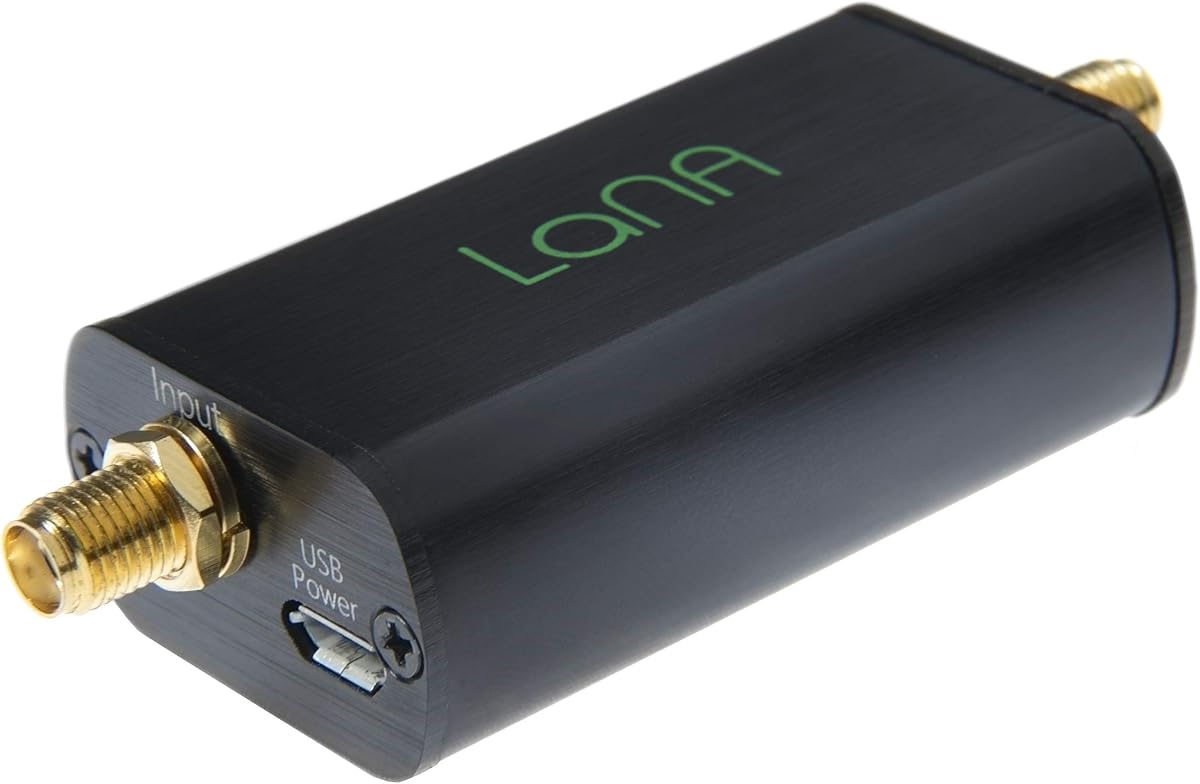
The Nooelec Lana is a premium LNA module designed to enhance the performance of SDR and standard radio receivers. With a 4.2 rating it improves SNR significantly across a wide 20MHz to 4GHz frequency range.
We may earn a commission when you buy through this link, at no additional cost to you.
Its design offers lower noise and better linearity than many comparable MMIC modules. This makes it ideal for detecting weak signals in crowded bands where clarity is essential for decoding digital modes or SSB.
Users should note that some receivers require a DC block when using external power options. While the bias tee feature is convenient the need for additional accessories might add slight complexity to your setup.
For serious SDR users this module provides a reliable upgrade to their signal chain. The included accessories and robust build quality ensure long term stability in both fixed and portable listening stations.
The ultra low noise figure allows you to hear faint signals that standard receivers might miss.
Supports bias tee USB and DC power allowing integration with various transceiver antenna systems.
We may earn a commission when you buy through this link, at no additional cost to you.
This RF Wideband LNA Module has achieved a perfect 5.0 rating due to its robust performance and ease of use. It covers a massive range from 10MHz to 6GHz making it suitable for diverse tasks from ham radio to remote control systems.
We may earn a commission when you buy through this link, at no additional cost to you.
With 30dB of gain and a 5dB noise figure it strengthens weak signals effectively while maintaining clarity. The Type C power input simplifies installation for modern setups and the aluminum case helps with heat dissipation.
One consideration is that gain may decrease slightly at the upper frequency limits. Also the lack of a bypass switch means you cannot easily disable the amp when testing raw antenna signals.
For hobbyists needing a versatile booster for SDR or multi band listening this module is an excellent choice. Its reliable operation and convenient connectivity make it a standout in the budget friendly segment.
Covers everything from HF shortwave up to 6GHz for comprehensive monitoring capabilities.
Type C USB power means you can run it from a power bank or USB charger easily.
We may earn a commission when you buy through this link, at no additional cost to you.
The AURSINC ZK09-BM is designed for portability with a built-in battery that supports field testing without external power. With a rating of 3.8 stars it offers a broadband range from 100kHz to 10GHz for diverse applications.
We may earn a commission when you buy through this link, at no additional cost to you.
Its integrated 300mAh battery provides up to 5 hours of operation which is great for outdoor antenna tuning or DXing. The rugged metal housing protects the internal components during travel or rough handling conditions.
Users should avoid using this LNA in overly noisy urban environments to prevent AGC compression or signal blocking. Also it is best not to use simultaneously with the TinySA built-in LNA for optimal spectral purity.
Despite the lower average rating it remains a useful tool for engineers and operators needing a portable amplifier. The complete kit with charging cable ensures you can start testing signals immediately upon arrival.
No need for external power banks makes this ideal for remote site measurements and tuning.
Specifically designed to enhance the sensitivity of TinySA Ultra spectrum analyzers significantly.
We may earn a commission when you buy through this link, at no additional cost to you.
The Generic Taurus MK2 serves well as a pre amplifier for scanners and basic radio receivers. Rated at 4.1 stars it covers a useful 25 to 2000MHz range with gain adjustable between 6 to 20dB.
We may earn a commission when you buy through this link, at no additional cost to you.
It is designed to be versatile for different scanners using a PP3 battery or standard AC adapter. The included BNC patch lead simplifies setup connecting your antenna directly to the amplifier and then to the receiver.
While gain varies across frequencies it provides a noticeable improvement in weak signal areas. The basic design lacks advanced protection features but works reliably for casual monitoring tasks in home or vehicle use.
For operators looking to boost their scanner performance without spending much this unit offers practical value. Its simplicity makes it a good starting point for those new to using pre amplifiers.
Directly connects to standard antenna cables to improve range and reception clarity.
Works with common batteries or adapters so it fits into existing portable setups.
We may earn a commission when you buy through this link, at no additional cost to you.
The BJ-300 Plus delivers robust power output up to 150W on SSB and 100W on FM which is great for long distance transmission. With a rating of 3.1 stars it features a cooling fan to maintain stability during extended use.
We may earn a commission when you buy through this link, at no additional cost to you.
Its reverse polarity protection safeguards against connection errors making it safer for users who may be less experienced with wiring. The high low power adjustment switches give you some control over signal strength based on conditions.
However the unit requires a stable 13.8V input which can be challenging in portable setups without proper power supplies. Quality control inconsistencies might lead to occasional reliability issues so thorough testing is recommended upon receipt.
For home stations needing a linear boost to existing transceivers this amp is a cost effective option. Just ensure you have a reliable power source and proper ventilation for safe operation over long periods.
Output power reaches 150W SSB making it suitable for extending HF communication range significantly.
Built in fan prevents overheating ensuring consistent output during prolonged high power transmissions.
We may earn a commission when you buy through this link, at no additional cost to you.
The AURSINC ZK09-UM has earned a nearly perfect 4.9 rating for its noise performance and broad frequency range. It operates from 100kHz to 10GHz and is powered directly via USB making integration with SDR setups simple and convenient.
We may earn a commission when you buy through this link, at no additional cost to you.
Its high PSRR LDO suppresses power supply noise significantly improving the noise floor compared to standard USB LNAs. The shielded metal housing protects against interference and ensures consistent flatness across the wide bandwidth it covers.
Users should avoid applying excessive input power as this could damage the device permanently. Also it is not recommended for damp outdoor environments to prevent rust on the metal casing over time.
For TinySA Ultra users and SDR operators this module offers high frequency testing performance. The combination of low noise and compact size makes it a reliable choice for laboratory or field measurements.
Suppression of power supply noise reveals faint signals often buried in interference.
Enhances performance above 3.5GHz where onboard LNA modules may struggle.
We may earn a commission when you buy through this link, at no additional cost to you.
The BJ-300 Plus is a versatile linear amplifier supporting AM FM SSB and CW modes for broad ham radio use. It delivers up to 150W on SSB making it suitable for operators looking to extend their signal reach significantly.
We may earn a commission when you buy through this link, at no additional cost to you.
Built with polarity protection and dual fuses it safeguards the unit from incorrect power connections or surges. The fan assisted cooling ensures that the amplifier stays within safe operating limits even during continuous transmissions.
Installation is straightforward using standard PL-259 connectors common in most HF antenna systems. However its power consumption is significant so ensure your power supply can handle the load consistently during operation.
For hobbyists seeking a powerful boost without complex digital features this unit provides a solid analog solution. Just verify your power source capacity and ventilate the area properly to avoid overheating issues.
Supports all major amateur modulation modes for a versatile amplification solution.
Polarity reversal protection helps prevent accidental damage from wiring errors.
We may earn a commission when you buy through this link, at no additional cost to you.
The BJ-300 offers a strong balance of features and affordability for HF transceiver owners. While it lacks a specific rating it provides up to 150W max output and supports standard amateur modes like FM SSB and CW.
We may earn a commission when you buy through this link, at no additional cost to you.
Its HI/LO power switch lets you adjust output strength based on conditions which can help conserve power when needed. The LED indicator simplifies status checks and the heat sink design manages heat reasonably well for intermittent use.
Overvoltage protection adds a layer of safety against power surges which is crucial for field or remote stations. However the basic cooling might limit continuous operation duration compared to units with active fans.
For those needing an entry level linear amp to boost weak HF signals this model delivers reliable value. Ensure your power supply is stable and monitor heat levels if running for extended transmission periods.
HI/LO switches provide flexibility to match transmission needs with battery or supply limits.
Compact design and standard ports make it easy to integrate into existing stations.
We may earn a commission when you buy through this link, at no additional cost to you.
Selecting the right amplifier depends on your specific use case whether you need signal enhancement for receiving or power boosting for transmitting.
Ensure the amplifier covers the bands you operate on. Wideband units offer versatility but may sacrifice performance on specific frequencies compared to targeted models.
Choose a model that matches your primary HF VHF or UHF needs.
For receiving amplifiers look for high gain and a low noise figure to improve signal to noise ratio without adding static.
Higher gain helps detect weak signals while low noise ensures clarity.
Check the input voltage and current needs. Portable units often use USB or small batteries while high power transmitters require stable 13.8V supplies.
Ensure your power source matches the amplifier to prevent failures.
Transmitting amplifiers must support your operating modes such as SSB FM or CW. Verify that the linear amp handles the required modulation cleanly.
Select an amp that matches your transmission style for best results.
Heat can degrade performance over time so look for heat sinks or cooling fans especially for high power units.
Active cooling is recommended for continuous transmission sessions.
Aluminum enclosures protect internal components and help dissipate heat. Standard connectors like SMA or PL-259 ensure easy integration with your current gear.
Durable builds extend the life of your equipment in field use.
Protection against reverse polarity overvoltage and overheating safeguards your equipment. These features are crucial for beginners or those using external power sources.
Always prioritize safety features to avoid damaging your radio or amp.
For field operations consider size and weight. Compact units with built-in batteries are ideal for remote locations where power is scarce.
Balance performance needs with the convenience of carrying the unit.
Connect the amplifier between your antenna and radio or transceiver. Ensure all coaxial cables are securely tightened to prevent signal leaks or impedance mismatches.
Power on the unit before transmitting to avoid damage. Observe the indicator lights to confirm it is active and ready for operation.
Store the amplifier in a dry environment to prevent corrosion. Periodically check connectors for tightness and clean any dust from cooling vents or heat sinks.
No low noise amplifiers are designed for receiving only. Using them for transmitting can damage the device instantly due to their low output capacity. Always use a linear amplifier for transmission.
High quality amplifiers are designed to minimize distortion. However improper power supplies or high interference can cause issues. Choose models with good linearity to maintain clear signal purity.
Not for small receiving units. However high power transmitting amplifiers generate significant heat and require active cooling or substantial heat sinks to operate safely during long sessions.
Most amateur equipment uses 50 ohm impedance. Check your amplifier specs to ensure it matches your antenna and radio. Mismatched impedance can lead to signal reflection and reduced performance.
Noise figure measures how much noise an amplifier adds to a signal. Lower values are better for receiving weak signals. Look for amplifiers with low noise figures for SDR or sensitive front ends.
Yes if you have a stable power source. Portable amps designed for battery use are ideal. For transmitting portable amplifiers usually require heavier batteries to handle the current demands.
Heat is normal during operation especially for high power units. Ensure adequate ventilation and never cover the unit. If it overheats excessively check your input power and load conditions.
Most are not fully weatherproof unless specified. Keep them indoors or in sheltered locations. For outdoor use use a waterproof enclosure or ensure the casing protects against moisture.
We have reviewed ten top options ranging from budget receiving LNAs to powerful linear amplifiers. Each model offers distinct advantages depending on your primary use case and frequency preferences.
Prioritize compatibility with your existing gear and power availability. A unit that integrates seamlessly will save you time and ensure consistent performance during your operating sessions.
Always verify current pricing and availability before purchasing. Conditions and stock change frequently so checking the latest details helps you secure the best deal for your setup.